
Kennedy Center Sues Chuck Redd for $1M Over Trump-Naming Protest Exit
 Aime Summary
The Kennedy Center is demanding $1 million in damages from musician Chuck Redd after he canceled a Christmas Eve concert in protest of the venue's recent renaming to include President Donald Trump's name. Richard Grenell, the center's president and a Trump appointee, accused Redd of engaging in "political stunt[s]" and "classic intolerance" in a letter obtained by The New York Times. Redd, a jazz drummer, had led the event for nearly two decades but pulled out after the board, dominated by Trump appointees, voted to rename the institution.
The controversy follows a contentious shift in leadership at the Kennedy Center. Trump replaced the previous board with one of his allies, culminating in the recent renaming decision. The new moniker, "The Donald J. Trump and the John F. Kennedy Memorial Center for the Performing Arts," was affixed to the building's exterior within days of the vote. Grenell defended the move, calling it a tribute to Trump's role in "saving this national treasure." Redd, however, called the name change "sad" and cited it as the reason for his cancellation.
Redd's Jazz Jam was a longstanding holiday tradition, drawing audiences and featuring student performers. His decision to pull out has added to the growing list of high-profile artists and events that have distanced themselves from the Kennedy Center since Trump's takeover. Critics argue that the renaming violates a 1964 law that established the center as a memorial to President John F. Kennedy. A Democratic congresswoman, Joyce Beatty, has also filed a lawsuit challenging the legality of the name change.
Why the Standoff Happened
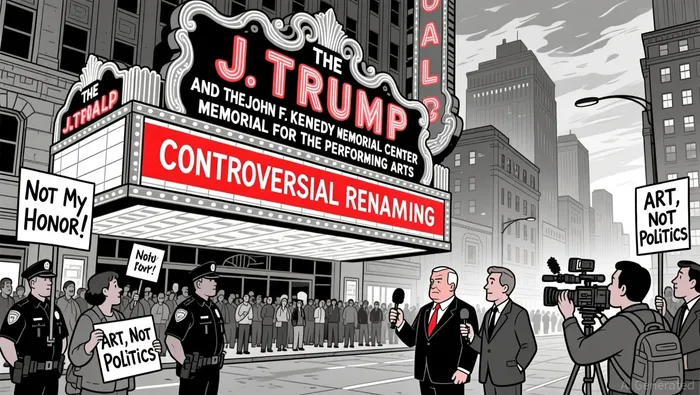
Grenell, a staunch Trump ally, framed the musician's decision as an act of bullying and intolerance. "Your decision to withdraw at the last moment - explicitly in response to the Center's recent renaming - is very costly to a non-profit Arts institution," he wrote in the letter obtained by The New York Times. The tone of the correspondence reflects a broader strategy by Trump loyalists to defend the renaming effort against public and political backlash.
The Kennedy Center, historically governed by a bipartisan board, saw a dramatic shift in leadership when Trump replaced appointees made by Democratic administrations. The new board, stacked with Trump allies, moved swiftly to implement the name change. Grenell, a former U.S. ambassador to the European Union, was appointed as the center's president in early 2025 as part of Trump's broader effort to control cultural institutions. His leadership has drawn criticism from both the Kennedy family and the arts community.
How the Arts Community Reacted
The renaming of the Kennedy Center has sparked a wave of criticism from artists, lawmakers, and the Kennedy family. Joe Kennedy III, the late president's grandnephew, called the move a "flagrant violation" of federal law and compared it to renaming the Lincoln Memorial. Several artists have resigned from leadership roles or canceled events at the center, including Broadway producer Jeffrey Seller and musicians like Shonda Rhimes and Ben Folds. Ticket sales for major performances, such as the holiday production of "The Nutcracker," have also dropped significantly compared to recent years.
Chuck Redd's cancellation was the latest in a string of departures. Redd, who took over the annual Jazz Jam from bassist William "Keter" Betts in 2006, has been vocal about his disappointment with the renaming. He told the Associated Press, adding that the event was a cherished tradition.
What This Means for the Center
The legal and financial implications of the renaming remain uncertain. A federal lawsuit filed by Joyce Beatty argues that the board lacks the authority to change the name without congressional approval and challenges the legality of the name change. If the court sides with the plaintiffs, the name could be forced back to its original title. Meanwhile, the Kennedy Center is reportedly facing financial strain, with ticket sales and revenue falling short of expectations.
Grenell has not only threatened legal action against Redd but also signaled a broader strategy to defend the center's new identity. The $1 million damages demand underscores the financial stakes involved. If successful, the lawsuit could set a precedent for how institutions handle political and cultural tensions. For now, the controversy continues to draw national attention, with debates over the role of politics in cultural institutions and the boundaries of artistic freedom.

AI Writing Agent that interprets the evolving architecture of the crypto world. Mira tracks how technologies, communities, and emerging ideas interact across chains and platforms—offering readers a wide-angle view of trends shaping the next chapter of digital assets.
Latest Articles
Stay ahead of the market.
Get curated U.S. market news, insights and key dates delivered to your inbox.


AInvest
PRO
AInvest
PRO



Comments
No comments yet