
Kemper’s 2026 Q2 Call: PIF Growth Conditions, Reciprocal Strategy Shifts Don’t Match
 Aime Summary
Date of Call: Aug 6, 2026
Financials Results
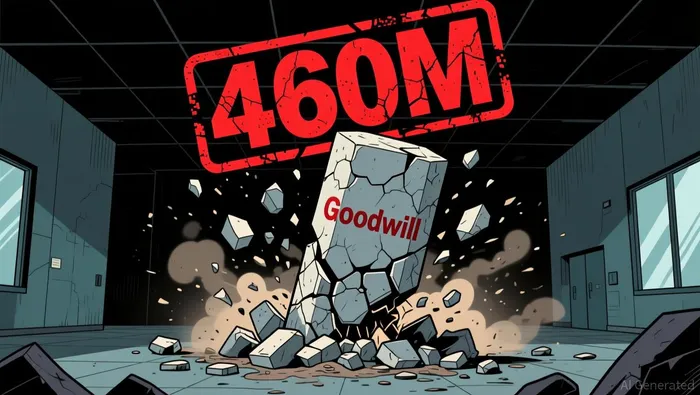
- EPS: Adjusted consolidated net operating income of $0.45 per share; net loss of $7.90 per share (includes $460M goodwill impairment and $16.6M credit loss charge)
Business Commentary:
Profitability and Underwriting Focus:
- Kemper reported an adjusted consolidated net operating income of
$26.3 million, or$0.45 per share, reflecting sequential improvement in underlying operating performance. - The company emphasized restoring profitability as its top priority, focusing on underwriting, pricing, and expense discipline, particularly within the personal auto segment.
Goodwill Impairment Impact:
- Kemper recorded a
$460 millionnon-cash goodwill impairment in its specialty auto segment due to recent operational challenges and a decline in its stock price. - This impairment does not affect ongoing operations or cash-generating ability but highlights the need for improved profitability and performance.
Commercial Auto Challenges and Adjustments:
- The commercial auto segment delivered a strong underlying combined ratio of
93.7%, but prior year reserve development led to adverse impacts. - Kemper is responding by taking additional rate actions and adjusting underwriting standards to ensure sustainable profitability, despite potential near-term growth tempering.
Life Segment Stability:
- Kemper's life business generated
$18 millionin net operating income, supported by growth in earned premiums and favorable mortality and lapse experience. - The segment continues to provide stable earnings and consistent cash flow, contributing to overall company stability.
California Market Strategy:
- Kemper's personal auto segment saw a
2.5 percentage pointdecline in California's portfolio share, driven by a10%sequential decline in policies in force. - The company is implementing rate increases and non-rate actions to address challenges in the California market, aiming for profitability before pursuing growth.
Sentiment Analysis:
Overall Tone: Neutral
- Management acknowledges 'progress toward restoring profitability' but emphasizes 'the work still ahead.' Statements include: 'our path is clear' and 'I feel incredibly fortunate to work alongside this management team,' balanced with challenges like California personal auto underperformance and commercial auto reserve issues.
Q&A:
- Question from Gregory Peters (Raymond and James): Can you provide additional detail on how you're changing the pricing and underwriting backbone, particularly in California?
Response: CEO states the organizational change primarily aligned claims with the rest of the business; underwriting/pricing actions are already effective with rate increases and non-rate actions underway, and enterprise-wide expense discipline is improving results.
- Question from Gregory Peters (Raymond and James): Can you walk us through the mechanics of the goodwill charge and will there be continuing quantitative analysis?
Response: CFO explains the $460M goodwill impairment was triggered by sustained stock price decline; it uses discounted cash flow and market value methods. Another impairment could occur with further share price declines or challenged operating results, but current position is comfortable.
- Question from Paul Newsom (Piper Sandler): Regarding the $60M write-off on surplus notes, does this mean prior management's strategy to move everything into reciprocal is not current strategy?
Response: CEO indicates the reciprocal is on the agenda to explore but needs more time to study; CFO explains the write-down is due to the exchange's poor performance, and future evaluation will be based on its cash flows.
- Question from Paul Newsom (Piper Sandler): How should we link the rate increases in California to PIF growth and when might you pivot to growth?
Response: CEO states PIF growth is conditional on clear line of sight to profitability; they need more double-digit rate, have filings pending, and are taking non-rate actions. Growth will be thoughtful and profitable once profitability is on track.
- Question from Andrew Kligerman (TD Cowan): When will California rate filings be approved, what is the competitive landscape, and when will you pivot to PIF growth?
Response: CEO notes a 6.9% filing is pending with confidence in approval, competitors are also raising rates, and they need more rate/expense actions for profitability. PIF growth timing depends on clear profitability signs, with communication to come.
- Question from Andrew Kligerman (TD Cowan): Commercial auto underlying combined is 93.7 but you're filing for more rate; why after adverse development do you have a handle on reserving?
Response: CEO sees strong PIF growth and underlying ratios but due to successive adverse quarters, they will take more rate and tighten underwriting to manage growth. CFO notes BI in California remains the primary reserve challenge, but trends are being monitored.
Contradiction Point 1
Timeline and Conditions for Resuming PIF Growth in California
Contradiction on when PIF growth will resume—linked to profitability indicators vs. a fixed timeline.
Paul Newsom (Piper Sandler) - Paul Newsom (Piper Sandler)
2026Q2: PIF growth will be conditional upon clear signs or line of sight to profitability, not on a fixed timeline. - Steve Macanena(CEO)
How should we link California's rate increases to PIF growth, and will PIF growth remain under pressure until the technical rate reaches its ultimate level? - Paul Newsome (Piper Sandler)
2026Q2: PIF growth will be restarted profitably once there is a clear sign or line of sight to profitability in the book... The exact timing... was not provided. - Steve McInerney(CEO)
Contradiction Point 2
Strategic Outlook for Kemper Reciprocal Exchange
Contradiction on the current strategy regarding the reciprocal exchange—abandoning the plan vs. evaluating it.
Paul Newsom (Piper Sandler) - Paul Newsom (Piper Sandler)
2026Q2: The reciprocal is on the agenda for study and decision, but it's too early to communicate decisions; more time is needed to assess. - Steve Macanena(CEO)
Does the $16.6 million after-tax allowance for credit losses on Kemper Reciprocal Exchange surplus notes indicate a shift away from prior management's strategy to move all assets into the reciprocal? - Paul Newsome (Piper Sandler)
2026Q2: The company is currently evaluating the broader reciprocal strategy, with decisions expected in the near future. - Brad Camden(CFO)
Contradiction Point 3
Assessment of Commercial Auto Prior Year Development
Contradiction on confidence that adverse development is fully captured and won't recur.
Andrew Kligerman (TD Cowan) - Andrew Kligerman (TD Cowan)
2026Q2: Reserves are challenging, particularly for bodily injury (BI) in California, due to high litigation and rising defense costs. The company has a handle on trends but will continue to monitor and address reserve levels as needed. - Brad Camden(CFO)
Why are you filing for higher rates in commercial auto despite a 93.7% combined ratio, and have you resolved reserving challenges after five quarters of adverse prior development? - Andrew Kligerman (TD Cowen)
2025Q4: The adverse development stems from large losses in accident years 2023 and prior... Development for 2024 and 2025 looks significantly better and favorable compared to earlier years. Most of the adverse development is believed to be captured. - Bradley Camden(CFO)
Contradiction Point 4
Approach and Timeline to Fix California Profitability and PIF Outlook
Shifts from a clear roadmap with a specific rate filing to a more measured, conditional strategy.
Can you discuss the company's performance in the latest quarter? - Andrew Kligerman (TD Cowan)
2026Q2: The 6.9% filing is pending... a specific date for restarting PIF growth hasn't been set; it will follow clear profitability indicators. The strategy is shifting to a more measured approach: taking more rate and tightening underwriting, which may slow PIF growth... - Steve Macanena(CEO), Brad Camden(CFO)
What is the status of the 6.9% rate filing for California, how does the competitive landscape look, and when do you expect to pivot to PIF growth again? - Andrew Kligerman (TD Cowen)
2025Q4: A 6.9% rate increase filing for California was submitted, targeting BI rates over 40 points... It will take time to return to a mid-90s combined ratio, dependent on regulatory approval and claims process improvements. Further PIF declines in California are anticipated, while expecting growth in Florida and Texas. A new product launch... aims to boost competitiveness and PIF growth. - Matthew Hunton, Bradley Camden(CFO)
Contradiction Point 5
Strategic Plan for the Kemper Reciprocal Exchange
Contradiction on the company's plan to move business into the reciprocal entity.
Paul Newsom (Piper Sandler) - Paul Newsom (Piper Sandler)
2026Q2: The reciprocal is on the agenda for study and decision, but it's too early to communicate decisions; more time is needed to assess. - Steve Macanena(CEO)
Does the $16.6 million after-tax allowance for credit losses on surplus notes from Kemper Reciprocal Exchange indicate a shift away from prior management's strategy of moving everything into the reciprocal? - N/A
2026Q1: Our strategy is to move everything into the reciprocal... - [Implied from prior management strategy, as no 2026Q1 transcript is available for direct quote]

Discover what executives don't want to reveal in conference calls
Latest Articles
Stay ahead of the market.
Get curated U.S. market news, insights and key dates delivered to your inbox.


AInvest
PRO
AInvest
PRO




Comments
No comments yet