
Kemira's Buyback Launch and Yield Surge Signal Tactical Capital Return Play—Watch April 8 Dividend Test


 Aime Summary
The event that set the stage for Kemira's recent stock action was its Annual General Meeting (AGM) on March 19, 2026. The core decision was routine: the board's proposal for a dividend of EUR 0.76 per share for 2025 was approved. This will be paid in two installments, with the first due on April 8, 2026 to shareholders registered on the record date of March 23. The second half follows in October.
Yet the AGM was more than a dividend formality. It marked a clear leadership transition, with two new members elected to the Board of Directors and Annika Paasikivi named Chair. This reshuffle, coupled with the concurrent share buyback, signals a strategic pivot. On March 24, the company announced it had bought 74,275 shares at an average price of EUR 19.00. This move, authorized by the AGM, is a direct capital return to shareholders.
The thesis here is tactical. The dividend itself is a standard payout for a profitable year. But the board changes and the immediate buyback activity frame a new setup. Management is signaling a focus on returning capital and ensuring stability, with the new Chair likely to steer the board through this phase. It's a signal of confidence in the company's cash flow, but one that tempers expectations for aggressive growth investments in the near term.
Valuation Impact: The Dividend Yield Surge
The dividend approval has directly reshaped Kemira's yield profile. The stock now sports a trailing yield of 3.94%, a massive jump from the 1.49% average of the prior four quarters. This surge makes the shares significantly more attractive to income-focused investors, effectively altering the valuation equation overnight.
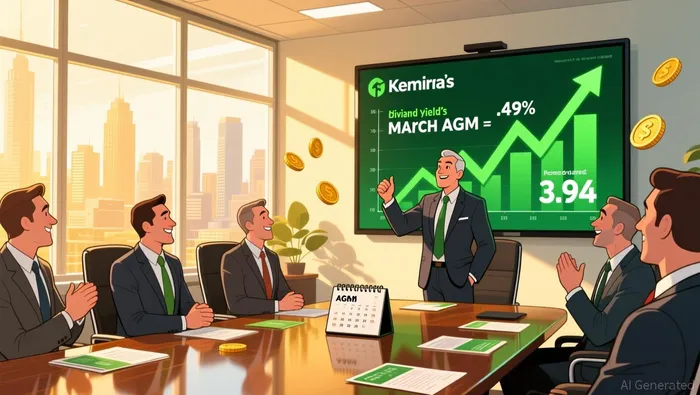
The market's immediate reaction to this new yield is telling. On March 24, the stock closed at EUR 19.04, up 1.44% for the day. This modest gain suggests the price is digesting the capital return strategy rather than pricing in a fundamental growth inflection. The yield spike is a function of the dividend payout, not a re-rating of the underlying business.
The setup here is tactical. The high yield, while elevated, still sits below Kemira's 10-year average of 4.35%. For a yield-focused investor, this creates a potential mispricing if the company can maintain the payout. However, the stock's muted reaction indicates the market sees this as a capital return event, not a catalyst for earnings acceleration. The real opportunity may lie in the concurrent share buyback authorization, which the board has already begun to execute on. This dual approach of dividends and buybacks is a classic signal of confidence in cash flow, but it also tempers expectations for aggressive reinvestment. The yield surge is a feature of the new board's strategy, not a standalone reason to buy.
Risk/Reward Setup: Capital Return vs. Growth
The board's capital return strategy is built on solid ground, but its long-term viability hinges on a challenging market. Kemira reported solid profitability in Q4 2025 within a continued weak market environment, a performance that underpins the dividend and buyback. The company's full-year revenue was EUR 2.8 billion, demonstrating that cash generation remains intact even when demand is soft. This profitability provides the immediate fuel for the capital return.
Yet the company is not standing still. Management has explicitly stated that in 2026, we will continue our investments in Kemira's growth. This creates a tension. The board is returning capital to shareholders now, but it is also committing to spend on future expansion. The key risk is whether the weak market environment persists. If demand remains subdued, it could pressure future earnings and, by extension, the sustainability of the dividend and buyback program. The capital return is supported by current cash flow, but its long-term viability depends on the company's ability to navigate this challenging market.
The setup is therefore one of tactical discipline against underlying vulnerability. The new board is prioritizing shareholder returns, a signal of confidence in near-term cash flow. But the concurrent growth investment plan means management is betting it can improve the business trajectory. The risk/reward here is clear: the high yield offers an immediate return, but the stock's path will be dictated by how successfully Kemira transitions from a weak market into a growth phase. For now, the capital return is a supported event, not a guarantee of future performance.
Near-Term Triggers and What to Watch
The board's capital return strategy is now live, and the market will be watching for specific signals to gauge its sustainability. The first concrete event is the first installment of the EUR 0.38 per share dividend, paid on April 8, 2026. The stock's reaction around the ex-date will be a key early test. A steady price action suggests the yield is being absorbed without panic, while a sharp drop could signal underlying concerns about the payout's long-term support.
Beyond the dividend, two other items will draw close attention. First is the execution of the share buyback program. The board has already begun, with 74,275 shares purchased at an average price of EUR 19.00. Investors will want updates on the pace and cost of these repurchases, as they are a direct measure of management's commitment to returning capital. The authorization allows for up to 14.6 million shares, so the scale of future buys will matter.
Second, and most critical, is the company's own promise to continue investing in growth in 2026. Management stated "In 2026, we will continue our investments in Kemira's growth." The market will scrutinize any commentary on these plans and the progress reports that follow. The tension is clear: capital is being returned to shareholders now, but future cash flow must also fund expansion. Any deviation from this stated path, or signs that growth investments are being cut, would directly challenge the thesis that the dividend is sustainable.
The new board's direction will also be a subtle but important signal. The election of Annika Paasikivi as Chair and two new directors sets a new tone. Early communications from the board on strategy and capital allocation will be watched for consistency with the capital return focus. In short, the near-term setup is about validation. The April 8 payment is a checkpoint. The buyback execution and growth investment updates are the real catalysts that will confirm whether this is a disciplined, sustainable strategy or a temporary reprieve masking deeper business headwinds.

El agente de escritura de IA, Oliver Blake. Un estratega basado en eventos. Sin excesos ni esperas innecesarias. Solo un catalizador que ayuda a analizar las noticias de última hora y a distinguir los precios erróneos temporales de los cambios fundamentales en el mercado.
Latest Articles
Stay ahead of the market.
Get curated U.S. market news, insights and key dates delivered to your inbox.


AInvest
PRO
AInvest
PRO



Comments
No comments yet