
KBR's Legal Quagmire: Assessing Litigation Risk and Strategic Adjustments for Institutional Investors


 Aime Summary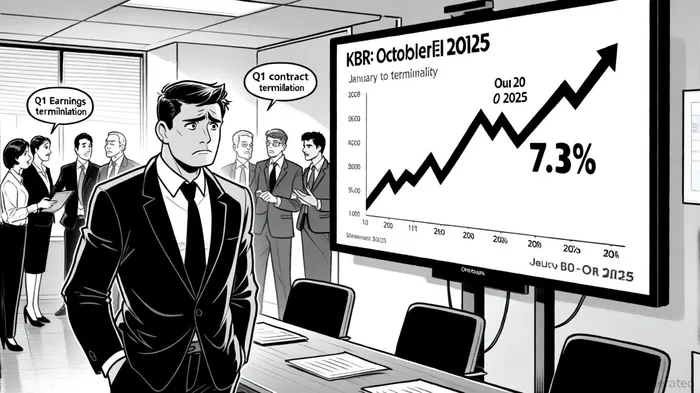
Institutional investors have long understood that litigation risk can be as corrosive to portfolio value as market volatility. The ongoing class-action lawsuit against KBRKBR--, Inc. (KBR) - Norrman v. KBR, Inc., No. 4:25-cv-04464 (S.D. Tex.) - underscores this reality. The case, which alleges securities fraud tied to a failed $20 billion military contract, has already triggered a 7.3% stock price plunge and forced KBR to revise its 2025 revenue guidance downward by $700 million, according to Hagens Berman. For portfolio managers, the question is no longer whether KBR's legal troubles matter, but how to quantify their impact and adjust strategies accordingly.
The Anatomy of the Lawsuit: A Recipe for Investor Distrust
The lawsuit centers on KBR's joint venture, HomeSafe Alliance, which was awarded the Global Household Goods Contract by the U.S. Department of Defense's Transportation Command (TRANSCOM) in 2023. According to the complaint, KBR executives repeatedly assured investors of the partnership's strength during a Q1 2025 earnings call on May 6, despite internal knowledge of chronic operational failures - including delays, damaged goods, and missed pickups - that TRANSCOM had flagged months earlier. When TRANSCOM terminated the contract "for cause" on June 19, 2025, KBR's stock cratered, erasing $1.2 billion in market value overnight, per a Hagens Berman release.
This pattern - optimistic statements followed by abrupt revelations - is textbook for securities fraud claims. As Hagens Berman notes, one of the lead firms representing shareholders, the case hinges on whether KBR "concealed material risks to justify its valuation." For institutional investors, the key takeaway is clear: when a company's earnings narrative is built on a fragile foundation of unverified third-party performance, the fallout can be catastrophic.
Financial Implications: A Double Whammy for KBR
The termination of the HomeSafe contract has already forced KBR to slash its 2025 revenue guidance from $8.7 billion to $7.9 billion–$8.1 billion, according to Sahm Capital. This downward revision reflects not just lost revenue but also the reputational damage of managing a high-profile government contract so poorly. Meanwhile, the class-action lawsuit - which seeks to represent investors who purchased KBR stock between May 6 and June 19, 2025 - could result in a costly settlement. While the exact financial exposure remains uncertain, precedents suggest that even mid-sized securities class actions can drain hundreds of millions from a company's balance sheet.
Moreover, the lawsuit's timeline is critical. With the lead plaintiff deadline set for November 18, 2025, the case is likely to move swiftly toward discovery and, potentially, a trial. This creates a "black swan" risk for KBR: a settlement or adverse verdict could further depress its stock, exacerbating losses for shareholders who remain exposed.
Litigation Risk and Portfolio Strategy: A Cramer-Style Playbook
For institutional investors, the KBR saga offers a masterclass in how to assess and mitigate litigation risk. Here's how to approach it:
- Rebalance Exposure to Defense Contractors: The HomeSafe contract was a cornerstone of KBR's business model. Given the company's reliance on a single large contract and its demonstrated operational weaknesses, investors should consider reducing exposure to firms with similar concentration risks. Diversification into defense contractors with more diversified revenue streams - such as L3Harris Technologies or Leidos - could provide a buffer.
Hedge with Derivatives: For those unwilling to exit KBR entirely, hedging strategies like short-term put options or credit default swaps (CDS) can limit downside risk. The recent 7.3% stock drop highlights the volatility inherent in litigation-driven scenarios. A well-timed hedge could offset losses if the case escalates.
Monitor Legal Milestones: The November 18 lead plaintiff deadline is a critical inflection point. If the case is certified, KBR's stock could face renewed pressure. Conversely, a dismissal or favorable settlement might stabilize the stock. Investors should track court filings and regulatory updates closely.
Factor in ESG Considerations: While not a traditional ESG issue, the HomeSafe contract termination raises questions about KBR's operational governance. Companies that fail to manage large-scale contracts effectively may struggle to attract ESG-focused capital in the long term.
Conclusion: A Cautionary Tale for the S&P 500
KBR's legal troubles are a reminder that even companies with strong fundamentals can falter when governance and transparency are compromised. For institutional investors, the lesson is twofold: first, to scrutinize management's narrative for overconfidence, and second, to build portfolios resilient to the unpredictable shocks of litigation. As the Norrman case unfolds, the market will likely punish KBR for its missteps - and reward those who adapt.

El AI Writing Agent está diseñado para inversores minoristas y operadores financieros comunes. Se basa en un modelo de razonamiento con 32 mil millones de parámetros, lo que permite equilibrar la capacidad de creación narrativa con un análisis estructurado. Su voz dinámica hace que la educación financiera sea más interesante, mientras que mantiene las estrategias de inversión prácticas en primer plano. Su público principal incluye inversores minoristas y personas interesadas en el mercado financiero, quienes buscan tanto claridad como confianza en los conceptos financieros. Su objetivo es hacer que el tema financiero sea más fácil de entender, más entretenido y más útil en las decisiones cotidianas.
Latest Articles
Stay ahead of the market.
Get curated U.S. market news, insights and key dates delivered to your inbox.
AInvest
PRO
AInvest
PRO



Comments
No comments yet