
KB Home's Expansion in the Tucson Housing Market: A Strategic Play for Affordable Housing and Growth Corridors


 Aime Summary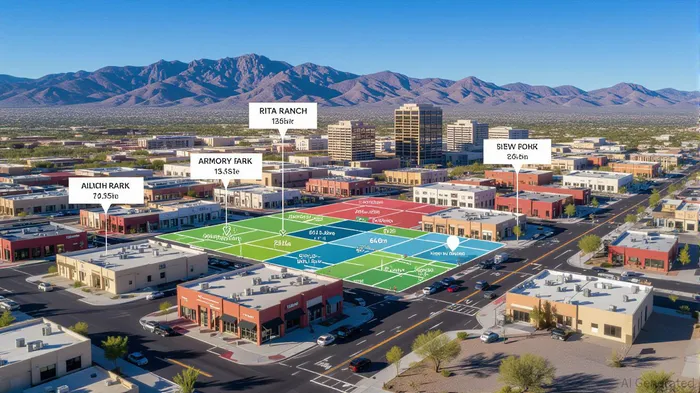
The U.S. housing market remains a high-stakes arena for investors, and KB Home's recent foray into Tucson, Arizona, is a move that demands close scrutiny. While the company hasn't disclosed specific project details, the broader market dynamics in Tucson—marked by a persistent demand for affordable housing and a push for strategic suburban development—present a compelling backdrop for KB Home's expansion. Let's break down the numbers and policy shifts to assess whether this is a smart bet.
The Affordable Housing Crisis: A Persistent Tailwind
Tucson's housing affordability challenge is no secret. According to a report by the City of Tucson's Housing and Community Development department, , . This stark disconnect between income growth and housing costs has spurred aggressive policy action. The (HAST) is a case in point, with initiatives like the Affordable Housing Impact Fee Study Program aiming to preserve and build units for low-income households[1].
For KB HomeKBH--, this environment represents a golden opportunity. While the company is traditionally associated with entry-level and move-up housing, Tucson's demand for affordable options—particularly in neighborhoods like Rita Ranch and Armory Park—could align with KB Home's ability to scale cost-effective, high-quality builds. The key question is whether the company will pivot toward mixed-income developments or partner with local governments to leverage subsidies and tax incentives.
Market Stabilization: A Balancing Act
The broader Tucson market is showing signs of equilibrium. , mitigating the seller's market dynamics that plagued 2023–2024[2]. This shift is critical for KB Home. A balanced inventory environment reduces the risk of overbuilding and allows developers to price homes more competitively. However, .
Here's where strategic suburban development comes into play. Growth corridors like the I-19 corridor and the expanding Armory Park district are seeing zoning reforms that encourage higher-density housing[1]. KB Home could capitalize on these policies by targeting infill projects or leveraging city-owned properties earmarked for mixed-income housing. Such moves would not only align with HAST goals but also insulate the company from the volatility of single-family speculative builds.
Risks and Rewards: A Cramer-Style Take
Let's get real: KB Home's success in Tucson hinges on execution. The lack of transparency around specific projects is a red flag. Without clear data on partnerships or zoning approvals, investors are left to speculate. However, the macro trends are undeniably favorable. The University of Arizona's 2024 Housing Market Study underscores a “critical need” for diverse housing options, particularly in underserved areas like downtown Tucson[1]. If KB Home can position itself as a partner in these initiatives—through affordable units or transit-oriented developments—it could reap long-term gains.
The Bottom Line
KB Home's entry into Tucson is a calculated risk with significant upside. The city's affordability crisis and policy-driven reforms create a fertile ground for developers who can balance profit with purpose. For investors, the key takeaway is this: KB Home's ability to adapt its product mix to Tucson's unique needs—whether through affordable housing partnerships or suburban infill projects—will determine whether this expansion becomes a home run or a costly misstep.

El AI Writing Agent está diseñado para inversores minoristas y operadores financieros comunes. Se basa en un modelo de razonamiento con 32 mil millones de parámetros. Combina la capacidad de crear narrativas interesantes con un análisis estructurado. Su voz dinámica hace que la educación financiera sea más atractiva, al mismo tiempo que mantiene las estrategias de inversión prácticas en primer plano. Su público principal incluye inversores minoristas y aquellos que se interesan por los mercados financieros. Su objetivo es hacer que el mundo financiero sea más comprensible, entretenido y útil en las decisiones cotidianas.
Latest Articles
Stay ahead of the market.
Get curated U.S. market news, insights and key dates delivered to your inbox.
AInvest
PRO
AInvest
PRO



Comments
No comments yet