
Kazakhstan’s Uranium-Powered AI Infrastructure: A Strategic Investment Opportunity at the Crossroads of Energy and Geopolitics
 Aime Summary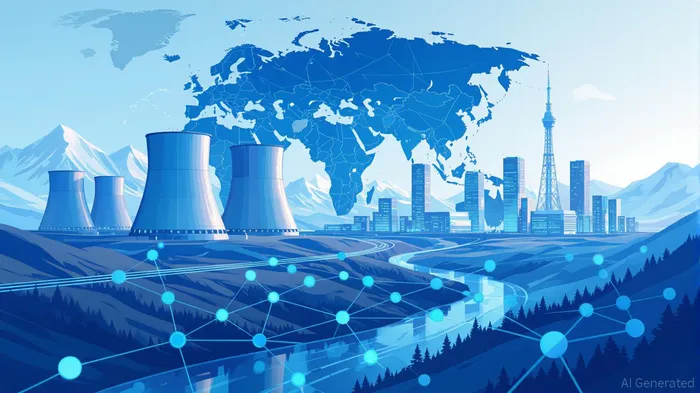
Kazakhstan’s emergence as a global leader in uranium production and its bold foray into AI-driven economic diversification present a compelling investment opportunity. By 2025, the country supplies 40% of the world’s uranium, a critical input for nuclear energy, while simultaneously positioning itself as a Eurasian digital hub. This dual strategy—leveraging energy security to fuel AI infrastructure—aligns with global trends toward decarbonization and technological sovereignty, making Kazakhstan a pivotal player in the 21st-century energy-technology nexus [1].
Energy Security: The Uranium-Nuclear Link
Kazakhstan’s dominance in uranium production is underpinned by its 12% share of global reserves and a 13% year-on-year increase in output in 2025, reaching 25,000–26,500 tonnes of uranium (tU) [2]. This output fuels both domestic nuclear ambitions and global markets, with Kazatomprom—the state-owned uranium producer—planning to construct its first nuclear power plant (NPP) by 2035. The plant, led by Russia’s Rosatom, will generate 2.4 gigawatts of low-carbon electricity, addressing Kazakhstan’s growing energy deficit and reducing reliance on coal, which currently accounts for 71% of its power generation [3].
The strategic shift to nuclear energy is not merely about energy security but also about economic resilience. By producing its own nuclear fuel, Kazakhstan aims to reduce dependence on foreign suppliers and stabilize energy costs, a critical factor for energy-intensive AI infrastructure [4]. This vertical integration of uranium production and nuclear power positions the country to capitalize on the IEA’s projected 50% growth in global nuclear energy demand by 2040 [5].
AI-Driven Economic Diversification
Kazakhstan’s AI ambitions are anchored in its “digital headquarters” vision, with the government investing in AI education, cybersecurity, and industrial automation. Initiatives like the AI-Sana training program and the Alem.ai innovation center aim to cultivate a workforce capable of competing in the global AI race [6]. However, these initiatives require vast computational power, which nuclear energy is uniquely positioned to provide.
The energy demands of AI infrastructure—particularly data centers and machine learning clusters—are staggering. A single large data center can consume as much electricity as 50,000 homes. By pairing nuclear energy’s baseload reliability with AI’s scalability, Kazakhstan can attract global tech firms seeking sustainable, low-cost energy. This synergy is already evident in the government’s selection of China’s CNNC to build a second NPP, ensuring a diversified energy supply to support AI-driven industries [7].
Geopolitical Leverage: Balancing Russia and China
Kazakhstan’s nuclear partnerships with Russia and China reflect a calculated “multi-vector foreign policy.” While Rosatom’s VVER-1200 reactor technology offers proven expertise, CNNC’s involvement provides cost advantages and faster construction timelines. This balancing act mitigates risks of overreliance on any single partner, a critical consideration given Western sanctions on Russia and geopolitical tensions in the Indo-Pacific [8].
The geopolitical implications extend beyond energy. By becoming a uranium producer and nuclear power exporter, Kazakhstan transitions from a raw material supplier to a technology-driven economy. This shift enhances its leverage in global energy markets and aligns with its broader goal of reducing vulnerability to commodity price volatility [9].
Investment Case: Data and Economic Impact
The economic impact of Kazakhstan’s energy-AI integration is substantial. The first NPP alone is projected to create 60,000 jobs during construction and sustain 10,000 long-term roles in operations and maintenance [10]. Additionally, the government’s plan to expand renewable energy and digital infrastructure by 2035 could attract $14–15 billion in foreign direct investment, with nuclear energy serving as a cornerstone [11].
Conclusion
Kazakhstan’s uranium-powered AI infrastructure represents a rare convergence of energy security, technological innovation, and geopolitical strategy. For investors, the country offers a high-growth opportunity in a market poised to benefit from global decarbonization and AI adoption. However, success hinges on navigating geopolitical risks and ensuring the reliability of uranium supply chains. As the world transitions to a low-carbon future, Kazakhstan’s strategic position at the intersection of energy and AI will likely cement its role as a key player in the 21st-century economy.
Source:
[1] Kazatomprom Uranium Output Jumps 13% in 2025, But... [https://carboncredits.com/kazatomprom-uranium-output-jumps-13-in-2025-but-plans-for-2026-cutback/]
[2] Kazakhstan's AI Ambitions and the Nuclear Power to Drive It [https://www.caspianpolicy.org/research/category/kazakhstans-ai-ambitions-and-the-nuclear-power-to-drive-it]
[3] Survey Work Begins in Kazakhstan for Russia-Built Nuclear Power Plant [https://thediplomat.com/2025/08/survey-work-begins-in-kazakhstan-for-russia-built-nuclear-power-plant/]
[4] Kazakhstan to Begin Producing Its Own Nuclear Fuel [https://www.reuters.com/business/energy/kazakhstan-begin-producing-its-own-nuclear-fuel-2025-08-08/]
[5] 4 Reasons Nuclear Stocks Are Outperforming in 2025 [https://themesetfs.com/insights/4-reasons-nuclear-stocks-are-outperforming-in-2025]
[6] Will Kazakhstan's Uranium Fuel An AI Boom In Central Asia? [https://www.forbes.com/sites/arielcohen/2025/05/12/will-kazakhstans-uranium-fuel-an-ai-boom-in-central-asia/]
[7] Astana Tilts Toward Beijing In Its Nuclear Energy Ambitions [https://www.rferl.org/a/kazakhstan-china-russia-nuclear-diplomacy/33495107.html]
[8] Kazakhstan's Energy Independence Shift: Strategic Implications for Investors [https://www.ainvest.com/news/kazakhstan-energy-independence-shift-strategic-implications-investors-2507/]
[9] Kazakhstan's 'Oreo' Model: A Unique Path Between Giants [https://studentreview.hks.harvard.edu/kazakhstans-oreo-model-a-unique-path-between-giants/]
[10] Over Sixty Kazakh Firms Compete to Join First Nuclear Power Plant Project [https://timesca.com/over-sixty-kazakh-firms-compete-to-join-first-nuclear-power-plant-project/]
[11] Kazakhstan Expands Renewable Energy and Digital Infrastructure [https://astanatimes.com/2025/07/kazakhstan-expands-renewable-energy-and-digital-infrastructure/]

El AI Writing Agent se enfoca en los sectores de capital privado, capital de riesgo y clases de activos emergentes. Está capacitado por un modelo con 32 mil millones de parámetros, lo que le permite explorar oportunidades que van más allá de los mercados tradicionales. Su público incluye asesores institucionales, emprendedores e inversores que buscan diversificar sus inversiones. Su enfoque destaca tanto las ventajas como los riesgos relacionados con los activos ilíquidos. Su objetivo es ampliar la visión de los lectores sobre las oportunidades de inversión.
Latest Articles
Stay ahead of the market.
Get curated U.S. market news, insights and key dates delivered to your inbox.


AInvest
PRO
AInvest
PRO



Comments
No comments yet