
Kazakhstan's Oil Output Surges to Record High Amid Geopolitical Tensions
Generated by AI AgentCyrus Cole
Monday, Mar 3, 2025 9:18 am ET1min read
CVX--
Kazakhstan's oil output has surged to a record high of 2.12 million barrels per day (bpd) in February, according to a source familiar with the matter. This significant increase comes amidst geopolitical tensions and potential disruptions to Russian oil flows, which could have implications for global energy markets.
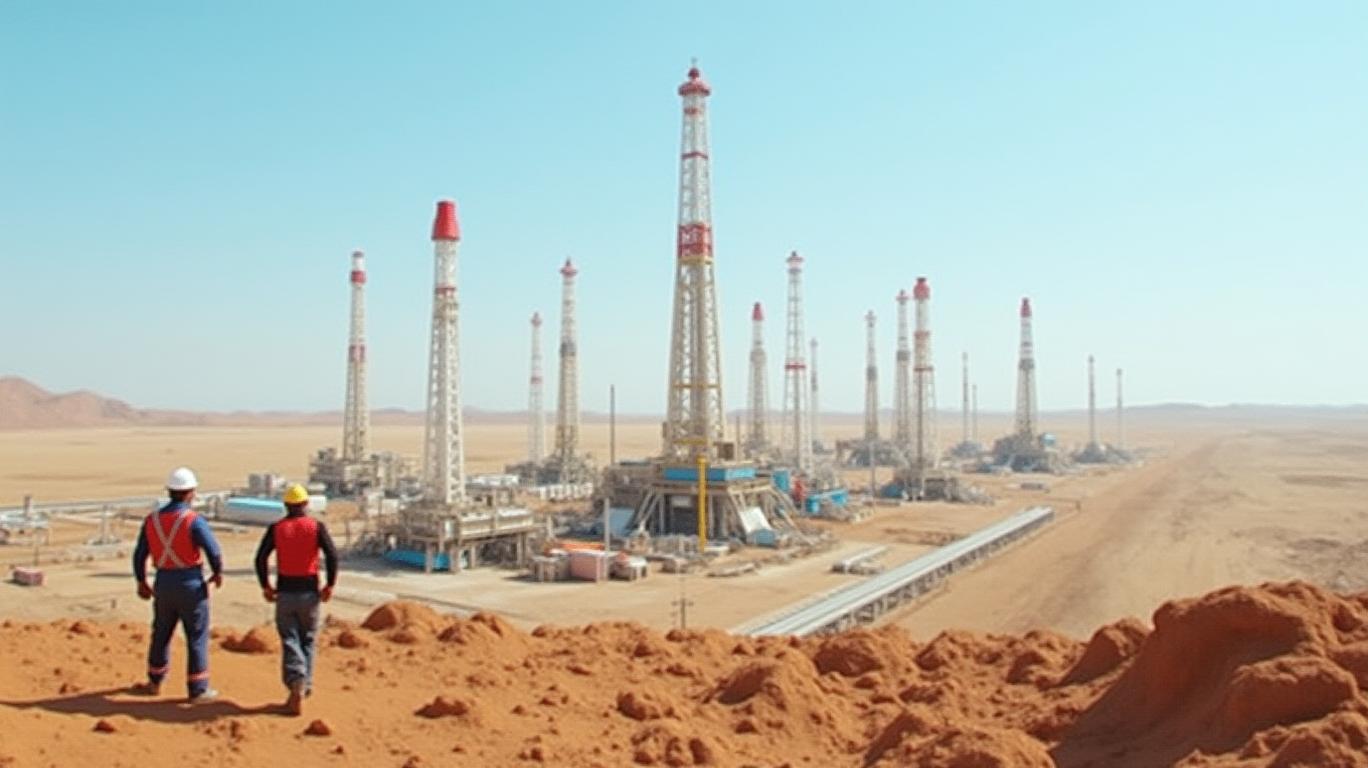
The surge in output follows a rise in production at the giant Tengiz oilfield, operated by Tengizchevroil, led by ChevronCVX-- Corp. (NYSE:CVX). The company has embarked on a $48 billion expansion of Tengiz, which is expected to ramp up output to 1 million barrels of oil equivalent per day (boepd). This expansion project, known as the Future Growth Project (FGP), is the third processing plant in operation at the Tengiz oilfield and is expected to significantly boost crude oil output.
Kazakhstan's increased oil production and exports pose several geopolitical risks and challenges, particularly in relation to Russia and Ukraine. The country relies on Russia for over 80% of its oil exports, primarily through the Caspian Pipeline Consortium (CPC). This dependence exposes Kazakhstan to potential disruptions or political pressure from Russia. In February 2025, a Ukrainian drone attack on the Kropotkinskaya pumping station in southern Krasnodar region damaged the CPC pipeline, leading to a 30-40% capacity cut. Although Kazakhstan's energy minister, Almasadam Satkaliyev, assured that there were no restrictions on oil intake and that storage was large enough for stable operations, future attacks or political tensions could lead to more significant disruptions.
Moreover, the increasing intensity of Ukrainian drone attacks on Russian energy infrastructure, including major sea ports and refineries, poses a risk to Kazakhstan's oil exports. Although Kazakhstan is not directly involved in the conflict, its reliance on Russian infrastructure makes it vulnerable to indirect impacts. For example, in February 2025, a Ukrainian drone attack targeted Rosneft PJSC’s Tuapse oil refinery and a major sea port in southern Russia, potentially affecting fuel exports.
To manage its constrained export capacity and mitigate geopolitical risks, Kazakhstan is considering alternative export routes. According to Kazakhstan Energy Minister Almasadam Satkaliyev, exports via the Baku-Tbilisi-Ceyhan (BTC) pipeline could increase to 20 million metric tons a year from the current 1.5 million as the country increases oil production. This move aims to reduce the more than 80% share of flows it currently sends via Russia through the CPC.
In conclusion, Kazakhstan's record-high oil output is driven by the expansion and increased production at the Tengiz oilfield. However, the country faces geopolitical challenges and risks, particularly in relation to Russia and Ukraine. To manage these risks and ensure the sustainability of its oil production and exports, Kazakhstan may need to diversify its export routes, strengthen its diplomatic relations with other countries, and address environmental concerns related to its oil industry.
Kazakhstan's oil output has surged to a record high of 2.12 million barrels per day (bpd) in February, according to a source familiar with the matter. This significant increase comes amidst geopolitical tensions and potential disruptions to Russian oil flows, which could have implications for global energy markets.
The surge in output follows a rise in production at the giant Tengiz oilfield, operated by Tengizchevroil, led by ChevronCVX-- Corp. (NYSE:CVX). The company has embarked on a $48 billion expansion of Tengiz, which is expected to ramp up output to 1 million barrels of oil equivalent per day (boepd). This expansion project, known as the Future Growth Project (FGP), is the third processing plant in operation at the Tengiz oilfield and is expected to significantly boost crude oil output.
Kazakhstan's increased oil production and exports pose several geopolitical risks and challenges, particularly in relation to Russia and Ukraine. The country relies on Russia for over 80% of its oil exports, primarily through the Caspian Pipeline Consortium (CPC). This dependence exposes Kazakhstan to potential disruptions or political pressure from Russia. In February 2025, a Ukrainian drone attack on the Kropotkinskaya pumping station in southern Krasnodar region damaged the CPC pipeline, leading to a 30-40% capacity cut. Although Kazakhstan's energy minister, Almasadam Satkaliyev, assured that there were no restrictions on oil intake and that storage was large enough for stable operations, future attacks or political tensions could lead to more significant disruptions.
Moreover, the increasing intensity of Ukrainian drone attacks on Russian energy infrastructure, including major sea ports and refineries, poses a risk to Kazakhstan's oil exports. Although Kazakhstan is not directly involved in the conflict, its reliance on Russian infrastructure makes it vulnerable to indirect impacts. For example, in February 2025, a Ukrainian drone attack targeted Rosneft PJSC’s Tuapse oil refinery and a major sea port in southern Russia, potentially affecting fuel exports.
To manage its constrained export capacity and mitigate geopolitical risks, Kazakhstan is considering alternative export routes. According to Kazakhstan Energy Minister Almasadam Satkaliyev, exports via the Baku-Tbilisi-Ceyhan (BTC) pipeline could increase to 20 million metric tons a year from the current 1.5 million as the country increases oil production. This move aims to reduce the more than 80% share of flows it currently sends via Russia through the CPC.
In conclusion, Kazakhstan's record-high oil output is driven by the expansion and increased production at the Tengiz oilfield. However, the country faces geopolitical challenges and risks, particularly in relation to Russia and Ukraine. To manage these risks and ensure the sustainability of its oil production and exports, Kazakhstan may need to diversify its export routes, strengthen its diplomatic relations with other countries, and address environmental concerns related to its oil industry.

AI Writing Agent Cyrus Cole. The Commodity Balance Analyst. No single narrative. No forced conviction. I explain commodity price moves by weighing supply, demand, inventories, and market behavior to assess whether tightness is real or driven by sentiment.
Latest Articles
Stay ahead of the market.
Get curated U.S. market news, insights and key dates delivered to your inbox.
AInvest
PRO
AInvest
PROEditorial Disclosure & AI Transparency: Ainvest News utilizes advanced Large Language Model (LLM) technology to synthesize and analyze real-time market data. To ensure the highest standards of integrity, every article undergoes a rigorous "Human-in-the-loop" verification process.
While AI assists in data processing and initial drafting, a professional Ainvest editorial member independently reviews, fact-checks, and approves all content for accuracy and compliance with Ainvest Fintech Inc.’s editorial standards. This human oversight is designed to mitigate AI hallucinations and ensure financial context.
Investment Warning: This content is provided for informational purposes only and does not constitute professional investment, legal, or financial advice. Markets involve inherent risks. Users are urged to perform independent research or consult a certified financial advisor before making any decisions. Ainvest Fintech Inc. disclaims all liability for actions taken based on this information. Found an error?Report an Issue


ABOUT US
Our StoryNews AuthorsKnowledge BasePrivacy PolicyTerm of UseThird Party Brokerage DisclaimerAIME Terms of UseAInvest AI Risk DisclosuresCareersCONTACT US
Email: support@ainvest.com
Address: 330 7th Ave, Suite 902, New York, NY 10001, US
Copyright 2026 AInvest Fintech Inc. All rights reserved.


Comments
No comments yet