
Kazakhstan's FDI Surge Amid Global Slowdown: A Strategic Gateway to Central Asia
 Aime Summary
In an era of global economic uncertainty, Kazakhstan has emerged as an unexpected bright spot in the foreign direct investment (FDI) landscape. The first quarter of 2025 saw gross FDI inflows reach $6.6 billion, a 6.2% increase compared to the same period in 2024, despite a broader global decline in cross-border investment. This surge is not merely a statistical anomaly but a reflection of deliberate policy reforms, strategic geographic positioning, and a recalibration of economic priorities. For investors seeking resilience amid volatility, Kazakhstan's transformation offers a compelling case study.
A Shift in Investment Priorities
The composition of FDI into Kazakhstan has undergone a striking metamorphosis. While traditional sectors like mining and construction—long pillars of the Kazakh economy—have seen sharp declines (44.1% and 76.5%, respectively), high-growth industries are attracting unprecedented attention. The information and communication sector, for instance, witnessed a 9.5-fold increase in investment, while financial and insurance activities grew by 2.5 times. Manufacturing expanded by 27.6%, and services such as real estate and hospitality also recorded robust gains.
This shift underscores a broader trend: investors are pivoting toward sectors with long-term scalability and resilience. The decline in traditional industries is not a sign of economic weakness but rather a recalibration toward a diversified, innovation-driven model. For instance, the $1.1 billion surge in Qatari investments and the UAE's $737.4 million inflow reflect confidence in Kazakhstan's ability to adapt to global economic currents.
Regulatory Reforms: A New Legal Framework for Growth
Kazakhstan's attractiveness as an FDI destination is underpinned by a series of regulatory reforms aimed at enhancing transparency and reducing barriers to entry. The 2025 tax code overhaul, for example, seeks to simplify compliance, decriminalize minor tax errors, and reduce monopolistic practices. These changes are part of a broader demonopolization agenda, including the establishment of an Asset Recovery Committee to address historical inequities in privatization.
The Astana International Financial Center (AIFC), launched in 2018, has further cemented Kazakhstan's reputation as a legal and financial hub. By adopting a Common Law-based system and offering tax holidays, the AIFC provides foreign investors with a familiar, dispute-resolution-friendly environment. This is critical in a region where regulatory uncertainty has historically deterred capital.
Economic Stability: A Resilient Foundation
Kazakhstan's economic stability is another cornerstone of its FDI appeal. Despite the war in Ukraine and its ripple effects on global supply chains, the country's economy has remained resilient. Favorable commodity prices and the diversification of trade routes—such as the trans-Caspian Middle Corridor—have insulated it from some of the shocks affecting its neighbors. As of October 2023, the stock of FDI in Kazakhstan totaled $173.4 billion, with the United States contributing $44.8 billion.
The government's commitment to sustainable practices also adds to its allure. Kazakhstan's implementation of a national emissions trading system (ETS) and its digital licensing platforms for businesses signal a forward-looking approach. These initiatives align with global ESG (Environmental, Social, Governance) trends, making the country a more attractive destination for ethically minded investors.
Strategic Location: The Central Asian Gateway
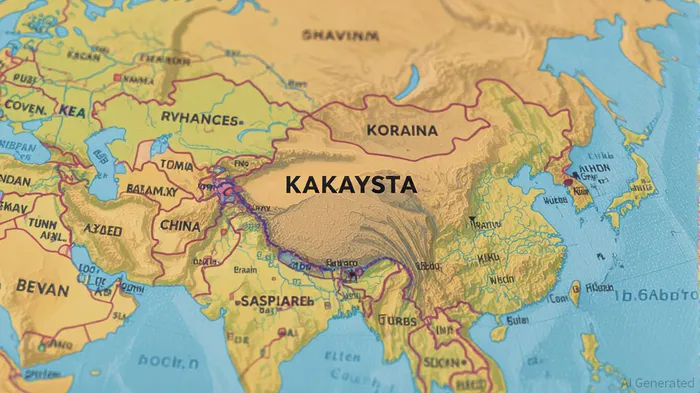
Kazakhstan's geographic position is a strategic asset. As the largest country in Central Asia, it serves as a logistical and economic bridge between Europe, China, and the Middle East. The expansion of the Middle Corridor—a trade route that bypasses Russia via the Caspian Sea—has further enhanced its connectivity. For multinational corporations seeking to diversify supply chains, Kazakhstan offers access to a region with untapped markets and a growing middle class.
Challenges and Opportunities
Despite these positives, challenges persist. Corruption and bureaucratic hurdles remain hurdles, as evidenced by Kazakhstan's 93rd rank in the 2023 Corruption Perceptions Index. Additionally, the decline in FDI from Russia (-47.4%) and the United States (-$1.0875 billion) highlights the need for sustained policy consistency.
For investors, the key lies in balancing these risks with the opportunities. The government's ongoing reforms—such as the digitalization of business registration and the introduction of fast-track procedures for priority projects—suggest a commitment to addressing these issues. The sovereign wealth fund Samruk-Kazyna's role in executing large-scale greenfield projects, including a $5.5 billion natural gas facility and a $1.8 billion steel plant, further underscores the country's potential.
A Call for Strategic Engagement
Kazakhstan's FDI surge is not a flash in the pan but a calculated response to global economic shifts. For investors, the country represents a unique intersection of regulatory innovation, geographic advantage, and sectoral diversification. However, success here requires a nuanced understanding of local dynamics and a long-term perspective.
Those who act now may find themselves positioned to benefit from a market that is not only weathering the storm but actively shaping the future of Central Asia's economic landscape. As the world grapples with fragmentation and uncertainty, Kazakhstan's strategic gateway offers a path forward—one that is as much about resilience as it is about opportunity.

Delivering real-time insights and analysis on emerging financial trends and market movements.
Latest Articles
Stay ahead of the market.
Get curated U.S. market news, insights and key dates delivered to your inbox.


AInvest
PRO
AInvest
PRO



Comments
No comments yet