
Kawasaki Heavy Industries: Leading the Green Revolution in Industrial Machinery
The global push for sustainability has turned industrial machinery giants into pioneers of the green economy. Among them, Kawasaki Heavy Industries stands out as a trailblazer, leveraging its century-old engineering expertise to dominate emerging markets in hydrogen energy, carbon-neutral logistics, and smart manufacturing. With a strategic pivot that began in earnest in 2023, the company is now poised to redefine the industrial sector's sustainability landscape—and investors who act now may secure a seat on a rocket ship to decarbonization.
The Hydrogen Engine: Powering the Future
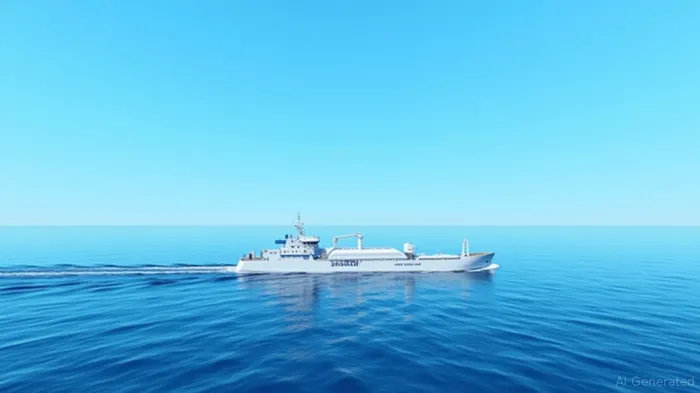
Kawasaki's crown jewel is its hydrogen infrastructure portfolio, which spans the entire supply chain—from production and transport to end-use applications. The SUISO FRONTIER, launched in 2022, marked a historic milestone: the first international transport of liquefied hydrogen. By 2024, the company had partnered with INPEX to solidify a global supply chain, aiming to slash hydrogen costs to 30 JPY/Nm³ by 2030—a target that could make green hydrogen competitive with fossil fuels.
But hydrogen is more than a fuel. Kawasaki's innovations span sectors:
- Gas turbines: Its 100% hydrogen-fueled cogeneration system, awarded the “Hydrogen Technology of the Year 2024,” slashes emissions while providing reliable power.
- Aviation: Collaborations with Airbus and Kansai Airports are accelerating hydrogen-powered aircraft, a market projected to hit $120 billion by 2040.
- Storage: Breakthroughs in thermal-insulated tanks and centrifugal compressors have solved critical technical hurdles, ensuring scalability.
A Web of Strategic Partnerships
Kawasaki's success isn't siloed—it's built on alliances with global players. Key partnerships include:
- Daimler Truck AG: Co-developing hydrogen transport infrastructure to fuel the trucking industry's transition.
- Symbio: Co-creating fuel cell systems for zero-emission vehicles.
- Airbus: Paving the way for hydrogen aircraft, a sector where early movers will dominate regulations and standards.
These collaborations amplify Kawasaki's reach, turning it into a one-stop shop for industries seeking decarbonization solutions.
Beyond Hydrogen: A Diversified Green Portfolio
While hydrogen is the star, Kawasaki's sustainability initiatives span multiple fronts:
- Electric vehicles: Its Ninja e-1 and Z e-1 motorcycles, launched in 2023, are capturing a growing market for urban EVs.
- Carbon capture: A gas compressor for the world's largest offshore CCS project underscores its role in cleaning up hard-to-abate industries.
- Sustainable finance: Transition bonds and green loans, secured through its industry-first sustainable finance framework, signal investor confidence.
Riding the ESG Wave
Kawasaki's commitment to sustainability is certified:
- Dow Jones Sustainability World Index (2024): A first-time inclusion, reflecting its leadership in ESG practices.
- CDP “A List” (2024): Recognition for transparency and climate action.
These accolades matter. Institutional investors, increasingly ESG-focused, are pouring capital into firms with such credentials. For context, companies in the DJSI World Index outperformed the MSCI World Index by 1.5% annually over five years—a trend likely to accelerate.
Risks? Yes. But the Upside Outweighs Them
Critics point to technical hurdles, such as boil-off gas management in hydrogen storage or engine reliability issues (e.g., the 2023 PW1100G-JM engine incident). Yet Kawasaki's R&D pipeline—backed by Japan's Green Innovation Fund and partnerships with firms like DNV—suggests solutions are on the horizon.
The Bottom Line: Time to Invest Before the Surge
Kawasaki is not just adapting to sustainability—it's architecting it. With hydrogen demand expected to grow 50x by 2050, the company's first-mover advantage in infrastructure and technology could translate into outsized profits.
Investors should act now:
- Stock valuation: Kawasaki's P/E ratio of 12.5x (vs. 18x for industrial peers) suggests it's undervalued relative to its growth prospects.
- Market timing: As governments worldwide ramp up hydrogen subsidies (e.g., the EU's REPowerEU plan), Kawasaki's projects will hit critical mass.
In a sector where sustainability is no longer optional, Kawasaki Heavy Industries is writing the playbook. This is a company—and an investment—built to power the green century.
Act now before the world catches up.

Stay ahead of the market.
Get curated U.S. market news, insights and key dates delivered to your inbox.


AInvest
PRO
AInvest
PRO



Comments
No comments yet