
KASPA PUSHES BLOCKCHAIN SPEED LIMITS WITH GHOSTDAG, INTRODUCES SILVERSCRIPT AND COVENANTS FOR SCALABILITY
 Aime Summary
- Kaspa (KAS) is leveraging the GHOSTDAG protocol to enable parallel block processing and aims for 100 blocks per second without compromising decentralization according to MEXC.
- The May 2026 hardfork is set to introduce native assets, KRC20 token support, and zero-knowledge verification, expanding programmability while maintaining decentralization as reported by AInvest.
- Silverscript, a high-level smart contract language, allows contracts to execute on Layer 1 and supports DeFi, vaults, and asset management as detailed by KasMedia.
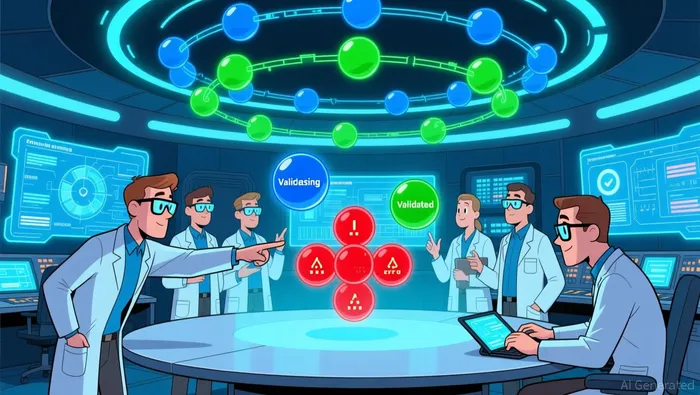
Kaspa's GHOSTDAG protocol is redefining the performance expectations for Proof-of-Work blockchains. By enabling parallel block processing, the network is achieving throughput levels not seen in traditional single-chain architectures according to AInvest. This technical innovation is being framed as a significant step toward real-time transaction settlement, positioning Kaspa as a potential solution for applications requiring high speed and decentralization as MEXC reports.
The May 2026 hardfork represents a key milestone in Kaspa's roadmap. It introduces features like native assets and KRC20 token support, which are designed to increase the network's utility in tokenization and privacy-focused applications as AInvest notes. These upgrades are intended to enhance the programmability of the base layer without requiring a new virtual machine according to KasMedia.
Silverscript's introduction marks a shift in how smart contracts are deployed on Kaspa. Unlike traditional virtual machines, this language compiles directly to native script, making execution more efficient as KasMedia explains. This development is seen as a step toward a more flexible and robust financial infrastructure on Kaspa's UTXO-based model.
What Is the Impact of Kaspa's High Throughput on Blockchain Design?
Traditional blockchain designs have long been constrained by the trade-off between speed and decentralization. Kaspa's GHOSTDAG protocol challenges this assumption by enabling high throughput without sacrificing network stability according to AInvest. By processing blocks in parallel, Kaspa avoids the bottlenecks that hinder single-chain architectures, allowing for faster transaction settlement and scalability as MEXC reports.
This approach has broader implications for blockchain design, especially for projects seeking to balance speed with decentralization. While many networks rely on consensus mechanisms that prioritize speed at the expense of decentralization, Kaspa's model demonstrates that these goals can be reconciled according to AInvest.
How Does Silverscript Enhance Programmability on Kaspa?
Silverscript is a strategic addition to Kaspa's smart contract ecosystem. Designed for DeFi, vaults, and asset management, it allows developers to build complex financial applications directly on the base layer as KasMedia reports. The language enhances the expressiveness of Kaspa's UTXO model by introducing features like loops, arrays, and function calls according to KasMedia.
Unlike traditional smart contract platforms that rely on virtual machines, Silverscript compiles directly to Kaspa Script, eliminating the need for a separate execution environment as KasMedia explains. This design choice reduces overhead and simplifies development, making it easier for projects to deploy on Kaspa according to KasMedia.
The language is currently in an experimental phase on Testnet-12, with future plans to expand its capabilities to WASM according to KasMedia. This iterative development approach allows the community to shape the language's evolution and ensures it remains aligned with the project's goals.
What Risks Are Associated With Kaspa's Rapid Innovation?
While Kaspa's rapid development is a strength, it also presents challenges. The project's early growth was driven by CPU miners, leading to an organic but unpredictable expansion according to AInvest. This has created a tension between decentralization and the need for sustainable funding in development as MEXC notes.
Additionally, Kaspa's fair launch model, while authentic, lacks the structured governance of projects with deep backing as MEXC reports. This can lead to uncertainty in long-term viability and make it harder to attract institutional adoption through custody solutions and ETF partnerships according to AInvest.
The broader altcoin market is also facing challenges in maintaining relevance. Many projects are experiencing a 'slow rug' cycle, where they lose liquidity and activity without a dramatic collapse according to AInvest. Kaspa will need to demonstrate sustained value and adoption to avoid this fate and maintain its position in the competitive crypto landscape.

Blending traditional trading wisdom with cutting-edge cryptocurrency insights.
Latest Articles
Stay ahead of the market.
Get curated U.S. market news, insights and key dates delivered to your inbox.


AInvest
PRO
AInvest
PRO



Comments
No comments yet