
Kanye West's YZY Crypto Surges 66% Then Crashes 54% in 24 Hours
 Aime Summary
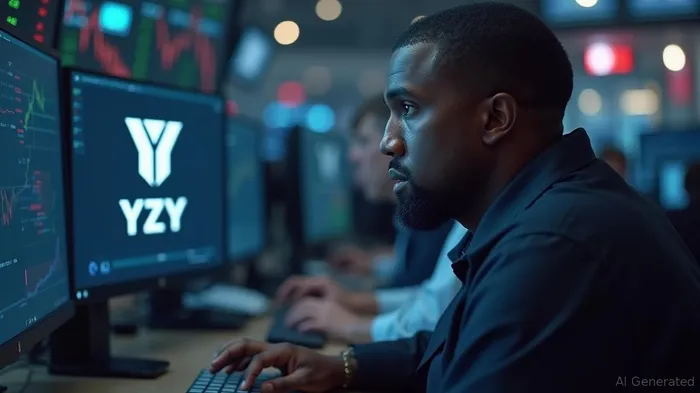
Kanye West, known professionally as Ye, has launched a new Solana-based cryptocurrency called YZY on August 15, 2025. Announced via Xiaohongshu and X, the token is part of a broader initiative titled “YZY Money,” which includes financial tools such as Ye Pay and the YZY Card. The token’s debut was marked by an immediate surge in value, with a peak market capitalization reaching $3 billion within hours. However, the token’s value quickly declined, dropping to around $349 million as of the latest available data [1][3].
YZY’s initial price rose sharply, peaking at $3.16 before retreating to $0.91 within hours, representing a 66% drop. Over the subsequent 24 hours, the token continued to decline by more than 54%, with hourly price swings reaching as high as 31%. The token’s extreme volatility has led to mixed reactions from traders and investors, with some profiting significantly while others faced heavy losses. A trader on Hyperliquid, for instance, shorted YZY with leverage and earned $202,000 within a short timeframe [3].
The token’s supply is highly concentrated, with 90% reportedly held in just six wallets. This has raised concerns over centralization and potential for market manipulation. One wallet, for example, converted $450,000 in USDCUSDC-- into $3.37 million in YZY within hours of the token’s launch [3]. The distribution of tokens—70% to Yeezy Investments LLC, 20% to public buyers, and 10% to liquidity—has also drawn scrutiny, particularly regarding the lack of transparency in vesting schedules and allocation mechanisms [3].
YZY’s ecosystem includes integration with USDC, which supports the YZY Card, offering users a way to spend tokens in real-world transactions. Despite these features, the project has been criticized for lacking the technical and financial expertise typically associated with successful cryptocurrency ventures. No prior crypto developers or financial experts have been identified in key leadership roles, raising questions about the project’s long-term viability and credibility [3].
The crypto community has responded with both excitement and skepticism. Pseudonymous trader Defi Mochi warned that the token’s valuation offers a “bad risk-reward,” citing the common trend of high-valuation meme coins failing to sustain their initial success. Similarly, CryptoQuant CEO Ki Young Ju compared YZY to the Official TrumpTRUMP-- token, which saw a similar pattern of rapid growth followed by a sharp decline. These comparisons underscore concerns about YZY’s potential to maintain long-term value and avoid the fate of other celebrity-backed tokens [3].
Despite the controversy, YZY was quickly listed on CoinMarketCap and secured exchange listings on platforms such as Bitget. This rapid adoption highlights the token’s appeal and the broader interest in celebrity-driven projects within the crypto space. However, it also underscores the speculative nature of the launch, with many viewing it as a short-term hype cycle rather than a sustainable financial innovation [1][3].
YZY’s launch reflects Kanye West’s ongoing efforts to expand into the digital economy, leveraging his celebrity status to generate interest and drive adoption. While the project has demonstrated strong initial market engagement, it remains to be seen whether YZY can overcome the challenges of centralization, market volatility, and regulatory scrutiny to establish itself as a credible player in the cryptocurrency sector [3].

Stay ahead of the market.
Get curated U.S. market news, insights and key dates delivered to your inbox.


AInvest
PRO
AInvest
PRO



Comments
No comments yet