
Kalshi's Federal Defense Falls as Judge Sides with State Gambling Regulations


 Aime Summary
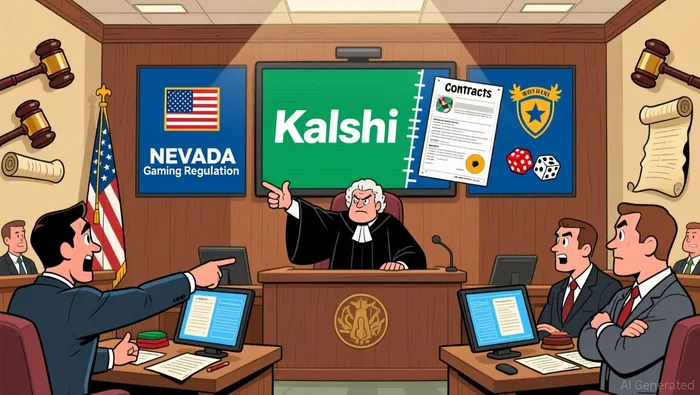
Kalshi Inc. faces a significant legal setback as a federal judge in Nevada ruled that the prediction market platform is subject to state gaming regulation, effectively classifying its sports-event contracts as unlicensed gambling products. U.S. District Judge Andrew Gordon lifted a preliminary injunction that had previously blocked Nevada gaming authorities from enforcing actions against the startup, marking a pivotal moment in the ongoing legal battle between Kalshi and state regulators. The decision undermines Kalshi's core argument that its operations are exclusively governed by federal derivatives law under the Commodity Futures Trading Commission (CFTC), a stance the company has defended in multiple jurisdictions.
The ruling has immediate implications for Kalshi's business model. The company, which markets itself as the first platform offering legal sports betting in all 50 states, has long contended that its event contracts-binary options on outcomes like sports scores or political events-are swaps under the Commodity Exchange Act (CEA), thereby placing them under federal jurisdiction. However, Judge Gordon rejected this interpretation, calling it a "strained reading" of the law that would upend decades of state oversight over gambling. He emphasized that contracts tied to sporting events "are not swaps" and instead fall under state definitions of gambling, a finding that aligns with Nevada's cease-and-desist letter from March 2025, which accused Kalshi of violating state laws and threatened civil and criminal penalties.
The market reaction to the ruling underscored its significance. Shares of established sports-betting firms like DraftKings Inc.DKNG-- and FlutterFLUT-- Entertainment PLC, owner of FanDuel, surged as investors anticipated stricter scrutiny of prediction markets. DraftKingsDKNG-- stock climbed nearly 9.3%, while Flutter rose 3.5%. Kalshi, however, moved swiftly to challenge the decision, filing an emergency motion to stay the injunction while appealing. The company warned of "imminent criminal enforcement" by Nevada authorities and highlighted the potential disruption to its $650 million in outstanding derivatives contracts, which could force violations of CFTC rules.
The case has broader ramifications for the regulatory landscape of prediction markets. Kalshi's interpretation of the CEA has been a cornerstone for its expansion into sports betting, a sector traditionally regulated by states. The judge's rejection of this argument strengthens the position of state regulators seeking to enforce licensing requirements on platforms offering event-based wagers. Legal experts note that the ruling could influence similar cases in states like New Jersey, Illinois, and Ohio, where regulators have also issued cease-and-desist orders.
Kalshi's legal strategy now hinges on appeals, with the company vowing to "continue to argue" that CFTC regulation pre-empts state gambling law. However, the decision highlights the tension between federal and state authorities over the classification of event contracts. While the CFTC approved Kalshi as a designated contract market in 2020, it has remained largely silent on the specific issue of sports-related contracts, leaving a regulatory gray area.
The outcome also raises questions about the future of decentralized prediction markets, particularly those leveraging blockchain technology. Regulators may use Nevada's precedent to argue that such platforms constitute unlicensed gambling wherever users are located, potentially triggering a wave of enforcement actions.
Kalshi's case remains a test of whether prediction markets can coexist with traditional state-licensed gambling frameworks. For now, the ruling in Nevada signals that federal preemption arguments may not hold in all jurisdictions, forcing the company and others in the sector to navigate a fragmented regulatory environment.

Stay ahead of the market.
Get curated U.S. market news, insights and key dates delivered to your inbox.
AInvest
PRO
AInvest
PRO



Comments
No comments yet