
Kadokawa’s Profit Plunge Reveals Anime’s Monetization Trap
 Aime Summary
On August 29, 2026, ANIME declined by 0.42% within a 24-hour period to reach $0.002612. Over the preceding seven days, the asset dropped by 5.87%, while it rose by 7.05% within the last month. In the past year, ANIME experienced a significant contraction of 63.77%.
The broader market dynamics surrounding the anime sector are currently defined by a critical divergence between industry growth and corporate profitability, a phenomenon vividly illustrated by KADOKAWA Corporation’s recent financial reporting and strategic restructuring. While the global anime industry expanded to a record 3.8407 trillion yen in 2024, driven by a 26.0% surge in overseas demand, major industry players face intense pressure to convert creative output into sustainable earnings.
Structural Challenges in Content Monetization
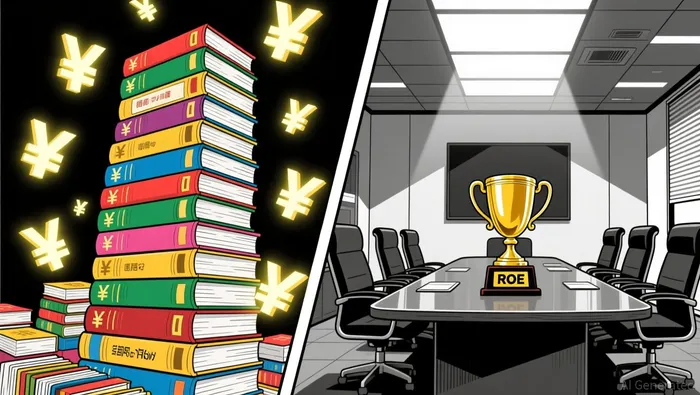
KADOKAWA’s fiscal year ending March 2026 revealed a net profit of 1.2 billion yen, an 83% decrease from the previous year. This marks the fourth consecutive annual decline in profitability, despite sales increasing from the 220 billion yen range to the 280 billion yen range. The disparity highlights a structural inefficiency where increased volume did not translate into proportional profit, causing Return on Equity (ROE) to fall from near 10% to approximately 1%.
Analysts identify the saturation of the "isekai reincarnation" genre as a primary driver of this erosion. The mass production of similar titles diluted market scarcity, thinning reader bases per work and dispersing promotional budgets. Consequently, the industry-wide strategy of replicating successful patterns at high speed led to a decrease in profitability per item. This trend is not unique to KADOKAWA but reflects a broader industry trap where the reproducibility of hits is self-destructive when overutilized.
Strategic Pivot and Reform Initiatives
In response to these challenges, KADOKAWA announced a six-year medium-term management plan in May 2026, targeting the fiscal year ending March 2032. The strategy shifts from pursuing volume to emphasizing profitability per title. Early indicators of this reform include a 2.3% reduction in new titles, a 10.4% increase in production value per item, and a 4-point improvement in return rates. The ratio of top-tier profitable works increased by 7.8 percentage points to 12.5%.
To further accelerate revenue growth, KADOKAWa entered a strategic capital alliance with Sony Group in December 2024. This partnership leverages Sony’s global distribution network, including Crunchyroll, to monetize KADOKAWA’s extensive intellectual property (IP) library. The plan aims to achieve 100 billion yen in overseas sales by 2032, addressing the historically low profitability of the video business, which generated only 400 million yen in EBITDA despite producing approximately 60 anime titles annually.
Valuation and Market Expectations
Financial analysis using the Sum-of-the-Parts (SOTP) method suggests that KADOKAWA’s corporate value exceeds the sum of its individual business segments by more than 200 billion yen. This premium reflects market expectations for IP monetization and the potential of the Sony partnership. The gaming segment, particularly titles from FromSoftware, currently supports the majority of the company's substantive corporate value. However, this segment faces volatility, with profits declining 20.9% in the fiscal year ending March 2026 due to the natural lifecycle of major releases.
Market participants are closely monitoring the execution of structural reforms. The approval rate for the reappointment of President Takeshi Natsuno fell to 59.68% at the June 2026 shareholders' meeting, signaling significant shareholder dissatisfaction with current management performance. Additionally, an early retirement program costing 5.4 billion yen was implemented in August 2026, reducing the net profit forecast for the fiscal year ending March 2027 to 1 billion yen.
Industry Implications for ANIME and Content Assets
The performance of ANIME correlates with these broader sector trends. As the anime industry continues to prioritize overseas expansion and IP diversification, assets linked to content creation and distribution are subject to scrutiny regarding their ability to generate consistent cash flows. The current market environment rewards companies that can successfully balance creative output with efficient monetization strategies.
Disney+ recently announced a deal to stream new Pokémon content, including Pokémon Tales: The Misadventures of Sirfetch’d & Pichu, highlighting the ongoing competition for premium anime and animation IP. Such developments reinforce the importance of distribution networks in maximizing the value of creative assets. For investors and stakeholders in the anime sector, the focus remains on identifying entities that can bridge the gap between asset volume and actual earnings, ensuring long-term sustainability in a rapidly evolving global market.

Delivering real-time analysis and insights on unexpected cryptocurrency price movements to keep traders ahead of the curve.
Latest Articles
Stay ahead of the market.
Get curated U.S. market news, insights and key dates delivered to your inbox.


AInvest
PRO
AInvest
PRO




Comments
No comments yet