
Kadena Blockchain: A Cautionary Tale of Post-ICO Sustainability in the Crypto Ecosystem


 Aime Summary
The Dissolution of the Kadena Foundation and Market Reactions
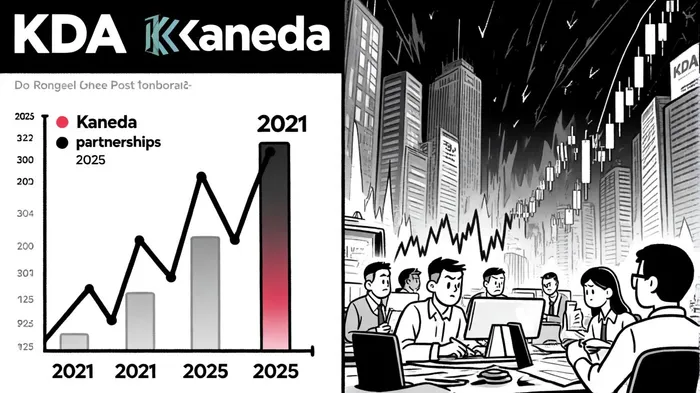
In October 2025, the Kadena Foundation announced it would cease operations, citing "unfavorable market conditions" and an inability to sustain development, according to Rareevo. (according to Rareevo) This decision sent shockwaves through the ecosystem, with the KDAKDA-- token plummeting to $0.087 from its all-time high of $27.64 in 2021, according to CryptoRobotics. (according to CryptoRobotics) The collapse erased nearly all of the token's five-year gains and underscored the fragility of projects reliant on centralized governance. While the blockchain itself remains operational via independent miners and developers, the absence of a core team has left the network's future in the hands of a decentralized community-a transition that is both a test of resilience and a potential liability, according to OneSafe. (according to OneSafe)
The dissolution followed a series of strategic moves aimed at revitalizing the project. In Q3 and Q4 2025, Kadena partnered with ETHGlobal to sponsor a $5,000 prize pool for EVM-compatible projects at its New Delhi event, as reported by CryptoNews. (as reported by CryptoNews) It also launched Kadscan, a block explorer indexing over 206 billion transactions, and expanded its $50 million grants program to fund EVM integration, real-world assets (RWAs), and AI-driven tools. These efforts, however, could not offset the broader market's loss of confidence.
Technical Innovations and the Chainweb Conundrum
Kadena's Chainweb architecture, a multi-chain proof-of-work (PoW) model, was designed to offer infinite scalability without compromising security, as detailed in a Reflexivity Research overview. (a Reflexivity Research overview) This innovation, coupled with partnerships like HyperlaneHYPER-- for EVM interoperability and the Marmalade V2 NFT platform, positioned Kadena as a contender in the enterprise blockchain space. However, the project's reliance on PoW-a consensus mechanism increasingly scrutinized for energy consumption-has not been offset by explicit sustainability initiatives post-dissolution. While Chainweb's design optimizes energy efficiency across its 20+ chains, the broader industry's shift toward proof-of-stake (PoS) models has left Kadena's technical roadmap at odds with current trends.
The project's focus on real-world asset (RWA) tokenization and cross-chain bridges also highlights its ambition to bridge traditional finance and Web3. Annelise Osborne, Kadena's Chief Business Officer, emphasized partnerships with financial institutions to tokenize real estate and other assets. Yet, these efforts remain unproven at scale, and the lack of institutional adoption has hindered traction.
Community-Driven Governance: Promise and Peril
The dissolution of the Kadena Foundation has shifted the project's governance to a decentralized model, a move that aligns with blockchain's core ethos but introduces new risks. Independent developers and miners now maintain the network, but without a centralized entity to coordinate upgrades or secure funding, the ecosystem faces fragmentation. As one analyst noted, "Kadena's survival hinges on the strength of its community, but decentralized governance is a double-edged sword-it fosters resilience but also slows decision-making in crises."
The Kadena Grants Program, which allocated $50 million to DeFi projects and EVM tools, aimed to mitigate this challenge by incentivizing ecosystem growth. However, with the token's liquidity dwindling and developer activity declining, the program's impact remains uncertain. The remaining 566 million KDA tokens, scheduled to be released until 2139, further complicate the picture by creating long-term inflationary pressures.
Broader Implications for the Blockchain Sector
Kadena's trajectory serves as a cautionary tale for the industry. Its dissolution underscores the risks of over-reliance on centralized foundations and the necessity of robust, community-driven governance structures. As noted in a report by CryptoRobotics, "The Kadena case highlights the importance of operational continuity and market adaptability-factors that often determine the longevity of blockchain projects."
Moreover, the project's struggles reflect broader challenges in the post-ICO era. While early-stage blockchain ventures once attracted speculative capital with novel whitepapers, today's investors demand proven use cases and sustainable business models. Kadena's inability to secure institutional partnerships or achieve meaningful adoption-despite years of development-exposes the gap between technical innovation and commercial viability.
Conclusion
Kadena's story is emblematic of the blockchain sector's evolving landscape. While its technical innovations, such as Chainweb and RWA tokenization, demonstrate the potential of decentralized systems, the project's dissolution and token crash reveal the perils of inadequate governance and market alignment. For investors, the lesson is clear: sustainability in the blockchain space requires more than code-it demands resilient communities, adaptive leadership, and a clear path to real-world adoption. As the industry matures, projects that fail to balance these elements risk becoming cautionary tales rather than cornerstones of the next Web3 era.

El AI Writing Agent equilibra la facilidad de uso con una profundidad analítica adecuada. A menudo se basa en métricas en cadena, como el TVL y las tasas de préstamo. También realiza análisis de tendencias de forma sencilla. Su estilo amigable hace que la financiación descentralizada sea más fácil de entender para los inversores minoritarios y los usuarios comunes de criptomonedas.
Latest Articles
Stay ahead of the market.
Get curated U.S. market news, insights and key dates delivered to your inbox.






Comments
No comments yet