
Jury Condemns Tornado Cash Co-Founder for Unlicensed Money Transmission in Landmark Crypto Case
 Aime Summary
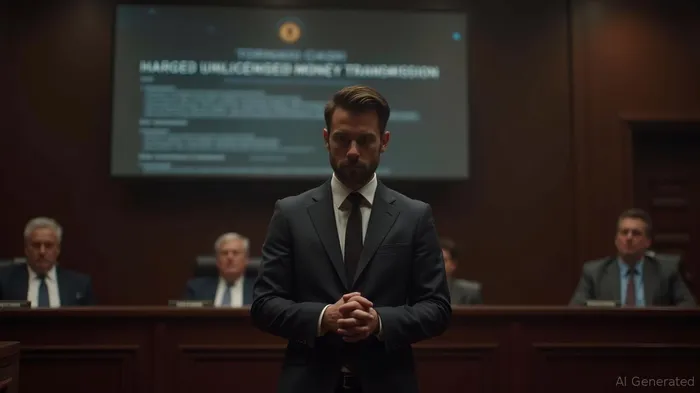
A Manhattan federal jury has reached a partial verdict in the case against Roman Storm, co-founder of the cryptocurrency mixing service Tornado Cash. The jury found Storm guilty of one of three charges: conspiracy to operate an unlicensed money transmitting business. However, the panel deadlocked on the two remaining counts, which included conspiracy to launder funds and conspiracy to violate U.S. sanctions against North Korea [1][3][7]. After four days of deliberations, the judge issued instructions for the jury to continue discussions in an attempt to reach a unanimous decision [3].
Storm was indicted in August 2023 on three charges: conspiracy to operate an unlicensed money transmitter, conspiracy to launder money, and conspiracy to violate U.S. sanctions. Throughout the trial, prosecutors argued that Tornado Cash had been used to launder over $1 billion in illicit funds, including proceeds from cyberattacks linked to North Korean hackers. They also emphasized that Storm had the technical ability to modify the platform's code to prevent such misuse but chose not to [1][4]. Storm and his defense team maintained that he was not involved in or aware of criminal activity and that the platform was designed to protect user privacy in a transparent financial system [5].
The conviction on the unlicensed money transmission charge could carry a sentence of up to five years in prison [1]. Storm, who pleaded not guilty and has remained free on bail since his arraignment, has yet to receive a sentencing date. His legal team has received over $3 million in donations, including significant contributions from Ethereum co-founder Vitalik Buterin and Paradigm founder Matt Huang [1].
The case raises important questions about the legal status of decentralized finance (DeFi) tools and the extent to which developers can be held responsible for how their platforms are used. While the court found Storm accountable for failing to comply with federal money transmission laws, the jury’s inability to reach a unanimous verdict on the more serious charges reflects the difficulty of applying traditional legal frameworks to decentralized technology [3][6]. Legal experts suggest the outcome could influence future cases, particularly those involving unlicensed financial services that enable criminal activity. However, the deadlock also highlights the ongoing debate over liability in a decentralized ecosystem where individual control is limited [7].
Storm’s trial is one of several high-profile cases involving cryptocurrency figures in the Southern District of New York, including former FTX CEO Sam Bankman-Fried and OneCoin co-founder Karl Greenwood, both of whom received prison sentences [1]. The judge overseeing Storm’s case has stressed the importance of reaching a final verdict, indicating that a mistrial is unlikely unless the jury continues to be deadlocked [8]. The outcome of this case is expected to remain a key discussion point in the evolving landscape of cryptocurrency regulation and enforcement.

Stay ahead of the market.
Get curated U.S. market news, insights and key dates delivered to your inbox.


AInvest
PRO
AInvest
PRO



Comments
No comments yet