
Jupiter's Mineral Wealth: The Catalyst for Renewable Energy Dominance
The global energy transition is no longer a distant ideal—it's a roaring revolution demanding critical minerals like lithium and rare earth elements (REEs) to fuel electric vehicles, batteries, and renewable infrastructure. Among the emerging players, Jupiter—spanning projects in Nigeria and Western Australia—stands at the intersection of untapped mineral wealth and cutting-edge partnerships, poised to redefine the renewable energy landscape. Here's why investors must act now.
The Strategic Goldmine: Jupiter's Mineral Reserves
Jupiter's projects encompass two game-changers:
- Nigeria's Tier 1 Lithium Deposit:
The Jupiter Critical Minerals Project in Kaduna State, Nigeria, spans 442 km² and holds a Tier 1 lithium deposit, with reserves capable of producing 55,000 tons of spodumene concentrate annually, scaling to 167,000 tons within two years. This output positions Nigeria to rival top lithium producers like Australia and Chile.
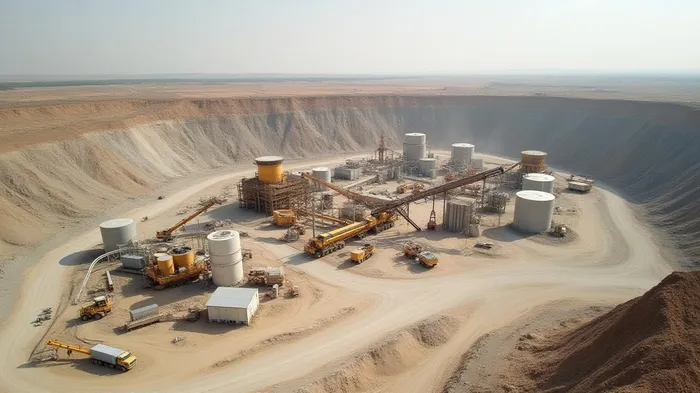
Beyond lithium, Nigeria's geology hints at broader rare earth potential. The project area is part of a Precambrian complex hosting REE-bearing pegmatites, with tantalum, cesium, and tantalum deposits already identified. Nigeria's total critical mineral reserves, including REEs, are valued at $700 billion, per the Nigerian government's 2023 assessment.
- Australia's Brothers Project:
In Western Australia, the Brothers Project—led by Critica Ltd (ASX:CRI)—holds a 1.8 billion-tonne rare earth resource grading 1,700 ppm TREO, with a high-grade subset of 500 million tonnes at 2,200 ppm TREO. This scale rivals top-tier global deposits, offering a grade upgrade of 830% through beneficiation. The shallow, clay-hosted mineralization reduces extraction costs and environmental risks, making it a low-cost, high-potential play.
Strategic Partnerships: Technology Meets Sustainability
Jupiter's value isn't just in its reserves—it's in its partnerships with ReElement Technologies Corporation, a subsidiary of American Resources Corporation (NASDAQ: AREC). ReElement's patented chromatographic separation technology enables the refining of lithium carbonate and REEs with 95% purity, while slashing water and energy use compared to traditional methods.
- Nigeria's Lithium Refinery: ReElement is constructing a facility to process Nigeria's spodumene into high-purity lithium carbonate, supported by an exclusive offtake agreement. This technology also extracts rare earth oxides (Nd, Dy, Tb) from coal tailings, turning waste into profit.
- U.S. Synergies: ReElement's Kentucky and Indiana plants—already producing REEs from coal waste—are expanding, with a $150 million funding boost. Their multi-feedstock model integrates Nigerian lithium and Australian REEs into a global supply chain, reducing reliance on Chinese dominance.
Market Demand: A Tsunami of Growth
The math is undeniable:
- Lithium Demand: Surged 30% in 2023, with the market projected to grow from $22.19B to $134B by 2032 (CAGR: 22.1%). Nigeria's low-cost lithium could capture a 10%+ market share by 2027.
- Rare Earths: The global REE market will double to $8.23B by 2032, driven by EV magnet demand. Jupiter's Brothers Project alone holds 10% of global light REE reserves, with scalability to meet this surge.
Why Invest Now?
- First-Mover Advantage: Nigeria's lithium and Australia's REEs are underdeveloped, with minimal competition. Early investors gain stakes in projects that could become continental supply hubs.
- Policy Tailwinds: Nigeria's government backs economic diversification, offering tax incentives and infrastructure support. Australia's Brothers Project benefits from Western Australia's mining-friendly policies and proximity to global markets.
- Technological Edge: ReElement's chromatographic tech ensures lower costs and higher purity than rivals, making Jupiter's minerals more attractive to EV manufacturers like Tesla and BYD.
The Risks—and Why They're Manageable
- Infrastructure Gaps: Nigeria's mining sector faces outdated policies and insecurity. However, Jupiter's phased development and Community Development Agreements (CDAs) ensure local buy-in and job creation, reducing risks.
- Geopolitical Tensions: U.S.-China trade wars favor partnerships like Jupiter-ReElement, which align with Western decarbonization goals.
Conclusion: The Energy Transition's Next Bull Run Starts Here
Jupiter's mineral reserves, paired with ReElement's technology, form a strategic trifecta: abundant resources, low-cost processing, and insatiable demand. With lithium prices rebounding and REE scarcity worsening, this is a once-in-a-decade opportunity to invest in the backbone of the renewable economy.
Act now—before the bulls do.

Stay ahead of the market.
Get curated U.S. market news, insights and key dates delivered to your inbox.






Comments
No comments yet