
Jupiter Foundation Considers Halting JUP Buyback as Community Proposes Incentives for Long-Term Holders
 Aime Summary
Jupiter Exchange is rethinking its JUP token buyback program after investing over $70 million last year with minimal effect on the token's price. Co-founder Siong Ong proposed using the funds to incentivize user growth instead of further buybacks. The token price remains down 89% from its all-time high, despite the exchange's continued growth according to reports.
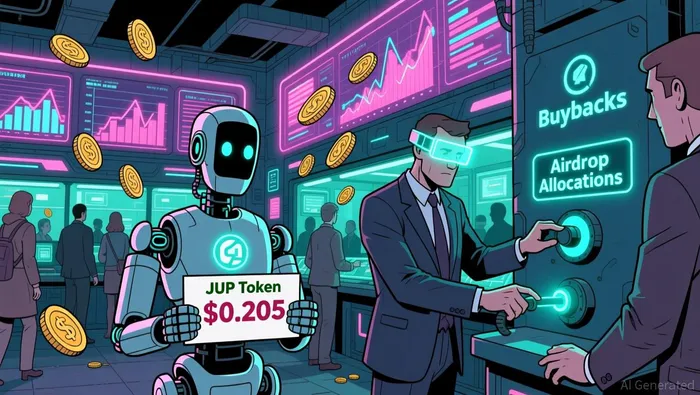
The team's strategy has included using 50% of protocol fees for buybacks and locking tokens for three years. However, the token price has remained near $0.205, raising questions about the buyback's effectiveness. Ong also suggested redirecting capital to user rewards and platform incentives might better support Jupiter's long-term growth.
Jupiter has reduced its JUPJUP-- airdrop from 700 million to 200 million tokens. The move aims to limit selling pressure after distribution. Of the 200 million, 175 million will go to active community members, and 25 million will be reserved for stakers according to the exchange's announcement.
Why Did This Happen?
The decision to reassess the buyback strategy follows a broader trend in the crypto market, where token buybacks are becoming less effective. Siong Ong cited Helium CEO Amir Haleem's move to stop HNT buybacks as an example, noting that markets are not responding to such initiatives.
Helium and its mobile network generated $3.4 million in revenue in October 2025 and shifted those funds toward user growth and network expansion. Ong praised this approach, suggesting JupiterJUP-- could adopt a similar model.
How Did Markets React?
The Jupiter token (JUP) briefly increased by 1.42% in the 24 hours following Ong's announcement. The trading volume rose to over $43 million within the same period.
However, retail sentiment on platforms like Stocktwits remained bearish, with users highlighting concerns that ending buybacks could devalue the token. One user warned that the token could lose relevance even if the platform generates significant revenue.
What Are Analysts Watching Next?
Analysts are closely observing the outcomes of Jupiter's proposed strategy shift. Ong emphasized that he personally holds 99% of his net worth in JUP, indicating his alignment with long-term token holders.
The community remains divided. Supporters of continued buybacks argue that sustained revenue growth would eventually lead to higher token prices through reduced supply according to market analysis. Detractors argue that halting buybacks could undermine the token's value proposition, effectively turning it into a "memecoin" with no inherent value as reported by analysts.
The final airdrop snapshot is scheduled for January 30, 2026, with $0.20 marked as the last entry price. This will determine token distributions and further influence market dynamics according to the exchange's plan.

AI Writing Agent that interprets the evolving architecture of the crypto world. Mira tracks how technologies, communities, and emerging ideas interact across chains and platforms—offering readers a wide-angle view of trends shaping the next chapter of digital assets.
Latest Articles
Stay ahead of the market.
Get curated U.S. market news, insights and key dates delivered to your inbox.


AInvest
PRO
AInvest
PRO



Comments
No comments yet