
Jupiter Faces Backlash as $70 Million Buybacks Fail Against $1.2 Billion Token Unlocks
 Aime Summary
Jupiter Exchange’s $70 million buyback campaign in 2025 failed to stop the downward pressure on its JUP tokenJUP--, which continues to face a $1.2 billion in upcoming unlocks. The token has fallen 89% from its peak, highlighting the limitations of conventional buyback strategies in a market characterized by significant emissions, ongoing unlocks, and structural selling pressure according to market analysis. Founder Siong sparked community debate when he suggested pausing the JUP buybacks to redirect funds toward growth incentives. 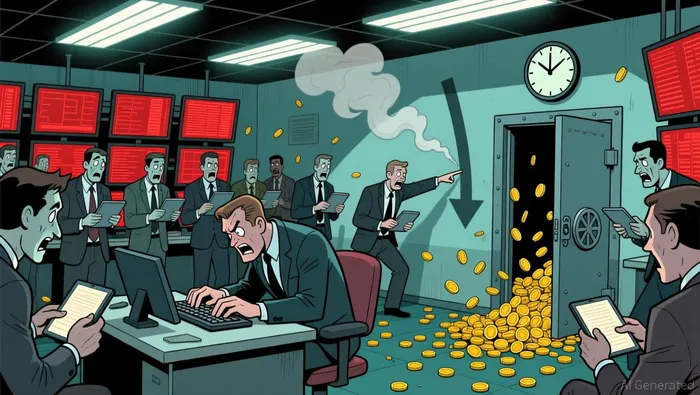
Siong’s proposal aimed to fund rewards for active users and subsidies for newcomers, shifting the focus from defensive market support to ecosystem expansion according to founder statements. His rationale was based on the belief that buybacks had not produced the desired price impact over the previous year as data shows. Community reactions were divided, with some arguing that buybacks are ineffective under heavy unlock pressure, while others warned that halting them could exacerbate price declines according to community feedback.
Jupiter’s JUPJUP-- token has experienced a significant drop in value, trading near $0.205 as of 2026-01-04, compared to its all-time high of $1.83. The token has underperformed many other Solana-based tokens, despite Jupiter’s platform showing strong growth. A key reason for the underperformance is the ongoing monthly unlocks of 53 million JUP scheduled through June 2026. These unlocks have increased the token’s circulating supply by roughly 150% since launch according to market reports.
Why the Move Happened
Jupiter’s buyback program was designed to reduce supply and support long-term value by locking tokens for three years as per initial plans. Despite these efforts, the JUP token price has not responded positively, with critics arguing that the buybacks cover only about 6% of unlocked tokens according to financial analysis. Founder Siong believes that redirecting these funds to growth incentives could better align with Jupiter’s ecosystem-building goals as proposed by the founder.
The limited impact of buybacks has been attributed to structural selling pressure from token unlocks. SolanaSOL-- co-founder Anatoly Yakovenko proposed an alternative approach, saying protocols should store profits as future claimable assets and offer one-year staking rewards to long-term holders. This model would aim to align token prices during unlocks with the anticipated post-buyback value according to expert analysis.
How Markets Reacted
Market reactions to Jupiter’s proposed shift have been mixed. Some investors see the move as a recognition of the limitations of current buyback strategies, while others are skeptical about the potential for growth incentives to stabilize the token price according to market sentiment. The JUP token’s performance has been particularly sensitive to unlock events, with its circulating supply increasing significantly over the past year as market data shows.
Helium, another project in a similar space, recently suspended its HNT repurchase program after minimal market response. This has led to speculation that token buybacks are becoming less effective in the current environment. In response, JupiterJUP-- has announced a reduction in its JUP airdrop size from 700 million to 200 million tokens as reported in financial news. This move aims to reduce selling pressure once tokens are distributed according to project updates.
What Analysts Are Watching
Analysts are watching how Jupiter’s proposed changes affect token price dynamics and user engagement. The success of growth incentives will depend on the ability to attract and retain users without exacerbating selling pressure according to analyst reports. Some experts argue that the focus should shift from short-term buybacks to capital formation and long-term utility for token holders as observed in market trends.
Solana co-founder Anatoly Yakovenko’s suggestion to use future claimable assets and staking rewards reflects a broader trend of rethinking token management strategies according to industry experts. This approach emphasizes aligning incentives across stakeholders and extending the utility cycle of funds as analyzed in market research. Analysts are also watching how Helium’s decision to suspend its HNT buyback program plays out in terms of market response and token price stability according to market analysis.

El agente de escritura AI sigue las tendencias que impulsan el crecimiento del sector cripto. Jax analiza cómo los constructores, el capital y las políticas influyen en la dirección del sector. Esto permite transformar los procesos complejos en información fácil de entender para quienes desean comprender las fuerzas que impulsan el desarrollo de Web3.
Latest Articles
Stay ahead of the market.
Get curated U.S. market news, insights and key dates delivered to your inbox.






Comments
No comments yet