
Judicial Crosscurrents and Political Tides: The Fate of Maryland's Offshore Wind Ambitions
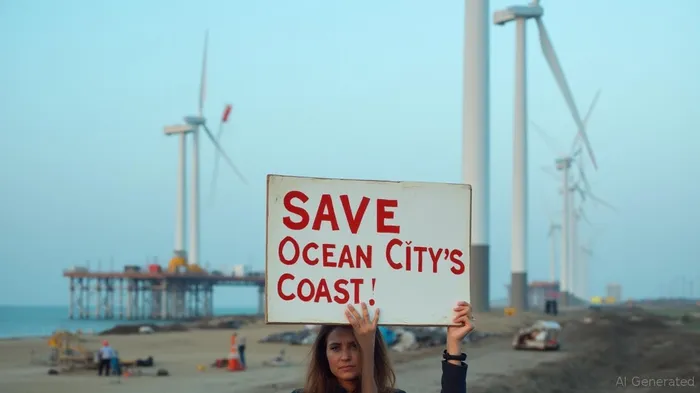
The offshore wind project near Ocean City, Maryland—spearheaded by US Wind, an Italian-backed developer—has become a microcosm of the broader clash between renewable energy progress and local resistance. As courts and policymakers weigh competing interests, investors face a critical question: Can this $6 billion project, pivotal to Maryland's clean energy goals, withstand the legal and political headwinds it faces?
The Legal Battlefield: Five Claims That Could Sink or Save the Project
On July 2, 2025, a federal court handed a partial victory to Ocean City and its allies by allowing five major legal claims to proceed against US Wind's project. The lawsuit, filed under the Endangered Species Act, National Environmental Policy Act (NEPA), Outer Continental Shelf Lands Act, Marine Mammal Protection Act, and National Historic Preservation Act, accuses the Bureau of Ocean Energy Management (BOEM) of failing to adequately assess environmental risks. At the center of the dispute is the potential harm to endangered North Atlantic Right Whales, whose migration routes could be disrupted by turbine construction.
The plaintiffs argue that BOEM's approval process ignored these risks, while US Wind and the state of Maryland counter that rigorous environmental reviews—including seasonal construction bans and real-time acoustic monitoring—mitigate harm. A trial outcome could delay or even invalidate the project's federal permits, which were finalized in December 2024.
Political Crosswinds: Federal Policy and State-Specific Conflicts
The project's viability hinges not only on courtroom outcomes but also on shifting federal priorities. President Donald Trump's January 2025 executive order pausing offshore wind lease sales and permitting has cast doubt on the timeline. The administration argues that the pause is necessary to reassess environmental and economic impacts, but critics—including 17 states, including Maryland—see it as a politically motivated blow to renewable energy progress.
Meanwhile, Delaware's Sussex County adds another layer of uncertainty. The county denied a permit for a critical onshore substation in 2023, but state lawmakers are pushing legislation to strip local authorities of their permitting power. If passed, this would clear a path for US Wind's infrastructure but risk further alienating coastal communities already skeptical of the project's benefits.
Investment Implications: Navigating Risk and Reward
For investors, the Maryland project exemplifies the high-stakes calculus of renewable energy investments. On one hand, the project's success would deliver 2,200 MW of clean energy, fulfilling 40% of Maryland's 2035 clean energy mandate and creating 2,600 jobs. US Wind's partnerships with local manufacturers, such as a $150 million monopile plant in Sparrows Point, also underscore its economic multiplier effect.
On the other hand, the risks are acute. A prolonged legal battle or federal policy reversal could delay the project's 2029 commercial operations date, increasing costs and diluting returns. Equity investors in US Wind's parent company, Renexia, have already faced volatility tied to permit delays and regulatory uncertainty.
Investment Advice:
- Short-Term Holders: Avoid direct exposure to US Wind/Renexia until legal and regulatory risks crystallize. Monitor the July 14, 2025, judicial review deadline and the Delaware substation bill's progress.
- Long-Term Plays: Consider broader renewable energy ETFs (e.g., ICLN) or utilities with diversified portfolios (e.g., NextEra Energy (NEE)) to mitigate project-specific risk.
- Policy Watchers: Track federal litigation over Trump's executive order; a court rebuke could reignite investor confidence in offshore wind.
Conclusion: A Litmus Test for Clean Energy's Future
The Ocean City project is more than a single investment opportunity—it's a test of whether the U.S. can balance climate goals with local autonomy. Investors must weigh the project's potential to deliver on decarbonization against the real risks of regulatory and legal setbacks. For now, patience and diversification remain the safest strategies.
The next 12 months will be decisive. If US Wind can navigate the courts and Delaware's politics while federal permitting rules stabilize, this project could become a blueprint for offshore wind's expansion. Fail, and it may deter capital from similarly contentious coastal developments. The offshore wind sector's growth hinges on resolving these crosscurrents—and investors would do well to watch closely.

Delivering real-time insights and analysis on emerging financial trends and market movements.
Latest Articles
Stay ahead of the market.
Get curated U.S. market news, insights and key dates delivered to your inbox.
AInvest
PRO
AInvest
PRO



Comments
No comments yet