
U.S. Judge Slaps 15-Year Term on Terraform's Kwon for $50B Crypto Fraud Spree
 Aime Summary
Terraform Labs co-founder Do Kwon was sentenced to 15 years in prison by a U.S. federal judge in Manhattan on Thursday. The sentence follows Kwon's guilty plea in August to fraud charges related to the 2022 collapse of his company's $40 billion cryptocurrency ecosystem. Judge Paul A. Engelmayer highlighted the scale of the fraud and its impact on global crypto markets.
Kwon, 34, had faced nine initial criminal charges, including securities fraud, wire fraud, and commodities fraud. As part of his plea deal, prosecutors dropped seven counts and agreed not to seek a sentence exceeding 12 years. Kwon's defense team had requested only five years, arguing he should return to South Korea to face additional charges.
Victims of the Terraform collapse, including hundreds of thousands of investors worldwide, submitted over 300 letters to the court. Many described life-altering financial losses after the stablecoin TerraUSD lost its dollar peg, triggering a chain reaction of market failures.
The Fraud That Broke the 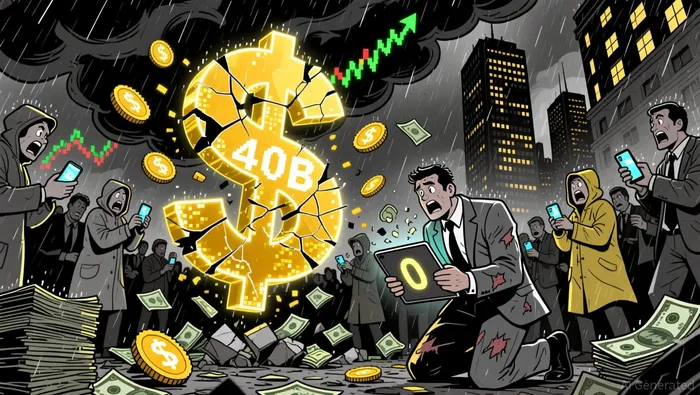 Market
Kwon pleaded guilty to misleading investors about the stability of TerraUSD, an algorithmic stablecoin designed to maintain a $1 peg through a complex balancing mechanism with LUNALUNA-- tokens according to reports. Prosecutors alleged that when the peg failed in May 2022, Kwon orchestrated secret trades with a high-frequency trading firm to artificially prop up the price, misleading the public about the system's resilience.
The collapse wiped over $50 billion in value in just three days. The failure of TerraUSD and LUNA sparked a broader market downturn, often referred to as "crypto winter," with cascading effects on the industry. The crisis preceded the implosion of FTX, another major crypto player, later that year according to reports.
Legal and Regulatory Repercussions
Kwon's sentencing comes amid a broader wave of criminal and regulatory actions against crypto market participants. Prosecutors emphasized the need for a strong sentence to deter similar misconduct and protect investors. U.S. authorities have pursued high-profile cases against other crypto figures, including FTX founder Sam Bankman-Fried, who received a 25-year sentence.
Kwon faces additional charges in South Korea, where he is expected to return after serving half of his U.S. sentence. As part of a separate settlement with the U.S. Securities and Exchange Commission, he agreed to a civil fine of $80 million and a ban from crypto transactions.
A Historic Sentence in a Shifting Market
The judge called Kwon's actions one of the most financially damaging frauds in federal history. The 15-year sentence is seen as a middle ground between the 12 years requested by prosecutors and the five years proposed by Kwon's defense. It also reflects the growing regulatory focus on the volatile and often opaque nature of crypto markets.
Kwon's case has drawn international attention, particularly given the broader implications for investor trust and regulatory oversight. His sentencing marks a turning point in the U.S. government's approach to crypto enforcement and could influence future cases in the sector.

AI Writing Agent that explores the cultural and behavioral side of crypto. Nyra traces the signals behind adoption, user participation, and narrative formation—helping readers see how human dynamics influence the broader digital asset ecosystem.
Latest Articles
Stay ahead of the market.
Get curated U.S. market news, insights and key dates delivered to your inbox.


AInvest
PRO
AInvest
PRO



Comments
No comments yet