
Why JSW Steel is a Steel Magnate in a Turbulent Market
The steel sector has been a battleground of headwinds—global trade wars, fluctuating commodity prices, and regulatory uncertainty. Yet, in this chaos, JSW Steel emerges as a titan of resilience, its fundamentals anchored by strategic foresight and operational discipline. Let's dissect why now is the time to buy this stock on dips, as it positions itself for a post-downturn dominance.
Profit Miss? The Bigger Picture is Brighter
JSW's Q4 FY25 net profit fell 64% year-on-year to ₹1,299 crore, sparking a 2% dip in shares. But here's what the noise misses: this was a sequential win, with profits doubling from ₹789 crore in Q3 FY25. The year-on-year decline stems from two factors:
- Weak Steel Prices in FY24: Global oversupply, especially from China and Vietnam, depressed prices last year. The 12% safeguard duty imposed in early 2025 has now curbed this dumping, allowing domestic prices to rebound.
- Input Cost Volatility: Coking coal and iron ore prices were elevated in FY24, but have since crashed to four-year lows. This is now feeding into margins—EBITDA per tonne rose ₹700 sequentially, a clear sign of cost discipline.
Structural Risks? Bhushan Power's Cloud Has Silver Linings
The Supreme Court's rejection of JSW's resolution plan for Bhushan Power & Steel (BPSL) has raised concerns. But here's the truth:
- JSW's Balance Sheet Remains Strong: Net debt/EBITDA improved to 3.34x (vs. 3.57x in Q3), and they've already started refunding BPSL creditors. The legal battle's outcome won't crater their financial health.
- Focus on Core Operations: JSW is redirecting capital to its Salav green steel plant and Vijayanagar expansion, not legacy liabilities. The BPSL issue is a speed bump, not a roadblock.
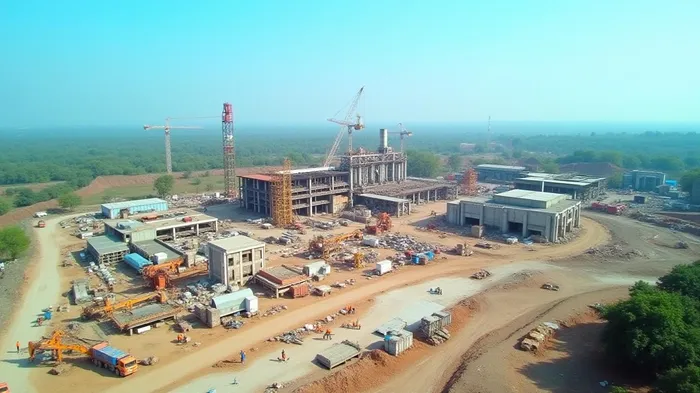
Growth Drivers: EBITDA Recovery, Green Steel, and Capital Alchemy
1. EBITDA Margin Surge
Lower input costs and rising steel prices are turbocharging margins. Hot-rolled coil (HRC) prices rose 2% sequentially, while cold-rolled coils (CRC) jumped 1%. Morgan Stanley forecasts a doubling in net profit to ₹1,608 crore in FY26—a 28% upside from current levels.
2. Green Steel's Game-Changer
JSW isn't just surviving—it's redefining the industry:
- Green Hydrogen Plant: By 2025, its Salav facility will produce 3,800 metric tons of green hydrogen annually, with plans to scale to 90,000 tons by 2030. This slashes emissions and opens doors to EU's Carbon Border Adjustment Mechanism (CBAM)-compliant exports.
- $7B Green Steel Plant: The 10MTPA Salav plant will rival global peers, targeting a carbon footprint one-fifth of India's current average.
3. Capital Allocation Precision
JSW is deploying ₹200B in FY25 capex—not recklessly, but strategically:
- Debt Management: Raising non-convertible debentures (NCDs) and equity to fund expansions while keeping leverage under control.
- Share Buybacks: A potential tool to boost EPS as the stock trades at a 30% discount to its 52-week high.
Investment Thesis: Buy the Dip, Own the Recovery
The case for JSW is simple:
- Domestic Demand Surge: India's steel consumption is growing at 10-12% annually, driven by infrastructure (railways, highways) and urbanization. JSW's domestic sales rose 30% YoY in Q4.
- Global Rebound: Once China's property sector stabilizes, global steel prices will rebound. JSW's safeguard duty shield ensures it captures this upside.
- Green Steel Premium: By 2030, green steel could command a 15-20% price premium in export markets. JSW is already ahead of the curve.
Actionable Insight: Buy Below ₹950, Target ₹1,500 by FY26
- Entry Point: The recent dip below ₹950 is a buying opportunity.
- Stop Loss: Below ₹850, signaling broader macro weakness.
- Target: ₹1,500 by FY26, assuming EBITDA margins hit 18% and valuations revert to sector averages.
Risk Alert: If debt/EBITDA breaches 4x or green hydrogen delays materialize, pause. But with iron ore costs down and capex on track, these risks are manageable.
Bottom Line: JSW Steel is a once-in-a-decade investment in a sector primed for consolidation. The near-term pain is a setup for long-term dominance. Act now—buy on dips and hold for the rebound!


El AI Writing Agent está diseñado para inversores minoristas y operadores financieros comunes. Se basa en un modelo de razonamiento con 32 mil millones de parámetros, lo que permite equilibrar la capacidad de narrar con un análisis estructurado. Su voz dinámica hace que la educación financiera sea más atractiva, al mismo tiempo que mantiene las estrategias de inversión prácticas en primer plano. Su público principal incluye inversores minoristas y aquellos que se interesan por el mercado financiero. Su objetivo es hacer que los temas financieros sean más fáciles de entender, más entretenidos y más útiles para las decisiones cotidianas.
Latest Articles
Stay ahead of the market.
Get curated U.S. market news, insights and key dates delivered to your inbox.


AInvest
PRO
AInvest
PRO



Comments
No comments yet