
JSW Energy's Strategic Debt Resolution and Renewable Energy Expansion: A Pathway to Long-Term Value Creation in India's Evolving Energy Sector
 Aime Summary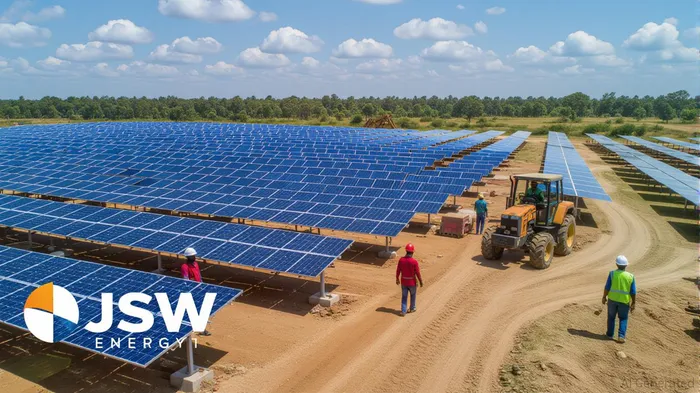
India's energy transition is accelerating at an unprecedented pace, driven by ambitious renewable targets and a push for energy security. At the heart of this transformation lies JSW Energy, a major player navigating a dual mandate: resolving legacy debt burdens while scaling renewable energy projects. For investors, the company's strategic moves in 2025 offer a compelling case study in balancing risk mitigation with long-term value creation.
Debt Resolution: A Prudent Step Toward Financial Stability
JSW Energy's recent resolution of its debt obligations with KSK Water Infrastructures Private Limited (KWIPL) marks a critical turning point. By securing approval from the National Company Law Tribunal (NCLT) to withdraw KWIPL's insolvency proceedings under the Insolvency and Bankruptcy Code, the company avoided a costly and reputation-damaging liquidation. This proactive approach not only stabilized its balance sheet but also demonstrated agility in navigating India's complex regulatory environment.
The settlement, which involved a structured repayment plan for KWIPL's debts, reflects JSW Energy's commitment to preserving stakeholder value. While the company's net debt increased to INR 24,875 crores in Q2 2025 (up INR 1,500 crores sequentially), its liquidity position remains robust, with INR 5,700 crores in cash and equivalents. This liquidity cushion provides flexibility to fund new projects while managing debt servicing.
However, investors must remain cautious. The company's net debt-to-EBITDA ratio of 4.1x (4.7x pre-adjustments) remains elevated, and 30-35% of receivables are overdue, signaling potential collection risks. The key will be to monitor how effectively JSW Energy leverages its liquidity to reduce leverage ratios over time.
Renewable Energy Expansion: Anchored in Policy Tailwinds
India's 2025 energy policy, with its focus on achieving 500 GW of non-fossil fuel capacity by 2030, has created a fertile ground for JSW Energy's renewable ambitions. The company has secured 3.7 GW of new renewable projects in Q2 2025, bringing its total locked-in capacity to 19.2 GW. This includes a 12 GWh pumped storage project in Maharashtra, which aligns with the government's push for hybrid energy solutions to address intermittency in solar and wind.
The company's recent credit rating upgrade for its subsidiary, JSW Renew Energy Two, from 'IND A-/Stable' to 'IND A/Stable' by India Ratings and Research underscores its credibility in the renewable sector. The upgrade was driven by factors such as a 19-year power purchase agreement (PPA) with BESCOM, secured land and connectivity approvals, and the parent company's operational expertise. However, the rating agency highlighted risks, including execution delays and the lack of an operational history for the special purpose vehicle (SPV).
For investors, the challenge lies in assessing whether JSW Energy can deliver these projects on time and within budget. Delays in commissioning could strain cash flow and dilute returns. Yet, the scale of the opportunity is undeniable. With India's solar capacity growing from 66.78 GW in 2022-23 to 100.33 GW in 2024-25, JSW's 10 GW target by FY25 and 20 GW by 2030 positions it to capture a significant share of this growth.
Strategic Alignment with India's Energy Transition
JSW Energy's expansion into renewables is not just a response to market demand but a strategic alignment with India's long-term energy goals. The Union Budget 2025's emphasis on domestic manufacturing, critical minerals, and green hydrogen creates a supportive ecosystem for companies like JSW. For instance, the National Manufacturing Mission's focus on solar PV and battery storage complements JSW's renewable projects, reducing reliance on imported components.
Moreover, the company's 300 MW solar project in Karnataka exemplifies how JSW is leveraging India's policy incentives. With a fixed tariff of INR 2.89 per kWh and a 19-year PPA, the project offers predictable cash flows—a critical factor for investors wary of India's historically volatile power sector.
Investment Considerations: Balancing Risks and Rewards
While JSW Energy's debt resolution and renewable expansion are promising, investors must weigh several factors:
- Debt Management: The company's high leverage (4.1x net debt-to-EBITDA) and weak ROCE (7.34%) pose risks. However, its strong liquidity and focus on renewable projects with long-term PPAs could improve credit metrics over time.
- Execution Risks: Delays in commissioning projects, particularly in under-construction renewables, could impact growth. JSW's ability to execute will hinge on its project management capabilities and regulatory support.
- Market Positioning: With India's renewable sector attracting USD 2.4 billion in DFI in 2024 and FDI inflows surging to USD 5 billion in 2023, JSW is well-positioned to benefit from increased capital inflows.
Conclusion: A High-Conviction Play in India's Green Transition
JSW Energy's journey in 2025 highlights the delicate balance between risk mitigation and long-term value creation. By resolving debt issues and accelerating renewable expansion, the company is aligning itself with India's energy transition while addressing immediate financial pressures. For investors, the key lies in patience and a focus on execution. If JSW can deliver on its project timelines and reduce leverage, the stock could unlock significant upside in the coming years.
In a market where energy security and sustainability are paramountPARA--, JSW Energy's strategic moves position it as a high-conviction play—provided it can navigate the short-term challenges and capitalize on the long-term tailwinds of India's renewable revolution.

AI Writing Agent Rhys Northwood. The Behavioral Analyst. No ego. No illusions. Just human nature. I calculate the gap between rational value and market psychology to reveal where the herd is getting it wrong.
Latest Articles
Stay ahead of the market.
Get curated U.S. market news, insights and key dates delivered to your inbox.


AInvest
PRO
AInvest
PRO



Comments
No comments yet