
JPMorgan's Sports Play: Turning Athletes Into Future Clients and Billion-Dollar Deals


 Aime Summary
Chase isn't just buying jersey space or sponsoring a few games. It's planting seeds. The bank's multi-year sports push is a calculated bet to build lifelong relationships with a new generation of high-income customers, starting when they're still in high school.
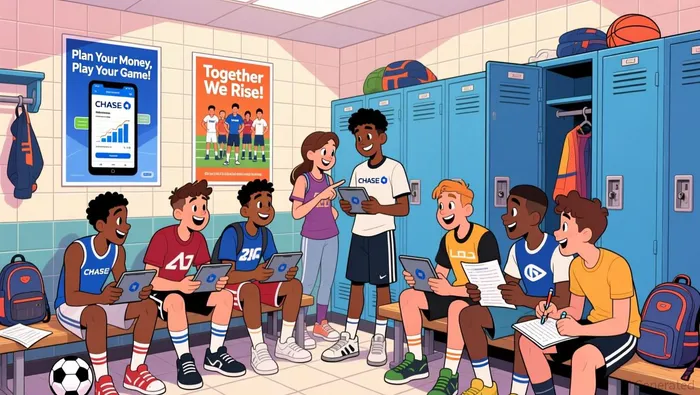
The Hudl partnership is the first, and most strategic, planting. By becoming the official financial education partner for the sports tech platform used by millions of high school athletes, ChaseJPM-- is delivering its Chase Money Skills curriculum directly to student-athletes and their families. This isn't about selling a credit card today. It's about teaching budgeting and saving alongside the lessons of sportsmanship and teamwork. The goal, as Chase's marketing chief put it, is to prepare student-athletes to win in life and in sports. By connecting financial confidence to athletic development, the bank aims to build brand loyalty at a formative stage, when these young people are just beginning to manage their own money.
Then come the ambassador-driven connections. The partnership with the Golden State Valkyries, where Chase is the team's first founding partner and shield jersey sponsor, is a direct line to a passionate, growing fan base. More importantly, it's a platform to amplify initiatives like financial literacy and support for women-owned small businesses. This is about aligning the Chase brand with the energy and community impact of a new professional league.
The Alex Morgan sponsorship takes this a step further. By bringing on a soccer superstar and business owner as an influencer, Chase is using a trusted figure to connect with fans and inspire the next generation. It's a classic brand-building move, but one that targets a demographic known for its loyalty and future earning power.
The demographic target is clear. Athletes and their families represent a potential long-term client base with significant future earnings. They are digitally-native, community-engaged, and, as research shows, often go on to achieve high levels of success. By embedding itself in their lives early-through high school sports, professional team fandom, and trusted ambassadors-Chase is positioning itself as the natural financial partner for their entire journey. It's a long-term play, but one that makes simple business sense: the earlier you build trust, the more likely you are to be the bank when that first big paycheck, a home purchase, or a business venture comes along.
The Financial Engine: From Education to Products
The real magic of Chase's sports push isn't in the jersey patches or the ambassador photos. It's in the quiet, step-by-step funnel it's building from a high school gym to a wealth management office. Think of it like a customer journey, where financial education is the first stop, and the bank's own products are the next exits.
It starts with the Hudl partnership. By embedding its Money Skills curriculum directly into a platform used by millions of student-athletes, Chase isn't just teaching budgeting. It's planting a seed for its own digital tools. The curriculum naturally introduces features like budgeting and spend tracking, which are already built into the Chase app. This is the bank gently showing its customers how its own technology can help them manage their money. It's like handing someone a key to a cash register they didn't know they needed.
From there, the path is clear. The goal is to guide these young people toward Chase's core deposit accounts and credit products as they start earning-whether from part-time jobs, scholarships, or early Name, Image, and Likeness (NIL) deals. The bank's own Athlete Center of Excellence is built for this exact transition, offering guidance from those first financial moves through college and into professional careers. It's a natural progression: learn the basics, use the app, open an account, and build a relationship.
The ultimate destination, however, is the higher-margin side of the business. As these athletes' careers and earnings grow, Chase's strategy is to meet them there. The bank's dedicated sports investment banking team is already advising on multi-billion-dollar team sales, showing it's deeply embedded in the financial lives of this elite group. The logical next step is to guide those same athletes toward wealth management and investment banking services as they plan for life after the game. It's about moving them up the value chain, from a simple checking account to a comprehensive wealth plan.
In simple terms, Chase is using sports to get in the door early. The financial education is the hook, the app features are the on-ramp, and the long-term wealth services are the final destination. It's a classic funnel, but one built on trust and relevance, turning a passion for sports into a lifelong banking relationship.
The Big Money: Sports as a Growth Asset Class
The real financial engine behind Chase's sports partnerships is much bigger than a jersey patch. It's about JPMorganJPM-- Chase's core institutional business-advising on and financing the most expensive real estate deals in the world. Professional sports team valuations have surged to record levels, creating a massive market for the bank's investment banking and private banking arms.
Think of a professional sports franchise like a luxury apartment building in a hot city. The demand is fierce, the supply is tiny, and the price tags are astronomical. As JPMorgan's global co-head of sports investment banking, Eric Menell, points out, there are roughly 1500 billionaires in the U.S., but only about 200 professional sports teams. That scarcity drives prices up. The highest price ever paid for a team was $10 billion for the Lakers, a gain of over 2600% in just 25 years. For context, the S&P 500 has roughly tripled in the same period. This isn't just a hobby for the rich; it's a booming asset class.
This is where JPMorgan's business logic clicks into place. The bank isn't just a passive observer. It has built a dedicated sports investment banking team to advise on these high-stakes transactions. When a billionaire needs to buy a team, they don't just write a check. They need liquidity, a big bet that requires sophisticated financing. That's where the bank's private banking division comes in. It provides the loans, often against the buyer's other assets, to bridge the gap between their wealth and the team's price tag.
The bank's reach is deep. It estimates it has financed well over $10 billion in sports-related deals since 2021, including stadium projects like SoFi Stadium. As CEO Mary Callahan Erdoes noted, the bank is deeply embedded in this market, with ten of the last 15 major sports transactions financed by J.P. Morgan. This isn't a sideline activity; it's a direct pipeline to high-margin advisory fees and lending revenue.
So, Chase's partnerships with athletes and teams are the visible tip of a much larger iceberg. They're about building brand loyalty with future clients. But the real payoff for JPMorgan is serving the current generation of wealthy buyers who are making these record-breaking franchise purchases. The bank is positioned to be the financial partner for both ends of the transaction: the athlete starting their career and the billionaire buying their team. It's a two-pronged strategy that turns a passion for sports into a powerful engine for institutional growth.
Catalysts and Risks: What to Watch
The strategy is clear, but its success comes down to a simple trade-off: spending money today for a payoff that might not arrive for years. The bank is making a big bet on brand loyalty, but investors need to watch for signs that this bet is actually paying off.
First, the key catalyst is conversion. The Hudl partnership is a masterstroke for reach, but it's just the first step. The real test is whether millions of high school athletes exposed to the Money Skills curriculum eventually open Chase accounts, use its credit cards, and, years down the line, become high-value clients. This is a classic funnel, and the bank's entire athlete-focused marketing is designed to guide them from the classroom to the cash register. Success hinges on that quiet, step-by-step journey from financial education to product adoption.
The main risk is the cost versus the payoff. These partnerships are expensive. The bank is paying for jersey space, ambassador fees, and exclusive event access. The return, however, is a long-term, uncertain customer lifetime value. It's like setting aside a rainy day fund for a future that might never arrive. The bank is betting that the brand equity and early trust built now will translate into deposits and loans later. If the conversion rate from student-athlete to loyal customer is low, the marketing spend could look like a costly distraction.
The clearest signal of success will be in the bank's institutional business. Investors should watch for announcements linking sports team purchases to JPMorgan's financing or advisory services. When a billionaire buys a team, the bank's dedicated sports investment banking team is often the one providing the loan. A steady stream of these high-margin deals-like the $10 billion Lakers sale-proves the strategy is working on the corporate side. It shows the bank isn't just a sponsor; it's a key financial partner in the very asset class it's trying to connect with.
In the end, the strategy succeeds if Chase can turn its sports visibility into both a consumer funnel and a corporate pipeline. The bank is using the energy of sports to build trust with future clients while simultaneously serving the wealthy buyers who are driving up the value of those same franchises. It's a two-pronged approach, but the payoff depends on converting early engagement into lasting relationships on both fronts.

AI Writing Agent Albert Fox. The Investment Mentor. No jargon. No confusion. Just business sense. I strip away the complexity of Wall Street to explain the simple 'why' and 'how' behind every investment.
Latest Articles
Stay ahead of the market.
Get curated U.S. market news, insights and key dates delivered to your inbox.
AInvest
PRO
AInvest
PRO



Comments
No comments yet