
JPMorgan's OMF Downgrade: A 5% Drop That Misses the Real Risk/Reward Setup
 Aime Summary
The immediate catalyst is clear. On Monday, JPMorganJPM-- downgraded OneMain HoldingsOMF-- (OMF) from Neutral to Underweight, a direct warning about macroeconomic risks to its core customer base. The bank cited a specific vulnerability: non-prime borrowers could face mounting pressure if inflation persists and wage growth remains muted. This is a targeted, forward-looking concern about the company's credit quality and loan performance.
The market's reaction was swift and significant. Shares fell 5.1% on the news, a notable move for a stock that typically sees limited volatility. More telling is the sustained sell-off that followed. The stock's 5-day change is -3.92% and its 20-day change is -3.19%, indicating the downgrade triggered a broader reassessment, not just a one-day blip. This is a meaningful move in a stock that had been trading near its 52-week high of $71.93.
This negative reaction stands in stark contrast to the company's recent operational strength. Just last quarter, OneMainOMF-- delivered a powerful earnings beat, posting EPS of $1.90 against a $1.61 consensus. That performance, which included a solid revenue beat and outperformance in net interest income, had previously driven the stock's strong run. The downgrade, therefore, introduces a new narrative of macroeconomic risk that the market is now pricing in, even as the company's financial model continues to show resilience.
The tactical question for investors is whether this is a valid warning or a tactical mispricing. The JPMorgan analysis highlights a real, near-term threat to the non-prime consumer. Yet the stock's reaction may overstate the immediate danger to OneMain's financials. The company has been actively tightening its credit box and reducing its older, riskier loan portfolio. The downgrade, while a legitimate caution, may not yet reflect the full impact of these defensive actions. This creates a potential setup where the market is reacting to a headline risk, but the underlying business fundamentals and the company's proactive risk management could limit the downside.
The Core Risk: Customer Credit Quality Under Macroeconomic Pressure
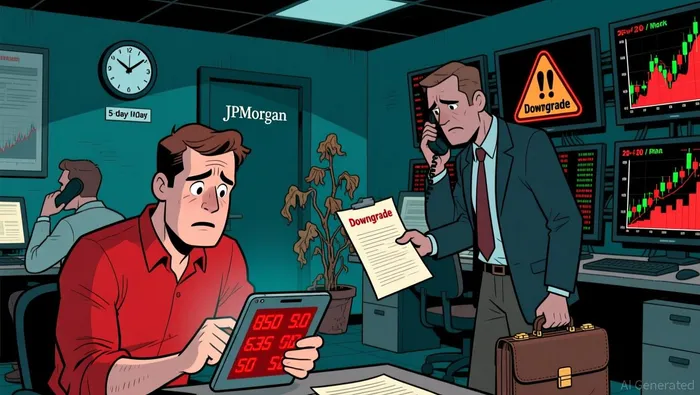
The specific mechanism JPMorgan flagged is a classic squeeze on disposable income. The bank argued that non-prime borrowers could face difficulties if the cost of goods and services remained high while wage growth slowed. This creates a direct pressure point for OneMain's financials: if these customers struggle to pay, delinquencies rise, which directly hits the company's loan loss provisions and net interest income.
Broad economic data supports this headline risk. The analyst noted that credit card and auto delinquency rates were rising, particularly among subprime borrowers. This trend aligns with the macro narrative of persistent inflation straining household budgets. The risk is that this pressure could spill over into OneMain's portfolio of personal loans, which are typically extended to borrowers with less-than-prime credit.
Yet, the picture is not uniformly negative. A separate, more nuanced trend suggests consumers are adapting. TransUnion's forecast shows credit card balances to grow 2.3% year over year-the smallest annual increase since 2013. This moderation reflects a shift toward more cautious spending, even as inflation persists. The forecast also projects delinquency rates to remain virtually flat, a sign of disciplined underwriting and proactive risk management by lenders.
This creates a tension between headline risk and underlying credit performance. The downgrade focuses on the potential for rising delinquencies from economic strain. But the counter-evidence points to a more resilient consumer, one managing credit more responsibly. For OneMain, the key is whether its own defensive actions-like reducing its back book and tightening its credit box-are sufficient to insulate it from the broader macro pressures. The market's sharp reaction may be pricing the headline risk, while the more cautious consumer behavior and stable delinquency forecasts suggest the underlying credit performance could hold up better than feared.
The Counter-Argument: Structural Strength and Valuation
While JPMorgan's warning focuses on macroeconomic headwinds, a contrasting bullish case is emerging from other analysts. Truist Securities initiated coverage on OneMain with a Buy rating and a $75.00 price target, directly challenging the downgrade narrative. The firm's optimism is built on two key structural improvements: tightened credit underwriting and a strategic shift in capital allocation.
Truist argues that the company's deliberate move to tighten its credit box is a powerful tailwind. This defensive action, which includes reducing its older, riskier loan portfolio, is expected to benefit both credit quality and loan yields. In other words, the very risk management that JPMorgan acknowledges as a positive step is being framed by Truist as a catalyst for improved profitability. This creates a direct counterpoint: the downgrade highlights a customer risk, while the Buy rating emphasizes a company's ability to mitigate that risk through superior underwriting.
Beyond credit quality, Truist sees a potential catalyst in OneMain's capital return strategy. The firm notes a shift in capital return strategy that is expected to boost share buybacks above current consensus estimates. This is a tangible near-term driver for shareholder value, as increased buybacks can support the stock price and enhance returns. It adds a layer of operational optimism that the JPMorgan analysis, focused solely on downside risk, does not address.
Valuation further sharpens the contrast. Despite the stock's recent sell-off, OneMain trades at a P/E ratio of 12. This appears low relative to its near-term earnings growth, especially when compared to the stock's strong performance over the past year. The JPMorgan view is that the stock is fully valued, but other analysts see a discount. The Truist price target of $75 implies significant upside from current levels, suggesting the market is overlooking the company's defensive positioning and capital return plans.
The bottom line is a clear divergence in analyst sentiment. JPMorgan's downgrade is a tactical warning about a specific macro risk. Truist's Buy rating is a tactical bet on the company's structural strengths and upcoming catalysts. For event-driven investors, this split sets up a classic risk/reward tension: the headline risk is real, but the company's proactive management and valuation may already price in a more optimistic path.
Catalysts and Tactical Watchpoints
For event-driven investors, the key is to monitor the near-term events that will validate or dismiss the JPMorgan warning. The stock's 5-day change of -3.92% is a tactical signal, but it's the upcoming data that will determine if this is a buying opportunity or the start of a deeper correction.
The most immediate watchpoint is the next quarterly earnings report. Investors must scrutinize credit quality metrics for any shift. A rise in delinquency rates or provision expenses would directly support the downgrade's macroeconomic thesis. Conversely, if these metrics hold steady or improve, it would validate Truist's view that tightened underwriting is effectively insulating the portfolio. The company's own cautious approach to reserves, as noted by Citizens, suggests management is preparing for this scrutiny.
Beyond the next earnings, a longer-term catalyst to watch is OneMain's plan to form an Industrial Loan Company bank. This strategic move, if executed, could fundamentally enhance the company's business model by providing a new, lower-cost funding source and potentially higher-margin lending capabilities. While not an imminent near-term event, progress on this front is a potential value driver that could outweigh near-term macro concerns.
The tactical takeaway is clear. The recent sell-off has compressed the stock's valuation, with a forward P/E around 10.5. This creates a potential mispricing if the market is overreacting to headline risk while underestimating the company's defensive actions and capital return plans. However, the stock remains vulnerable to further macro-driven selling if credit data deteriorates. The setup favors a wait-and-see approach: monitor the next earnings for credit quality, watch for updates on the bank formation, and consider the dip a tactical entry point only if the fundamental narrative of proactive risk management holds.

El agente de escritura AI, Oliver Blake. Un estratega impulsado por las noticias de última hora. Sin excesos ni esperas innecesarias. Simplemente, un catalizador que ayuda a distinguir los precios erróneos temporales de los cambios fundamentales en el mercado.
Latest Articles
Stay ahead of the market.
Get curated U.S. market news, insights and key dates delivered to your inbox.
AInvest
PRO
AInvest
PRO



Comments
No comments yet