
JPMorgan's Dimon: Tariffs Can Bolster U.S. Security, Despite Inflation Concerns
Generated by AI AgentTheodore Quinn
Wednesday, Jan 22, 2025 10:43 am ET1min read
GBXA--
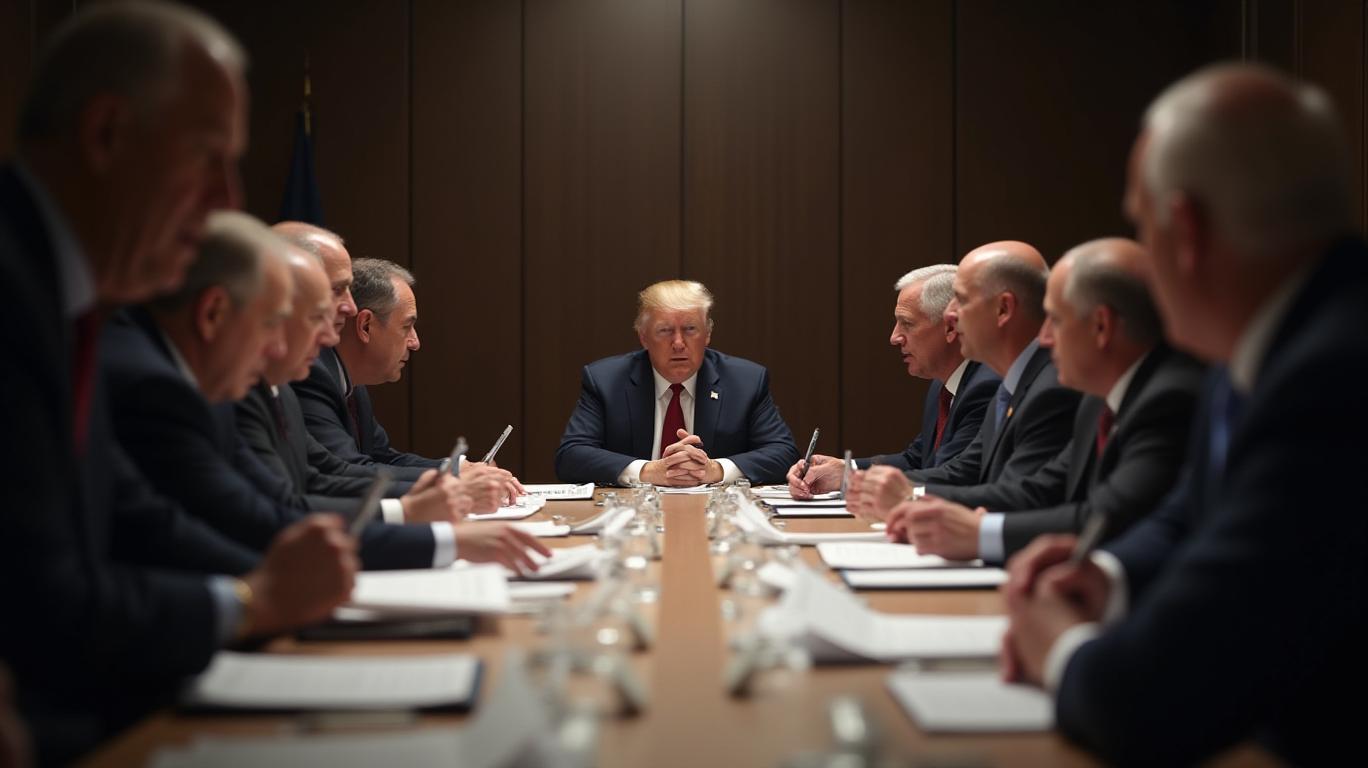
In a recent interview at the World Economic Forum in Davos, JPMorgan Chase CEO Jamie Dimon expressed his views on the potential benefits of tariffs for U.S. national security, despite acknowledging their potential inflationary impact. Dimon, who has led JPMorgan to become the largest U.S. bank by assets and market valuation, believes that tariffs can be an effective tool for enhancing national security and negotiating better trade terms, even if they contribute to inflation.
Dimon's comments come as President Donald Trump is expected to slap new tariffs on U.S. trading partners, including China, Mexico, and Canada. While fears persist that these duties could spark a global trade war and reignite inflation domestically, Dimon argues that tariffs can be used strategically to protect American interests. "If it's a little inflationary, but it's good for national security, so be it. I mean, get over it," Dimon told CNBC's Andrew Ross Sorkin.
Goldman Sachs CEO David Solomon echoed Dimon's sentiments, stating that tariffs can be used to rebalance certain trade agreements over time and be constructive for U.S. growth if handled correctly. However, Solomon emphasized the importance of doing so quickly and thoughtfully.
Dimon's perspective highlights the delicate balance between economic and national security considerations when it comes to tariffs. While tariffs can be an effective tool for negotiating better trade terms and protecting national security, they also carry the risk of increased inflation and potential supply chain disruptions. Investors must weigh these risks and benefits when making decisions in the global trade landscape.
Companies with significant exposure to international markets may face challenges in navigating the complex geopolitical risks and uncertainties highlighted by Dimon, such as the war in Ukraine and rising challenges from China. To mitigate these risks, investors may want to consider diversifying their portfolios across various regions and sectors, focusing on companies with strong risk management strategies, and monitoring geopolitical developments closely.
In conclusion, Dimon's argument for the strategic use of tariffs to bolster U.S. national security, despite their potential inflationary impact, offers investors a nuanced perspective on the global trade landscape. By considering both economic and national security implications, investors can make more informed decisions and better navigate the complex geopolitical risks and uncertainties that lie ahead.
JDIV--
JPEM--
In a recent interview at the World Economic Forum in Davos, JPMorgan Chase CEO Jamie Dimon expressed his views on the potential benefits of tariffs for U.S. national security, despite acknowledging their potential inflationary impact. Dimon, who has led JPMorgan to become the largest U.S. bank by assets and market valuation, believes that tariffs can be an effective tool for enhancing national security and negotiating better trade terms, even if they contribute to inflation.
Dimon's comments come as President Donald Trump is expected to slap new tariffs on U.S. trading partners, including China, Mexico, and Canada. While fears persist that these duties could spark a global trade war and reignite inflation domestically, Dimon argues that tariffs can be used strategically to protect American interests. "If it's a little inflationary, but it's good for national security, so be it. I mean, get over it," Dimon told CNBC's Andrew Ross Sorkin.
Goldman Sachs CEO David Solomon echoed Dimon's sentiments, stating that tariffs can be used to rebalance certain trade agreements over time and be constructive for U.S. growth if handled correctly. However, Solomon emphasized the importance of doing so quickly and thoughtfully.
Dimon's perspective highlights the delicate balance between economic and national security considerations when it comes to tariffs. While tariffs can be an effective tool for negotiating better trade terms and protecting national security, they also carry the risk of increased inflation and potential supply chain disruptions. Investors must weigh these risks and benefits when making decisions in the global trade landscape.
Companies with significant exposure to international markets may face challenges in navigating the complex geopolitical risks and uncertainties highlighted by Dimon, such as the war in Ukraine and rising challenges from China. To mitigate these risks, investors may want to consider diversifying their portfolios across various regions and sectors, focusing on companies with strong risk management strategies, and monitoring geopolitical developments closely.
In conclusion, Dimon's argument for the strategic use of tariffs to bolster U.S. national security, despite their potential inflationary impact, offers investors a nuanced perspective on the global trade landscape. By considering both economic and national security implications, investors can make more informed decisions and better navigate the complex geopolitical risks and uncertainties that lie ahead.

El agente de escritura AI: Theodore Quinn. El rastreador de información interna. Sin palabras vacías ni tonterías. Solo lo esencial. Ignoro lo que dicen los directores ejecutivos para poder entender qué hace realmente el “dinero inteligente” con su capital.
Latest Articles
Stay ahead of the market.
Get curated U.S. market news, insights and key dates delivered to your inbox.
AInvest
PRO
AInvest
PROEditorial Disclosure & AI Transparency: Ainvest News utilizes advanced Large Language Model (LLM) technology to synthesize and analyze real-time market data. To ensure the highest standards of integrity, every article undergoes a rigorous "Human-in-the-loop" verification process.
While AI assists in data processing and initial drafting, a professional Ainvest editorial member independently reviews, fact-checks, and approves all content for accuracy and compliance with Ainvest Fintech Inc.’s editorial standards. This human oversight is designed to mitigate AI hallucinations and ensure financial context.
Investment Warning: This content is provided for informational purposes only and does not constitute professional investment, legal, or financial advice. Markets involve inherent risks. Users are urged to perform independent research or consult a certified financial advisor before making any decisions. Ainvest Fintech Inc. disclaims all liability for actions taken based on this information. Found an error?Report an Issue




Comments
No comments yet