
JPMorgan Chase’s Sudden Downturn: What’s Behind the Unusual Intraday Drop?
 Aime Summary
The Technical Signals: A Bearish Death Cross?
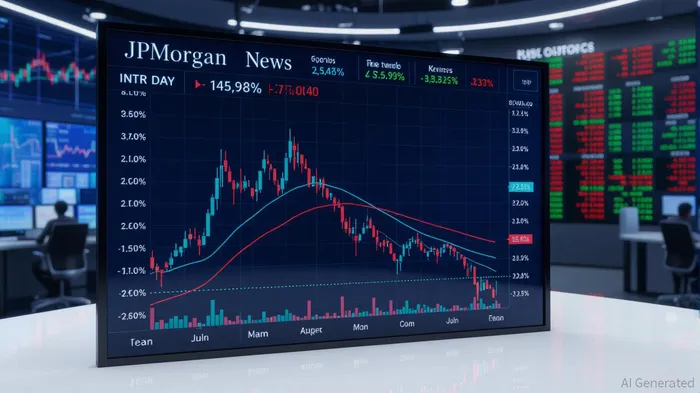
JPMorgan Chase (JPM.N) experienced an unusual intraday drop of nearly 3.89% on high trading volume (11.5 million shares). Among the technical signals, only one indicator triggered: the kdj death cross, which typically signals a bearish momentum shift. This pattern occurs when the K line crosses below the D line in the stochastic oscillator—often suggesting a potential short-term price reversal to the downside. However, no other major reversal signals like double tops, head and shoulders, or MACD death cross were activated, which might suggest that the drop isn’t part of a long-term bearish trend yet.
No Clear Order Flow to Guide the Move
There was no available order-flow data or block trading information to determine whether the move was driven by large institutional selling or strong retail buying pressure. This lack of data prevents us from pinpointing the exact source of the selling pressure. The absence of a clear bid or ask imbalance suggests that the drop may not have been caused by a liquidity event or sudden order imbalance.
Broader Market Sentiment: A Mixed Bag
 The performance of related stocks offers some clues about the broader market mood. Most theme stocks were mixed, with some rising sharply and others falling. For example, BEEM and ATXG surged by more than 4% and 7%, respectively, while AAP fell nearly 9%. This suggests that the move in JPMJPM-- may not be part of a broader sector-wide trend. JPMorganJPM-- is a large-cap financial stock, but it appears to be moving independently, possibly reacting to specific institutional or thematic pressure not reflected in the broader sector.
What’s Driving the Move? A Few Plausible Scenarios
- Institutional Selling: Despite the lack of block trade data, the high volume and a bearish technical signal could suggest institutional or algorithmic selling. A death cross often triggers stop-loss orders or automated sell-offs, which could exacerbate the downward move.
- Position Rebalancing in a Volatile Market: With many theme stocks moving sharply in both directions, it’s possible that traders are rotating out of large-cap names like JPM to more speculative or growth-oriented names. This would explain the divergence from peers and the lack of a broader bearish trend in the sector.
What to Watch Next
While the move appears to be technical in nature and lacks a clear fundamental catalyst, traders should keep an eye on the following:
- Whether JPM holds above key support levels or if the bearish signal leads to a breakdown.
- Any new order-flow data or news that could validate or refute the hypothesis of institutional selling or rebalancing.
- Whether the broader sector follows suit or if JPM remains isolated in its move.
Conclusion
JPMorgan Chase’s sharp intraday drop is likely driven by a mix of technical signals and broader market rotation, rather than a fundamental event. The kdj death cross and high volume suggest bearish momentum, while the lack of block trade data and mixed peer performance make it hard to blame a single factor. Traders may want to stay cautious as the stock tests key levels, especially in a volatile market where algorithmic and institutional moves can amplify short-term swings.

Stay ahead of the market.
Get curated U.S. market news, insights and key dates delivered to your inbox.
AInvest
PRO
AInvest
PRO



Comments
No comments yet