
JPMorgan Chase's Apple Card Takeover: A Strategic Shift in Fintech and Banking Stocks
 Aime Summary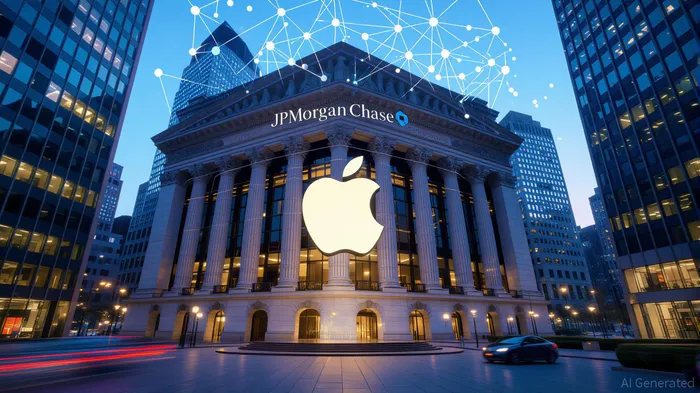
The potential acquisition of Apple's credit-card program by JPMorgan ChaseJPM-- marks a pivotal moment in the financial sector, signaling a strategic realignment between traditional banking institutions and tech-driven fintech platforms. This deal, which has been in advanced negotiations since early 2024, not only reshapes the credit card landscape but also highlights the growing importance of partnerships between big tech and legacy financial players. For investors, the implications extend beyond JPMorganJPM-- and AppleAAPL--, influencing competitors like MastercardMA--, American ExpressAXP--, and the broader fintech ecosystemFEXD--.
Strategic Rationale for JPMorgan and Apple
JPMorgan Chase, already the largest credit card issuer in the U.S. by spending volume, is poised to take over a $17 billion portfolio from Apple's current partner, Goldman SachsGS--. The latter has been exiting consumer lending due to profitability challenges and regulatory scrutiny, including a $90 million fine from the Consumer Financial Protection Bureau (CFPB) in 2023. By acquiring the Apple Card, JPMorgan gains access to a premium customer base and a digital-first financial product that aligns with its own transformation strategy under CEO Jamie Dimon.
For Apple, the partnership with JPMorgan offers deeper integration into daily financial life, potentially accelerating adoption of Apple Pay and expanding its services revenue. The company's ecosystem-centric approach—where financial tools like the Apple Card, Apple Pay, and Apple Cash work in unison—positions it to compete more aggressively with fintech disruptors. This deal could also unlock new cross-selling opportunities, such as linking credit card spending with Apple's retail and subscription services.
JPMorgan's stock has already shown resilience in 2025, rising 26.6% year-to-date, reflecting investor confidence in its digital pivot. If the Apple Card acquisition is structured to mitigate subprime risks (a key concern due to the program's no-fee structure and high reward rates), the stock could see further upward momentum. However, overpaying for the portfolio or failing to manage operational complexities could weigh on earnings.
Competitive Implications for Payment Networks
The Apple Card's transition also triggers a high-stakes bidding war among payment networks. Mastercard, which has served as the card's processor since its 2019 launch, now faces the risk of losing a high-profile client to rivals like VisaV-- and American Express.
Visa has already made a bold move, offering Apple $100 million to take over the network role—a rare strategy typically reserved for the largest card programs. American Express is also positioning itself as a dual contender, aiming to serve as both issuer and network partner. This dual role could allow Amex to capture a larger share of transaction fees and user data, potentially reshaping its brand alignment with Apple's tech-driven consumer base.
Mastercard's current market position is under pressure, as it navigates the potential loss of the Apple Card. For Amex, the opportunity to integrate its premium services with Apple's ecosystem could drive long-term value, particularly if it appeals to a younger, affluent demographic. Investors should monitor how these networks adjust their pricing and innovation strategies to retain Apple's business.
Broader Industry Impact and Investor Considerations
The JPMorgan-Apple partnership underscores a broader trend: the convergence of traditional banking and fintech. As consumer behavior shifts toward digital-first experiences, legacy institutions must adapt by leveraging technology platforms. JPMorgan's existing integration with Apple Pay and its robust infrastructure position it to manage the Apple Card's operational challenges, such as its calendar-based billing system and high customer service demands.
For fintech stocks, the deal highlights the importance of strategic alliances. While fintech disruptors like Stripe or Square remain relevant in B2B and small-business spaces, the Apple Card's success demonstrates that consumer finance still hinges on partnerships with established banks. This could limit standalone fintechs' ability to capture market share in high-margin areas like credit cards.
Apple's services segment, a critical growth driver, could benefit from the JPMorgan partnership. However, its premium valuation (P/E ratio of 28.5 as of July 2025) means gains may be capped unless the deal directly boosts revenue. Investors should also assess how regulatory scrutiny—such as potential CFPB investigations into JPMorgan's handling of the Apple Card—might affect both companies.
Investment Advice and Long-Term Outlook
For investors, the key is to evaluate risk-adjusted returns. JPMorgan's undervalued P/E ratio (10.2) and focus on high-margin digital services make it an attractive long-term play if the Apple Card acquisition is structured prudently. Conversely, overpaying for the portfolio or underestimating subprime risks could erode shareholder value.
Mastercard and American Express offer contrasting opportunities. Mastercard's dominance in the existing Apple ecosystem gives it a defensive edge, while Amex's aggressive bid for the network role could pay off if it secures the partnership. Both stocks warrant close monitoring, particularly as they adjust to the evolving fintech landscape.
In the broader financial sector, the deal signals a shift toward consolidation. As tech giants seek to control end-to-end financial experiences, traditional banks must either partner or risk obsolescence. For investors, this means prioritizing institutions that can adapt to digital ecosystems while managing regulatory and operational risks.
The JPMorgan-Apple Card deal is not without challenges—subprime exposure, regulatory hurdles, and operational complexities remain. However, if executed successfully, it could redefine the credit card industry and reinforce the importance of tech-banking collaborations. For now, investors should stay attuned to the deal's progression and how it reshapes the competitive dynamics between big tech and traditional financial players.

Stay ahead of the market.
Get curated U.S. market news, insights and key dates delivered to your inbox.
AInvest
PRO
AInvest
PRO



Comments
No comments yet