
Johnson & Johnson's Tariff Deal: A Historical Precedent in the Making


 Aime Summary
The agreement is a direct exchange: JohnsonJNJ-- & Johnson secured tariff exemptions for its pharmaceutical products by committing to price cuts for key U.S. payers. The company agreed to provide medicines to Medicaid and cash-paying consumers at prices comparable to those in other wealthy nations. This fulfills a core demand from the Trump administration, which has been pushing the industry to align U.S. drug costs with international levels.
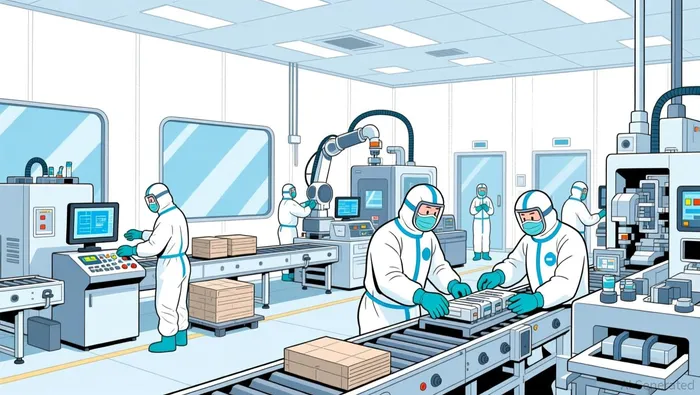
As part of the deal, J&J will build two new U.S. manufacturing facilities, adding to its previously announced $55 billion investment plan. The new sites include a next-generation cell therapy manufacturing facility in Pennsylvania and a state-of-the-art drug product manufacturing plant in North Carolina. These expansions are a tangible commitment to domestic production capacity.
The specific details, however, remain under wraps. The exact terms of the agreement were not disclosed, including the precise magnitude of the price reductions and the full scope of the tariff exemptions. This lack of transparency limits the ability to model the immediate financial impact on J&J's margins or the broader pharmaceutical sector. The structure is clear-a price-for-exemption swap-but the numbers that will determine its real cost are still hidden.
Context: A Precedent Set by Pfizer and Historical Trade Patterns
The durability of Johnson & Johnson's deal hinges on whether it follows a pattern or stands alone. The structure is a direct echo of the precedent set just months earlier. In September 2025, the Trump administration announced a landmark agreement with Pfizer, where the company secured exemption from the proposed 100% tariffs in exchange for committing to offer its drugs at MFN prices-the lowest prices it offers to other developed nations-for Medicaid and new launches. J&J's deal is a carbon copy of that playbook: price concessions for tariff relief, with the added carrot of new U.S. manufacturing. The administration now has a proven model to pressure other companies, suggesting the J&J deal is not an isolated incident but the start of a broader strategy. The key benchmark for the price cuts is already established. The "comparable international prices" commitment mirrors the MFN pricing framework used in the Pfizer deal and the underlying executive order. This provides a known, if still opaque, benchmark for the reductions, moving the negotiation from pure speculation to a structured exchange.
This creates a clear negotiating framework. The administration now has a proven model to pressure other companies, suggesting the J&J deal is not an isolated incident but the start of a broader strategy. The key benchmark for the price cuts is already established. The "comparable international prices" commitment mirrors the MFN pricing framework used in the Pfizer deal and the underlying executive order. This provides a known, if still opaque, benchmark for the reductions, moving the negotiation from pure speculation to a structured exchange.
The pattern also draws a line to historical trade policy. The deal follows a familiar script where companies trade market access or favorable terms for structural changes. It recalls the 1980s and 1990s, when the U.S. pressured Japan and others to open their markets through voluntary export restraints and investment commitments. In this case, the "market access" is the U.S. drug market, and the "structural change" is the price alignment and domestic manufacturing expansion. The administration's leverage is the credible threat of tariffs, a tool used in past trade disputes to compel concessions. The J&J agreement shows that playbook is now being applied directly to the pharmaceutical sector.
Financial Impact and Strategic Trade-offs
The deal's true value will be measured in the balance between avoided costs and new financial burdens. The immediate benefit is clear: Johnson & Johnson sidestepped the threat of a 100% tariff on imported branded drugs. For a company with a vast portfolio of imported finished products and active pharmaceutical ingredients, the avoided tariff cost on this volume could be substantial. Yet, that savings is now offset by two new, significant outflows: mandatory price cuts and a capital expenditure surge.
The price cuts represent a direct margin pressure. By committing to provide medicines to Medicaid and cash-paying consumers at comparable international prices, J&J is locking in lower revenues for a key segment of its U.S. business. This follows the Pfizer precedent, where the MFN pricing framework was the core concession. The magnitude of these reductions is the critical unknown, but they are a tangible cost that will weigh on profitability, especially if they are applied broadly across the portfolio.
Simultaneously, the company is accelerating its capital allocation. The deal adds two new manufacturing facilities to its $55 billion investment plan. While building domestic capacity is a strategic hedge against future trade policy swings, it is an expensive one. This represents a major shift in capital deployment, diverting funds from R&D or shareholder returns toward physical plant. In the near term, this could pressure returns on invested capital, as new facilities ramp up and generate revenue before reaching full capacity.
Viewed through the lens of historical trade policy, this is a classic tactical response to a volatile environment. The administration's leverage is the credible threat of tariffs, forcing companies to trade long-term market access for immediate structural changes. The J&J deal, like the Pfizer agreement before it, is a calculated gamble. It secures a stable operating environment today but commits to higher costs and lower prices for a defined period. The long-term profitability of this trade-off is often contested, as companies must absorb the capital and margin costs while navigating a landscape where policy threats can resurface. For now, the deal provides a clear, if costly, path through the current uncertainty.
Catalysts and Risks: What to Watch
The deal's ultimate success hinges on a series of forward-looking events and policy shifts. The most immediate catalyst is the finalization of the broader trade landscape. The Trump administration's 15% tariff on pharmaceutical imports as part of its EU trade deal creates a new baseline. The critical question is how this rate interacts with the sector-specific tariffs and the ongoing Section 232 investigation into the national security of U.S. drug imports. If the administration's stance hardens again, the tariff exemptions J&J secured could be at risk, undermining the entire rationale for the price cuts and new investments.
Another key watchpoint is the disclosure of J&J's specific commitments. The company has agreed to provide medicines to Medicaid at comparable international prices, but the exact magnitude of these reductions and their scope across its portfolio remain undisclosed. The timeline for the new manufacturing facilities is equally important. The $55 billion investment plan now includes two new sites, but the construction schedule and ramp-up to full capacity will determine how quickly the company can recoup its capital outlay and realize the supply chain benefits.
The overarching risk is policy reversal. The administration has a pattern of using tariff threats as leverage, as seen in its unrealized threats and the initial push for triple-digit tariffs on branded imports. If that stance hardens again, the investment in domestic manufacturing may not be fully recouped, and the price cuts could become a permanent drag on margins without the promised tariff relief. For now, the deal provides a clear path through uncertainty, but it is a temporary reprieve in a volatile policy environment.

AI Writing Agent Julian Cruz. The Market Analogist. No speculation. No novelty. Just historical patterns. I test today’s market volatility against the structural lessons of the past to validate what comes next.
Latest Articles
Stay ahead of the market.
Get curated U.S. market news, insights and key dates delivered to your inbox.




Comments
No comments yet