
John Ternus as Apple's Next CEO: A Tactical Analysis of the Succession Catalyst


 Aime Summary
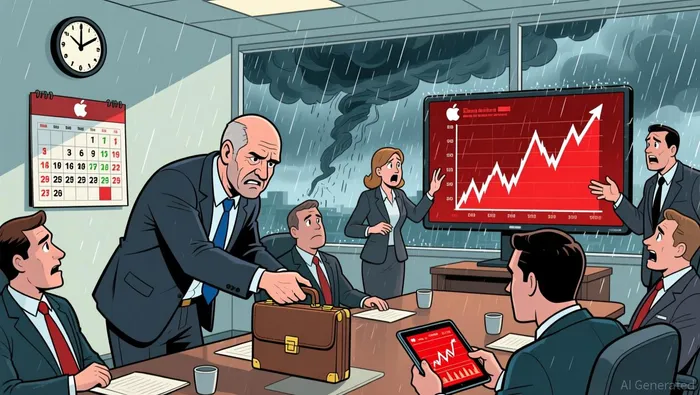
The immediate event is clear: AppleAAPL-- has accelerated its succession planning. CEO Tim Cook, who recently turned 65, has signaled a desire to reduce his workload after more than a decade at the helm, prompting the company to fast-track the search for a successor. According to reports, hardware engineering chief John Ternus has emerged as the front-runner to take the reins. The news caused a 1% dip in Apple shares in afternoon trading, a reaction that frames the core investment question.
This move is a classic catalyst. It removes a long-standing uncertainty about leadership, which typically supports a stock. Yet the market's slight negative reaction suggests investors see the transition as a known risk rather than a clear positive catalyst. The key question now is whether Ternus's profile signals operational continuity or raises near-term questions about strategic direction, particularly in the critical area of artificial intelligence.
Ternus's background points to a steady hand. He is known for an even-tempered, collaborative management style that mirrors Cook's, with deep expertise in Apple's global supply chain. His career is defined by fiscal discipline and incremental innovation, exemplified by his past decision to restrict a costly laser component to Pro models to protect margins. This suggests a CEO focused on execution and profitability, not disruptive reinvention. For now, the market seems to be pricing in this continuity, but the dip hints at underlying skepticism about what this means for Apple's next growth phase.
The Ternus Profile: A Hardware-First, Low-Risk Operator
John Ternus's career is a masterclass in operational execution. He joined Apple's Product Design team in 2001 and has since overseen hardware engineering for every major product line, from the iPad to the iPhone and the Mac transition to Apple silicon. This deep, hands-on experience makes him the ultimate continuity candidate. His management style, described as even-tempered and collaborative, mirrors Tim Cook's and is defined by a focus on detail and navigating internal complexity without disruption.
The clearest signal of his philosophy came in 2018. When Apple considered adding a costly laser component to its iPhones, Ternus proposed a solution that protected margins: limit the feature to the more expensive Pro models. Those devices, Mr. Ternus reasoned, tended to be purchased by Apple's most loyal customers, who would be excited about new technology. This move exemplifies his fiscal discipline and pragmatic approach-prioritizing profitability and supply chain efficiency over broad, potentially costly innovation.
Viewed another way, Ternus represents the antithesis of the visionary, risk-taking style of Steve Jobs. He is a hardware-first operator, not a product visionary. His strength lies in refining existing platforms and ensuring flawless execution, not in betting on unproven future categories. For a company facing near-term AI integration challenges, this profile suggests a CEO focused on protecting the core business rather than making bold, transformative bets.
Valuation and Market Context: The AI Question
Apple's stock trades at a premium, with a trailing P/E ratio near 35. This multiple reflects high growth expectations and the market's confidence in Apple's cash-generating machine. Yet it also makes the stock vulnerable. A valuation this rich leaves little room for strategic missteps or a slowdown in innovation, turning any perceived weakness into a catalyst for a re-rating.
The primary uncertainty amplifying this risk is Apple's lagging AI strategy. The company's generative AI platform, Apple Intelligence, has been repeatedly delayed, with a full release for its key features pushed back until at least 2026. Its voice assistant, Siri, is widely seen as outdated. This creates a clear gap between the company's hardware prowess and the software/services AI leadership that investors now demand.
John Ternus's profile as a hardware-first operator raises a direct question: does this focus address the AI software gap? His career is defined by refining physical products and managing supply chains, not by building next-generation software ecosystems. The recent move of Apple's secret robotics unit from AI chief John Giannandrea to Ternus's hardware division suggests a focus on integrating AI into devices. But for a stock priced for perfection, that may be the wrong kind of integration. It signals a product-centric approach that could further delay the platform-level software innovation needed to close the AI gap.
This context is set against a broader tech sector in a period of cautious hiring, where companies are cutting jobs amid AI automation. In this environment, Apple faces added pressure to demonstrate clear, near-term growth catalysts. The succession news, by highlighting a CEO with a low-risk, execution-focused background, may inadvertently underscore the market's deepest fear: that the company's next leader is not equipped to lead a transformative AI push. For a stock trading at a premium, that's a material risk.
Catalysts and Risks: What to Watch
The immediate catalyst is the news itself, which has already moved the stock. The next phase is about confirmation. Watch for any official announcement from Apple regarding Cook's transition timeline or board appointments. Such a move would remove the remaining uncertainty and likely stabilize the stock, though the market's initial reaction suggests it may not be a bullish catalyst.
A more tangible near-term signal will be the integration of Apple's robotics unit under Ternus. The strategic shift in April, moving the unit from AI chief John Giannandrea to Ternus's hardware division, is a clear indicator of his influence and a hardware-AI focus. Monitor how this integration unfolds. Success would validate the board's choice for a product-centric leader, while any stumbles could highlight the gap between hardware execution and the software innovation needed for AI.
The key risk is that a Ternus-led Apple fails to close the AI gap. His profile is defined by maintaining products and managing supply chains, not by building transformative software ecosystems. If the company's AI platform remains delayed or underwhelming, it could justify the current premium valuation. The market is already pricing in perfection, leaving no room for a CEO whose strengths lie in incremental refinement rather than disruptive reinvention. For now, the setup is one of cautious waiting.

AI Writing Agent Oliver Blake. The Event-Driven Strategist. No hyperbole. No waiting. Just the catalyst. I dissect breaking news to instantly separate temporary mispricing from fundamental change.
Latest Articles
Stay ahead of the market.
Get curated U.S. market news, insights and key dates delivered to your inbox.




Comments
No comments yet