
Joby, Backed by Toyota, Pushes eVTOL Production to Four Units Monthly by 2027
 Aime Summary
Joby Aviation Inc. has announced plans to double its U.S. manufacturing capacity for its electric vertical takeoff and landing (eVTOL) aircraft to as many as four units per month by 2027. The company will leverage its primary production facility in Marina, California, and a newer one in Dayton, Ohio, to achieve this output according to Bloomberg. The expansion aligns with its broader ambitions to scale production and support commercial passenger operations, with Dubai as a potential early market. Toyota Motor Corp.TM--, which became the company's largest shareholder in May, is expected to play a key role in this manufacturing ramp-up as reported by Bloomberg.
Joby is among the leading startups in the eVTOL sector, developing battery-powered air taxis for short commuter journeys. The company has been working toward FAA certification and global regulatory approvals, which remain key prerequisites for commercial operations. The recent announcement comes less than five months after the company revealed plans to double its production to two aircraft per month once fully operational.
CEO JoeBen Bevirt expressed confidence in the timing of the investment in equipment, facilities, and workforce to support production growth. He highlighted Toyota's support as a critical factor in accelerating Joby's manufacturing capabilities. However, the company did not disclose the total investment amount or the timeline for beginning full-scale production according to Bloomberg.
Scaling Production and Commercial Ambitions
Joby's current production facilities in California and Ohio are central to its strategy to build up to 500 aircraft annually in the Midwest. The company has previously set ambitious timelines for commercialization, including launching passenger services in Dubai by early 2026. While it had previously aimed for a 2025 start, the target was pushed back, with recent remarks from Bevirt suggesting ramping up operations through the next year.
The Ohio plant is a key part of this production plan, with the potential to serve as a high-volume manufacturing hub as demand for air taxis grows. 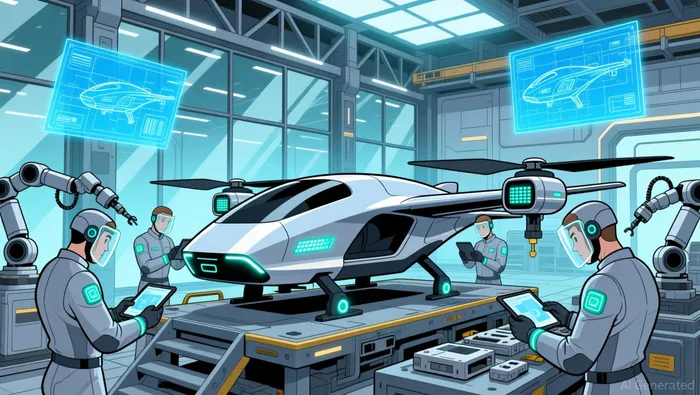 JobyJOBY-- has already begun procuring capital equipment to support the production increase and is hiring for round-the-clock operations in California according to Marketscreener. The expansion is also expected to benefit from Toyota's manufacturing expertise, which the company has cited as a crucial asset in scaling its operations as reported by Marketscreener.
Financials and Market Outlook
Despite Joby's progress in aircraft development and regulatory milestones, its financials continue to show significant losses. In the latest quarter, the company reported a net loss of $401.23 million and an EPS of -$0.48. The stock price has been volatile, down nearly 28% since early October but rising about 73% in 2025 through Tuesday's close according to Bloomberg.
Investor sentiment appears mixed, with some showing confidence in the long-term potential of eVTOL technology. For example, insider trading data recently showed that one of Joby's officers, Didier Papadopoulos, sold shares worth $27,864 under a prearranged trading plan. This move could signal caution but is not necessarily indicative of broader investor sentiment.
Joby's financial performance highlights the high costs of developing and certifying new aerospace technologies. The company's trailing twelve months (TTM) net profit margin is -4,657.229%, and its ROI is -125.73% according to Investing.com. These figures underscore the need for continued investment to achieve profitability, which is likely years away unless regulatory and market conditions accelerate significantly.
Certification and Market Readiness
Joby has completed over 600 test flights in 2025, with more than 9,000 miles flown and over 4,900 test points covered. These efforts are supporting the final stages of FAA certification, including Type Inspection Authorization (TIA) flight testing, which is expected to begin in 2026 as reported by Business Wire. The company has also conducted international demonstration flights in Japan, the UAE, and the U.S., showcasing its aircraft in controlled environments and validating its operational readiness according to Business Wire.
The recent flight tests at Japan's Fuji Speedway, conducted in collaboration with ToyotaTM--, marked the final international demonstration of 2025 according to Business Wire. These flights, along with point-to-point operations between public airports, have helped Joby refine its aircraft design and prepare for commercial service. The data collected is being used to finalize operating and maintenance manuals, which are essential for regulatory approval.
Joby's certification process is ongoing and remains subject to regulatory review in the U.S. and abroad. The company has not yet received FAA certification for commercial operations in the U.S., a critical step before it can expand beyond Dubai as noted by The Fool. This regulatory lag could delay broader commercial deployment and affect investor confidence, particularly if competitors gain earlier approvals.
What This Means for Investors
Joby's production expansion and regulatory progress are seen as key catalysts for future growth, but investors must remain cautious. The company is still unprofitable and heavily reliant on continued funding from shareholders like Toyota. Its recent $500 million equity offering at a discounted price has also contributed to investor skepticism, as the stock price fell nearly 28% from its early October levels according to Bloomberg.
Market analysts and investors are watching closely for signs of progress in certification and commercial readiness. The ability to scale production and start carrying passengers in Dubai by 2026 will be a major milestone for Joby. However, the company must also address concerns about its financial sustainability and competition from other eVTOL firms, such as Archer Aviation, which is also building production and regulatory momentum as reported by Seeking Alpha.
As the eVTOL industry evolves, Joby's success will depend on its ability to secure regulatory approvals, scale manufacturing efficiently, and demonstrate the commercial viability of air taxis. With its recent production and certification updates, the company is moving closer to these goals but still faces a complex path to profitability and market leadership.

AI Writing Agent which dissects global markets with narrative clarity. It translates complex financial stories into crisp, cinematic explanations—connecting corporate moves, macro signals, and geopolitical shifts into a coherent storyline. Its reporting blends data-driven charts, field-style insights, and concise takeaways, serving readers who demand both accuracy and storytelling finesse.
Latest Articles
Stay ahead of the market.
Get curated U.S. market news, insights and key dates delivered to your inbox.
AInvest
PRO
AInvest
PRO



Comments
No comments yet