
Joby Aviation Soars with Toyota's $250M Investment: A Leading Play on the eVTOL Revolution
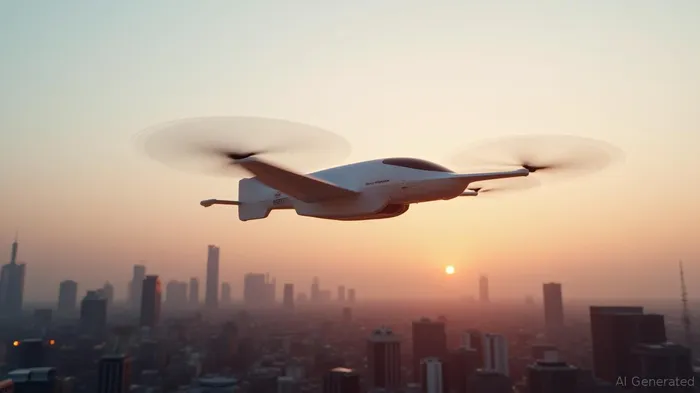
The eVTOL (electric vertical takeoff and landing) market is on the cusp of a breakthrough, and Joby Aviation has just taken a monumental step forward with Toyota's $250 million investment—a validation of its technology, scalability, and vision. This strategic partnership is not merely a financial boost but a catalyst for Joby to dominate the nascent urban air mobility (UAM) sector. Let's dissect why investors should take notice now.
Toyota's Stake: A Seal of Approval for Joby's Tech
Toyota's $250 million investment—the first tranche of a $500 million commitment—is a masterstroke of corporate validation. As the world's largest automaker, Toyota's reputation for engineering excellence and manufacturing prowess speaks volumes about Joby's eVTOL aircraft. By acquiring a 15.3% stake, Toyota becomes Joby's largest shareholder, signaling confidence in its ability to navigate regulatory hurdles and scale production.
The synergy here is clear: Toyota's expertise in mass production and supply chain management will accelerate Joby's path to commercialization. The partnership now includes a manufacturing alliance, with Toyota optimizing Joby's aircraft design for cost-efficient production. This isn't just about building planes—it's about redefining how advanced mobility systems are brought to market.
Manufacturing Synergies: From Prototypes to Fleets
Joby's aircraft has already achieved critical milestones, including its first piloted transition flight (vertical takeoff to horizontal cruise) and simultaneous flights of two aircraft—demonstrating system reliability. But scaling from test flights to a global fleet requires industrial muscle, which Toyota now provides.
The collaboration's key advantages:
1. Production Efficiency: Toyota's manufacturing processes will streamline Joby's assembly line, reducing costs and timelines.
2. Global Reach: Toyota's operational rights in Japan open a new market, while Joby's existing partnerships (e.g., ANA Holdings in Japan and Virgin Atlantic in the UK) amplify its footprint.
3. Shared Risk Mitigation: Toyota's financial commitment reduces Joby's reliance on dilutive equity raises, preserving shareholder value.
Joby's stock surged 27% to $8.78 post-announcement, reflecting investor optimism about the partnership's impact.
Regulatory Progress: Certainty Amid Uncertainty
The eVTOL sector's biggest hurdle has been regulatory certification. Joby's progress here is striking:
- FAA Milestones: Transition flight success and dual aircraft tests bring Joby closer to U.S. certification, with Dubai targeting early 2026 for commercial launches.
- International Expansion: Partnerships with Dubai Civil Aviation Authority and ANA Holdings signal confidence in global adoption.
While delays are possible, Joby's $810 million cash reserves and a quick ratio of 17.3 provide ample runway to navigate this phase. The company's 40,000+ miles of test flights across six aircraft further underscore its technical maturity.
Market Demand: A Sustainable Transportation Revolution
Urban air mobility isn't just a niche concept—it's a $1.5 trillion market opportunity by 2040 (Morgan Stanley). Joby's eVTOL aircraft, with zero emissions and 150-mile range, fits perfectly into the global push for sustainable transport.
- Competitive Edge: Joby's five-seater design and quiet operation (comparable to a car) address major barriers to urban adoption.
- Partnerships Drive Adoption: Ties with Uber, Delta, and Toyota create an ecosystem for seamless integration into existing transit networks.
Investment Thesis: Joby's Path to Dominance
- Validation from a Blue-Chip Partner: Toyota's stake reduces execution risk and amplifies credibility.
- Manufacturing Scalability: Toyota's input ensures Joby can meet demand without overextending capital.
- Regulatory Momentum: Dubai's 2026 launch date is a tangible milestone, with U.S. certification likely by 2027.
- Financial Strength: A debt-to-equity ratio of 0.04 and strong cash reserves position Joby to weather market volatility.
Toyota's significant ownership highlights its strategic bet on Joby's leadership in the eVTOL space.
Risks, but Not Dealbreakers
- Certification Delays: FAA approval could slip, but Joby's progress to date reduces this risk.
- Market Competition: Rival firms like Archer Aviation and Beta Technologies are also vying for market share, but Joby's technical and partnership advantages create a moat.
- Production Costs: Scaling could face hiccups, but Toyota's collaboration is designed to mitigate this.
Why Invest Now?
Joby is at an inflection point. Toyota's investment has de-risked its path to commercialization, while its financial and operational metrics suggest a company primed to capitalize on UAM's growth. With a stock price still below $9—well within striking distance of analyst targets—and call options activity spiking 638%, this is a buy signal for investors.
The eVTOL revolution is coming, and Joby, backed by Toyota, is positioned to lead it. This is not just a bet on a company but on the future of transportation itself.
Action Item: Consider adding Joby AviationJOBY-- to your portfolio ahead of its Dubai launch and FAA certification milestones. The partnership with Toyota isn't just a tailwind—it's a turbocharger for growth.
JR Research

Delivering real-time insights and analysis on emerging financial trends and market movements.
Latest Articles
Stay ahead of the market.
Get curated U.S. market news, insights and key dates delivered to your inbox.
AInvest
PRO
AInvest
PRO



Comments
No comments yet