
Joby Aviation's Q2 Performance and Pre-TIA Testing Progress: A Tipping Point for Long-Term Investors?
 Aime Summary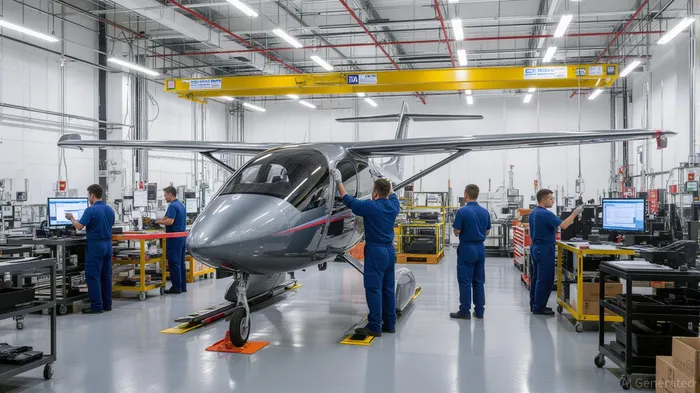
Joby Aviation's Q2 2025 earnings report has ignited a critical debate among investors: Are the company's recent production milestones and regulatory progress enough to offset its financial setbacks, or do they signal a red flag for long-term capital? The answer lies in dissecting the interplay between its operational advancements and the stark realities of its balance sheet.
Financial Setbacks: A Cost of Pioneering Innovation
Joby's Q2 results were undeniably bleak. The company reported a net loss of $325 million, driven by non-cash revaluations tied to its ToyotaTM-- investment and warrant adjustments. Revenue of just $20,000 fell far short of the $1.57 million forecast, underscoring the sector's reliance on capital rather than cash flow. Earnings per share (EPS) of -$0.41 marked a 115.79% negative surprise, sending shares down 3.12% in premarket trading.
However, these losses must be contextualized. JobyJOBY-- ended the quarter with $991 million in cash, bolstered by the first $250 million tranche of Toyota's $500 million investment. While the company projects a $500–$540 million cash burn for 2025, it has already reduced its Q2 burn by 10% compared to the prior quarter. For a pre-revenue company in a capital-intensive industry, these figures reflect a disciplined approach to managing liquidity.
Operational Milestones: A Race Against the Clock
The real story lies in Joby'sJOBY-- operational progress. The company has entered the final phase of FAA certification, with 70% completion of Stage 4 and the commencement of final assembly for its first Type Inspection Authorization (TIA) aircraft. This aircraft, set to be flown by Joby pilots in 2025 and FAA pilots shortly thereafter, is a linchpin for regulatory approval. The Dubai flight test campaign—21 full-transition flights in 110°F heat—validated critical aspects of commercial readiness, including logistics and infrastructure.
Production scaling is equally impressive. The Marina, California facility now produces 24 aircraft annually, while the Dayton, Ohio site is projected to reach 500 units per year. These expansions, supported by Toyota's investment, position Joby to meet global demand as it transitions from development to commercialization.
Strategic Moves: Diversification and Market Access
Joby's strategic acquisitions and partnerships further strengthen its case. The acquisition of Blade Air Mobility's passenger business grants immediate access to high-demand urban corridors in New York and Southern Europe. Agreements with Abdul Latif Jameel and All Nippon Airways (ANA) aim to deploy 300 aircraft in Saudi Arabia and Japan, diversifying its geographic footprint. Meanwhile, the collaboration with L3HarrisLHX-- to develop a hybrid variant for defense applications opens a new revenue stream and accelerates technology maturation.
Investment Implications: Weighing Risks and Rewards
For long-term investors, the question is whether Joby's operational and regulatory progress justifies the financial risks. The company's proximity to FAA certification—a critical inflection point—reduces the speculative nature of its business. Dubai's planned 2026 launch and U.S. market entry in 2027 are no longer hypothetical but high-probability events.
However, the financials remain a concern. Joby's stock trades at a premium to book value, and its cash burn rate, while improving, is still unsustainable without revenue. The market's 133% year-to-date gain suggests optimism, but the recent earnings miss highlights volatility.
Conclusion: A Calculated Bet on the Future of Aviation
Joby Aviation's Q2 performance presents a paradox: a company hemorrhaging cash but racing toward a transformative milestone. For investors with a long-term horizon, the production milestones and regulatory progress outweigh the near-term financial setbacks. The Dubai launch and global partnerships signal a viable path to commercialization, while Toyota's investment provides a financial safety net.
Yet, this is not a risk-free bet. The eVTOL sector is unproven, and Joby's ability to execute on its roadmap will determine its success. Investors must weigh the potential for first-mover advantage against the risks of a capital-intensive, unprofitable model.
In the end, Joby's story is one of ambition and execution. If the company secures FAA certification and scales production efficiently, it could redefine urban mobility. For those willing to tolerate the volatility, the current valuation offers a compelling entry point—provided the market hasn't already priced in the risks."""

Delivering real-time insights and analysis on emerging financial trends and market movements.
Latest Articles
Stay ahead of the market.
Get curated U.S. market news, insights and key dates delivered to your inbox.
AInvest
PRO
AInvest
PRO



Comments
No comments yet