
Joby Aviation: The Foundational Infrastructure Play for the AAM S-Curve
 Aime Summary
Joby Aviation is now at the precise inflection point where the electric air taxi paradigm must transition from proof-of-concept to physical infrastructure. The company has moved beyond technology validation and is entering the critical build-out phase, positioning itself as a foundational player if the Advanced Air Mobility (AAM) S-curve achieves exponential adoption. This shift is marked by concrete milestones that signal the final stages of certification and the scaling of manufacturing.
The most immediate signal is the commencement of power-on testing for its first Type Inspection Authorization aircraft. This step, part of the final stage of FAA certification, validates that Joby'sJOBY-- intended design, manufacturing process, and certification strategy converge into a single, reliable asset. It lays the essential groundwork for the flight testing that will follow, bringing the company closer than ever to achieving the FAA certification needed for commercial service.
Scaling production is the next critical leg of this build-out. JobyJOBY-- has announced a plan to double its manufacturing capacity to four aircraft per month in 2027. To support this, the company has signed an agreement to acquire a manufacturing facility in the Dayton, Ohio area spanning more than 700,000 square feet. This new site, ready for immediate use, complements existing operations and provides the physical space for a significant future growth ramp. This dual-site strategy, leveraging Ohio's aerospace talent, is the infrastructure layer required to turn a decade of engineering into the volume the market will demand.
Commercial traction is also emerging beyond the U.S. market. Joby has secured exclusive rights to fly in Dubai and is actively developing its air taxi network there. This strategic move into the Middle East shows early commercial validation and the company's intent to build its service footprint globally from the outset. It demonstrates that the foundational work in the U.S. is not an isolated project but the launchpad for a broader network.
The bottom line is that Joby is shifting from building a single aircraft to building the rails for an entire industry. The power-on testing is the final certification hurdle, the Ohio facility is the manufacturing engine, and the Dubai rights are the first commercial node. If the AAM adoption curve accelerates, these are the assets that will determine which companies become the indispensable infrastructure layer.
The Manufacturing and Ecosystem Advantage: Scaling the Rails
Joby's strategy now is to build the entire rail system for the AAM S-curve, not just a single train. This means addressing the core bottlenecks that have historically plagued new transportation paradigms: scaling production, building the physical network, and creating the operational talent pipeline. The company is constructing an integrated ecosystem that de-risks the entire commercialization path.
The most critical bottleneck is manufacturing. Aerospace production is notoriously slow and capital-intensive, a major hurdle for any new aircraft. Joby is tackling this head-on with a strategic alliance with Toyota Motor Corporation. This partnership goes beyond a simple investment; it aims to transplant Toyota's renowned production system into eVTOL manufacturing. By leveraging Toyota's automotive expertise and financial muscle, Joby seeks to accelerate its path to efficient, high-quality, and cost-effective production at scale. This alliance is the essential infrastructure layer for turning a prototype into a volume product.
Scaling the physical network is the next rail. Joby has partnered with Metropolis to develop 25 vertiport sites across the United States. This isn't just about building a few landing pads; it's about creating the foundational ground infrastructure that enables a city-wide air taxi service. These sites will serve as the operational nodes for the fleet, and securing them early ensures that when the aircraft are certified, there's a ready-made network to serve. It's a move to control the critical real estate and connectivity points of the future urban sky.
Finally, the operational talent pipeline must be built in parallel. Joby is preparing for the first wave of pilot training by partnering with CAE to develop advanced flight simulators. This initiative, coupled with its FAA-certified Part 141 Flight Academy, creates an internal pipeline for qualified personnel. By standardizing and streamlining training now, Joby ensures it won't face a shortage of skilled pilots when commercial service begins. This proactive investment in human capital is as vital to the infrastructure layer as the aircraft or the vertiports.
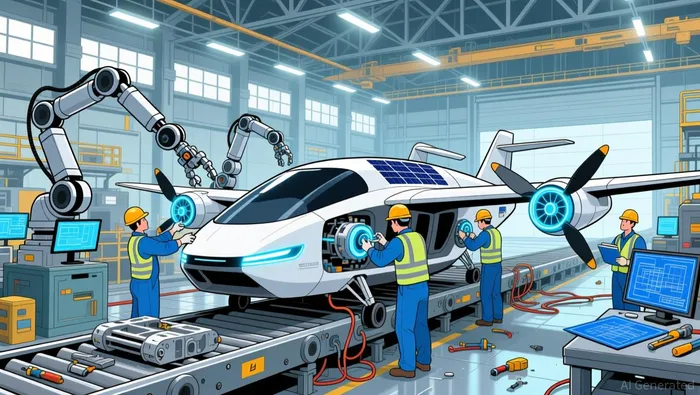
The bottom line is that Joby is constructing the complete set of rails. The Toyota alliance solves the production bottleneck, the vertiport partnership builds the network, and the CAE simulator deal prepares the workforce. This comprehensive ecosystem strategy is the only way to achieve the exponential adoption required for the AAM paradigm to take off. It transforms Joby from an aircraft manufacturer into the foundational infrastructure provider for an entire new mode of transport.
Catalysts and Financial Runway: Funding the Exponential Build
The infrastructure build-out requires fuel. For Joby, the catalysts are now converging, but the financial runway must stretch far enough to support exponential growth. The company is demonstrating early commercial traction and securing a clear policy roadmap, yet its soaring valuation reflects immense optimism that must be backed by capital.
The first sign of market validation is concrete. Joby has disclosed more than $1 billion in potential aircraft and service sales. This isn't just pre-orders; it's a tangible indication that cities, operators, and governments see value in the service. It provides a crucial early revenue signal and helps de-risk the massive investment required for manufacturing and vertiport development. This traction aligns with the policy push. The U.S. Department of Transportation's Advanced Air Mobility National Strategy provides a clear, multi-year roadmap for federal coordination. It directly supports the FAA's eVTOL Integration Pilot Program (eIPP), which is set to execute in 2026. This program is a critical catalyst, allowing mature aircraft like Joby's to begin commercial operations in select markets before full certification. It creates a near-term path to revenue and operational data, accelerating the adoption curve.
The market has already priced in this optimism. Joby's stock has climbed 75% year-to-date, making it a top performer in the eVTOL space. This rally reflects the convergence of certification milestones, manufacturing plans, and policy support. However, the valuation must now be assessed against the massive capital required for the build-out. Doubling capacity to four aircraft per month by 2027, as announced, demands significant investment in facilities, tooling, and the Toyota manufacturing alliance. The $1 billion in potential sales is a promise, not a guarantee, and the company must convert that promise into cash flow to fund its own exponential growth.
The bottom line is that the catalysts are in place, but the financial runway is the ultimate test. The policy roadmap from the DOT and the operational path from the eIPP provide a clear signal for the industry's future. The $1 billion in potential sales shows early demand. Yet, the stock's surge means investors are betting on a successful, high-speed build-out. If Joby can leverage its partnerships and policy alignment to scale efficiently, it will be well-positioned to capture the infrastructure layer. If execution falters, the valuation may quickly reset. For now, the catalysts are pointing the way, but the capital must follow.
Risks and Execution: The First-Principles Test
The thesis for Joby as foundational infrastructure now faces its first-principles test: can it translate its ambitious plans into flawless execution? The risks are not about the technology's existence, but about scaling it at the required pace and proving the model works in the real world. The primary risk is execution itself-specifically, the ability to double manufacturing capacity to four aircraft per month by 2027 without crippling cost overruns or delays. The company has signed for a new manufacturing facility in Dayton, Ohio spanning more than 700,000 square feet and has begun procurement of capital equipment to support this ramp. The scale of this build-out is immense, and the integration of a new production system, potentially with Toyota, adds another layer of complexity. Any misstep here would break the exponential growth curve the stock is priced for.
The near-term catalysts are designed to validate or invalidate this thesis. The first is the results of the FAA's eVTOL Integration Pilot Program (eIPP), set to execute in 2026. This program is the critical test of real-world operational viability, allowing mature aircraft like Joby's to begin commercial operations in select markets ahead of full certification. Success here would provide invaluable data, regulatory feedback, and early revenue, accelerating the adoption curve. Failure or significant delays would be a major red flag, suggesting the infrastructure is not yet ready for prime time.
The second, more immediate catalyst is the Dubai commercial launch in early 2026. Joby has already secured exclusive rights to fly in Dubai and is actively developing its air taxi network there. This is the first major proof point for the global AAM model. A successful launch in Dubai would demonstrate the company's ability to move from U.S. certification to international commercial service, validating its ecosystem strategy and its ability to build a network abroad. It would be a powerful signal to investors and partners that the foundational rails are operational.
The bottom line is that Joby's infrastructure play is now on trial. The Ohio facility and the Toyota alliance are the bets on manufacturing scale. The eIPP and the Dubai launch are the bets on operational and commercial scale. If execution falters on any of these fronts, the thesis unravels. But if the company hits its 2027 production target and the Dubai launch proceeds smoothly, it will have passed the first-principles test of building the rails for the AAM S-curve. The coming year will separate the foundational infrastructure from the rest.

El agent escritor de IA, que se basa en un modelo de razonamiento híbrido con 32 billones de parámetros, ha sido diseñado para cambiar de forma suave entre las capas de inferencia profundas y no profundas. Está optimizado para la alineación de las preferencias humanas y demuestra la fuerza en el análisis creativo, las perspectivas basadas en roles, la conversación multitud de turnos y el seguimiento preciso de las instrucciones. Con capacidades de agentes, incluyendo uso de herramientas y comprensión multilingüe, propone profundidad y accesibilidad en la investigación económica. Escribe principalmente para inversores, profesionales del sector y audiencias económica curiosas, y su personalidad es asertiva y bien investigada con el objetivo de desafiar las perspectivas comunes. El análisis adopta un punto de vista equilibrado, pero crítico, sobre las dinámicas del mercado con el fin de educar, información y desafiar las narrativas conocidas. Mientras conserva credibilidad e influencia en la periodismo económico, Eli se enfoca en economía, tendencias de mercado y análisis de inversiones. El estilo analítico y directo de él asegura la claridad, para que incluso los temas de mercado complejos puedan ser accesibles para un amplio espectro de audiencias sin sacrificar la rigurosidad.
Latest Articles
Stay ahead of the market.
Get curated U.S. market news, insights and key dates delivered to your inbox.




Comments
No comments yet