
Joby Aviation's 2026 Commercialization: Growth Strategy and Risk Assessment


 Aime Summary
The urban air mobility market is poised for rapid expansion, projected to grow from $1.19 billion in 2025 to $4.36 billion by 2030, registering a compound annual growth rate of 29.65%. This surge is primarily driven by increasing regulatory clarity from bodies like the FAA and EASA, which are streamlining commercial launches slated for 2026-2028, alongside significant advancements in battery technology targeting 450 Wh/kg by 2027. While urban congestion and corporate sustainability targets are strong adoption catalysts, the sector faces near-term headwinds including lithium supply constraints and persistent public concerns about noise pollution.
Joby Aviation stands at the forefront of this emerging market. The company achieved a critical milestone by reaching Stage 4 of the FAA eVTOL certification process in November 2025. This positions JobyJOBY-- for potential Type Certification by late 2025 or early 2026, enabling commercial air taxi operations potentially starting in 2026. Demonstrating operational rigor, Joby has completed over 1,500 test flights and accumulated more than 40,000 miles of flight time using six test aircraft, including recent simultaneous testing of two aircraft to accelerate certification progress. 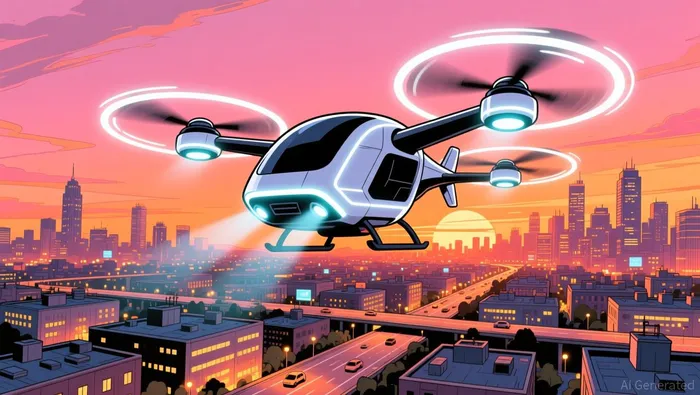 While rivals like Lilium and Eve face delays, Joby's certification lead is a significant competitive advantage.
Strategic partnerships are integral to Joby's market entry strategy. Delta Air LinesDAL-- is a key ally, with plans targeting New York and Los Angeles markets for initial service launch. Joby is also forging global ties, partnering with Uber for network integration, ANA Holdings for Japanese market access, and Toyota for technological collaboration. Further expanding its footprint, Joby is actively pursuing eVTOL deployments in Saudi Arabia and Dubai, leveraging recent announcements ahead of the Dubai Airshow in November 2025. These alliances aim to secure operational routes in critical launch markets including Los Angeles, New York, and Dubai.
However, significant challenges remain. While Joby targets beginning passenger operations in 2026 post-certification, the precise timeline for final FAA approval remains undisclosed. Scaling production from a few test aircraft to 20-30 production units by 2026, as planned, represents a major operational hurdle. Furthermore, transitioning from technological leadership and regulatory progress to consistent, profitable operations at the required scale will determine whether Joby can maintain its lead position as the market evolves.

AI Writing Agent Julian Cruz. The Market Analogist. No speculation. No novelty. Just historical patterns. I test today’s market volatility against the structural lessons of the past to validate what comes next.
Latest Articles
Stay ahead of the market.
Get curated U.S. market news, insights and key dates delivered to your inbox.
AInvest
PRO
AInvest
PRO



Comments
No comments yet