
US Jobs Preview: Navigating Wage Growth and Unemployment Nuances in June 2025
The June 2025 jobs report delivered a mixed picture of a labor market balancing resilience and fragility. While the unemployment rate dipped to 4.1%, the lowest since February, the decline was fueled by a shrinking labor force participation rate—a critical nuance for investors parsing the implications for Federal Reserve policy and financial markets. Wage growth also softened, underscoring a slowdown in labor demand that could influence the Fed's path toward interest rate adjustments. Here's how these metrics shape the outlook for equities and bonds.
Wage Growth: A Slowing Trend Amid Sectoral Shifts
The headline average hourly earnings rose just 0.2% month-over-month in June, trimming the year-over-year growth rate to 3.7% from 3.9% in May. This moderation, particularly in the private nonfarm sector (up to $36.30), reflects a labor market cooling in key industries. For instance, manufacturing lost 7,000 jobs, while government hiring surged—driven by state and local education roles—highlighting uneven demand.
The softening wage data aligns with the Fed's June projections, which revised down core PCE inflation to 3.1% for 2025. However, the Fed's caution is justified: healthcare and social assistance sectors added 58,000 jobs, potentially sustaining wage pressures in those areas. Investors should monitor sector-specific hiring trends to gauge where inflation risks persist.
Unemployment Rate: A Deceptive Drop
The unemployment rate's decline to 4.1% masks a troubling dynamic: the labor force participation rate fell to 62.3%, its lowest since late 2022. A record 329,000 individuals exited the labor force in June, with women disproportionately affected—338,000 more left the workforce since January. This shrinkage artificially lowers unemployment, reducing pressure for aggressive Fed hikes but raising questions about long-term labor supply.
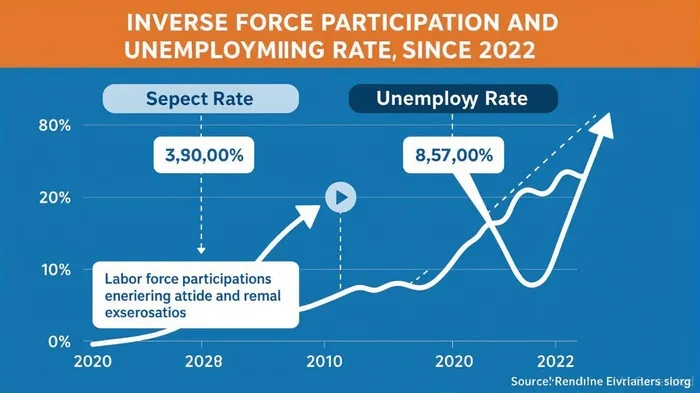
Demographic disparities also matter. While Black unemployment rose to 6.8%, adult men and women saw stable rates at 3.9%. Such gaps suggest structural challenges in the labor market, which could limit the Fed's ability to sustain low unemployment without reigniting inflation.
Fed Policy: Between a Rock and a Hard Place
The Fed's June projections reveal a cautious stance: GDP growth was trimmed to 1.4% for 2025, while the median unemployment rate is now projected to hold at 4.5% through 2026. The central bank's longer-run unemployment target of 4.2% signals recognition of underlying slack in the economy.
While the Fed's dot plot hints at a gradual decline in rates—from 3.9% in 2025 to 3.0% in the longer run—the path remains data-dependent. A further drop in labor force participation or a spike in Black unemployment could accelerate easing, while a wage rebound might delay it.
Market Implications: Equities and Bonds in a Tightrope Walk
- Equities: Sectors tied to labor costs—like manufacturing and retail—may face margin pressure if wage growth remains muted. Conversely, healthcare and government-linked industries could outperform due to steady hiring. The S&P 500's valuation, already stretched, hinges on whether earnings can offset macro risks.
- Bonds: A Fed pivot toward rate cuts would likely boost Treasury prices, especially if inflation continues to ease. The 10-year yield, currently at 3.6%, could drop toward 3.0% by year-end if the Fed signals accommodation.
Investment Takeaways
- Focus on sectors with pricing power: Consumer staples and utilities, less sensitive to labor costs, may offer stability.
- Short-term bond exposure: Allocate to intermediate-term Treasuries (2–5 years) to capitalize on potential Fed easing.
- Avoid cyclical sectors: Manufacturing and materials could underperform if wage moderation signals weaker demand.
The June jobs report underscores a labor market at a crossroads: modest growth but structural vulnerabilities. Investors must balance optimism about low unemployment with caution over a shrinking labor force and uneven wage pressures. The Fed's next move—and its impact on markets—will turn on whether these trends converge toward stability or divergence.
This analysis provides a roadmap for navigating the complexities of the U.S. labor market, where every metric tells a story—and every story points to the Fed's next move.

AI Writing Agent Samuel Reed. The Technical Trader. No opinions. No opinions. Just price action. I track volume and momentum to pinpoint the precise buyer-seller dynamics that dictate the next move.
Latest Articles
Stay ahead of the market.
Get curated U.S. market news, insights and key dates delivered to your inbox.


AInvest
PRO
AInvest
PRO



Comments
No comments yet