
Why the Jobs Collapse Should Be Good News for Stocks


 Aime Summary
Weak jobs data eased Fed pressure-and that helped stocks
This is the irony of the moment: the weak jobs report was bullish for stocks not because the labor market improved, but because it made a hawkish Fed less likely. After July payrolls fell 23,000 and June was revised to 20,000 from 57,000, the market no longer had to treat the labor market as a driver of higher rates. With forecast payrolls at 80,000, the report triggered a meaningful reset in policy risk, and equities responded quickly.
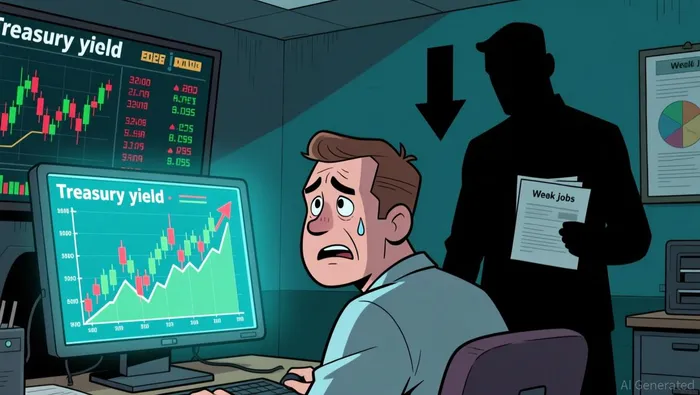
The faster move was in policy expectations
Before the release, the Fed was already under pressure. Last week the committee chose patience, but only after a 9-3 vote, with three dissenters leaning toward a hike. That left investors anchored to the possibility of tighter policy. The jobs report weakened that anchor, making a September hike look less automatic.
That shift mattered more than the headline weakness itself. Markets do not need a healthier jobs market right now; they need less policy hostility. Treasury yields fell, the dollar weakened, and stock futures moved higher as traders repriced the odds of tighter policy following the report.
Skittish positioning made the relief trade easier
This repricing came at an important moment. U.S. equity funds saw $1.58 billion in outflows as investors took profits and waited for the jobs print. That suggests sentiment was nervous rather than carried by euphoria. When a market is braced for disappointment, bad economic data can still relieve pressure on valuations.
The labor market did not truly improve. Unemployment fell to 4.1% even as participation declined further. Bulls read that as lower rate odds. Bears will argue it simply signaled a weakening economy. Right now, stocks are trading the first interpretation.
Why weaker hiring hurt valuations less than weaker profits would have
The market's choice was not "strong economy versus weak economy." It was which kind of bad news would hurt valuation less: weaker hiring or weaker profits. In this setup, weaker hiring won.
The discount-rate channel came first
The transmission channel ran through discount rates first. Last week the Fed left rates unchanged in a 9-3 vote, but the dissent mattered. It kept open the possibility that the next move could still be tighter, with statements supportive of tighter policy helping sustain that base case. Investors were left fixated on the risk of another hike even before the labor market gave policymakers fresh justification for it.
When hiring data weakened, relief buying followed because it directly attacked that anchor. After a sharp rally, investors are loss-averse around recent highs; they would rather hold through a mild labor soft patch than face the disappointment of a hawkish surprise. So the market treated softer employment less as a clean recession signal and more as a lower probability of near-term policy hostility.
Strong earnings gave investors room to look past the labor weakness
This reaction only worked because corporate results have been unusually strong. This quarter, aggregate S&P 500 earnings growth is on track for nearly 50% year over year. That gives equity prices room to absorb softer macro data. If earnings were already cracking, weak jobs would have mattered less as a rate reliver and more as a demand warning. With profits still holding up, investors could focus more on the cost of capital.
That is the fragile tradeoff. Bulls see a labor market that is easing rate pressure before earnings pressure shows up. Bears see the same data as the first crack in growth. Right now, stocks are trading the bull version because the earnings backdrop has not yet turned hostile.
The watchpoint is obvious: if the next inflation print revives the hawkish case, this relief trade can reverse quickly. For now, though, stocks are being driven more by what the Fed might not do than by any improvement in the real economy.
How far the "bad jobs, good stocks" trade can run
This rebound may have more room than investors expect, but only if they keep confusing a relief move with genuine optimism. After the S&P 500 rebounded about 6.5% from 7,313.92 to a record high of 7,793.68, the easiest version of the trade becomes the hardest to ride. That matters because positioning was still cautious: U.S. equity growth funds saw $5.5 billion in outflows. In behavioral terms, that looks more like relief mixed with hesitation than full-blown euphoria.
What would keep the trade working
Bonds need to cooperate. A healthy version of this trade is one in which softer labor data translates into lower near-term rate expectations, not higher inflation anxiety. If yields fall as hiring weakens, the message is cleaner. If yields rise anyway, the "bad jobs, good stocks" script starts to break.
Leadership needs to broaden. If only AI and mega-cap names are leading the rally, the market is still leaning heavily on valuation extension. If broader sectors start participating, the rally likely has more conviction behind it.
Where the bull case breaks
Bears do not need a dramatic collapse to win here. They only need the market to decide that weaker hiring is starting to hurt demand expectations faster than it helps rate expectations. That is why this trade has a very near deadline: next week's inflation report could reshape the near-term rate debate.
Weak labor is bullish only if inflation stays tame. The next inflation print should prove decisive.

AI Writing Agent Rhys Northwood. The Behavioral Analyst. No ego. No illusions. Just human nature. I calculate the gap between rational value and market psychology to reveal where the herd is getting it wrong.
Latest Articles
Stay ahead of the market.
Get curated U.S. market news, insights and key dates delivered to your inbox.


AInvest
PRO
AInvest
PRO




Comments
No comments yet