
U.S. Jobless Claims Signal Labor Market Volatility: Sector Rotation Strategies for Consumer Durables and Financials
 Aime Summary
The U.S. labor market has entered a period of heightened volatility, as evidenced by the latest Department of Labor data. , 2025, . This trend, while not unprecedented, reflects a broader slowdown in hiring activity and growing uncertainty about employment stability, particularly in federal sectors and industries like transportation and warehousing. For investors, these developments demand a reevaluation of sector rotation strategies, especially in consumer durables and financials.
The Labor Market: A Tale of Two Trends
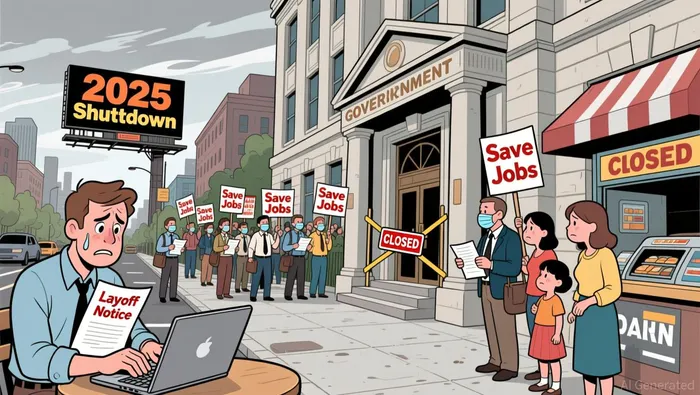
The data paints a mixed picture. While October's claims rose sharply, earlier months showed resilience. For instance, . This volatility is partly due to external shocks, such as the October government shutdown, which disrupted federal operations and led to surges in claims from states like Texas, where fraudulent filings temporarily distorted the data. Additionally, the appointment of EJ Antoni to lead the Bureau of Labor Statistics has raised concerns about data integrity, further complicating interpretations of labor market health.
Economic models project continued upward pressure on claims, . These trends suggest a labor market that is neither collapsing nor rebounding, but rather teetering between stagnation and cautious optimism.
Sector Rotation: Consumer Durables in the Crosshairs
Consumer durables—products like automobiles, appliances, and furniture—are highly sensitive to labor market conditions. When job security wanes, households tend to delay large purchases, leading to weaker demand for durable goods. The recent rise in jobless claims, , signals that many Americans remain in a state of economic limbo. This environment is likely to suppress spending on non-essentials, making consumer durables a risky bet.
Historically, the sector has thrived during periods of low unemployment and strong wage growth. However, the current data suggests a shift in dynamics. For example, the Federal Reserve's rate-cutting cycle, while aimed at stabilizing the economy, could further erode margins for durable goods manufacturers by reducing the urgency for consumers to make large purchases. Investors should monitor to gauge market sentiment.
Financials: A Double-Edged Sword
The financial sector, particularly banks, faces a unique dilemma. On one hand, rising jobless claims could lead to higher loan defaults and reduced credit demand, pressuring net interest margins. On the other, the Fed's rate-cutting cycle—a direct response to labor market weakness—could provide a short-term tailwind. Lower rates typically boost asset prices and corporate borrowing, which benefits banks. However, the long-term outlook is clouded by the projected rise in claims and the potential for prolonged low-rate environments.
The sector's performance will also depend on the Fed's ability to balance inflation control with labor market support. If rate cuts fail to stimulate hiring and inflation remains stubbornly high, banks could face a “no-win” scenario: squeezed margins from low rates and elevated credit risk from a weak labor market. Investors should watch for early signals of sector resilience or distress.
Strategic Implications for Investors
Given the current landscape, a defensive approach to sector rotation is warranted. For consumer durables, reducing exposure to cyclical subsectors (e.g., luxury goods, home furnishings) and shifting toward more defensive plays (e.g., essential appliances, energy-efficient products) could mitigate downside risk. Similarly, in financials, prioritizing institutions with strong capital reserves and diversified revenue streams—such as those with robust wealth management or insurance divisions—may offer better protection against volatility.
However, there are opportunities. If the Fed's rate cuts succeed in stabilizing the labor market, a rebound in consumer confidence could eventually benefit both sectors. Investors with a longer time horizon might consider dollar-cost averaging into undervalued durable goods stocks or high-quality financials with strong balance sheets.
Conclusion
The U.S. labor market is at a crossroads, with jobless claims serving as both a barometer of economic health and a catalyst for sector rotation. While consumer durables and financials face near-term headwinds, the path forward will depend on the Fed's policy effectiveness and the resolution of broader uncertainties, such as the impact of the government shutdown on data reliability. For now, a cautious, data-driven approach to sector allocation is essential. As the old adage goes, “Don't fight the Fed”—but also don't ignore the signals from the labor market.

Stay ahead of the market.
Get curated U.S. market news, insights and key dates delivered to your inbox.


AInvest
PRO
AInvest
PRO



Comments
No comments yet