
U.S. Jobless Claims Remain Elevated at 226,250: Sector Rotation Opportunities in Construction and Caution in Automobiles Amid Labor Market Trends
 Aime Summary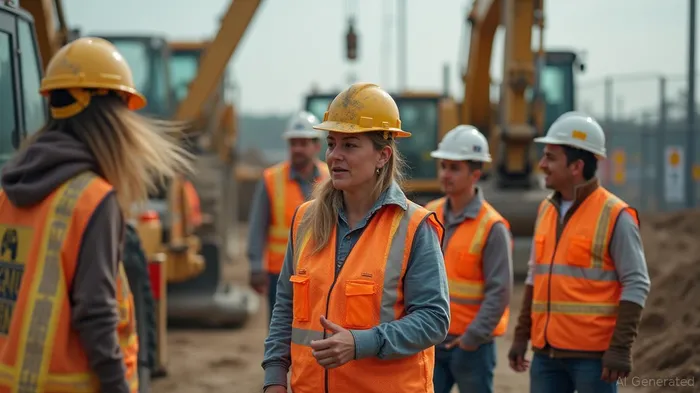
The U.S. labor market is at a crossroads. With initial jobless claims hitting 226,250 in early August 2025—the highest in three months—investors are recalibrating their strategies to navigate a shifting economic landscape. While the construction sector grapples with acute labor shortages, it is also emerging as a potential haven for capital amid policy-driven tailwinds. Meanwhile, the automobile industry, though resilient in retail segments, faces headwinds from trade policy uncertainty and cost inflation. This divergence presents a compelling case for sector rotation, favoring construction's adaptability while exercising caution in automobiles.
Construction: A Sector in Transition
The construction industry is navigating a perfect storm of labor shortages and project delays. Skilled trades like electricians, HVAC technicians, and pipe fitters are in high demand, particularly in regions like Texas, Arizona, and the Southeast, where data center construction and commercial projects are surging. Despite a 4.2% unemployment rate in the sector, hiring has slowed, with roles taking 4+ months to fill—up from 8 weeks in 2023. This bottleneck is forcing firms to adopt innovative solutions, including prefabrication, AI-driven project management, and partnerships with trade schools.
Policy incentives are amplifying these efforts. The U.S. government's push for workforce development, led by organizations like the National Center for Construction Education & Research (NCCER), is creating a pipeline for skilled labor. For example, DPR Construction's 18-month training program for recent graduates is addressing immediate gaps while building long-term capacity. These initiatives, combined with infrastructure spending, are positioning construction as a sector capable of weathering short-term volatility.
Investors should note the sector's resilience. While construction employment growth has averaged 35,000 jobs per month over the past three months, the industry's focus on productivity gains and strategic hiring is outpacing broader labor market weakness. The S&P 500 Construction Index has outperformed the broader market by 8% year-to-date, reflecting confidence in its long-term potential.
Automobiles: A Sector Under Pressure
The automobile industry, meanwhile, is caught in a web of trade policy uncertainty and cost inflation. Tariffs on imported vehicles—set at 25% for non-USMCA countries—have added $5,200 per vehicle in costs, with General MotorsGM-- and FordF-- absorbing billions in 2025 alone. These pressures are filtering into production costs, with manufacturer's suggested retail prices (MSRPs) rising 2.3% year-over-year. While retail segments remain stable (e.g., motor vehicle dealers added 9.5K jobs in Q2), manufacturing employment has declined by 34.8K since July 2024.
The Trump administration's rollback of EV incentives and environmental regulations further complicates the outlook. Automakers are pivoting toward high-margin, less fuel-efficient models to offset tariff-driven costs, a shift that could alienate price-sensitive consumers. For instance, Ford's Q2 tariff costs of $800 million highlight the fragility of profit margins in a high-cost environment.
Investors should also consider the sector's exposure to global supply chains. With 1.972 million continuing jobless claims—the highest since 2021—labor market softness could exacerbate production delays and inventory bottlenecks. The automobile sector's reliance on just-in-time manufacturing makes it particularly vulnerable to disruptions.
Sector Rotation: Where to Allocate Capital
The contrast between construction and automobiles underscores a clear investment thesis: overweight construction while underweighting automobiles. Construction's focus on workforce development and productivity gains aligns with long-term structural trends, including infrastructure spending and AI adoption. Conversely, automobiles face near-term headwinds from tariffs, policy shifts, and cost inflation.
For defensive positioning, investors should also consider utilities and healthcare—sectors with inelastic demand and stable cash flows. These industries added 73,300 jobs in July 2025, reflecting their resilience amid economic uncertainty.
The Road Ahead
The Federal Reserve's September meeting will be pivotal. With jobless claims signaling a potential rise in the unemployment rate to 4.3%, a rate cut is likely. However, the Fed's focus on inflation—driven by tariff-induced cost pressures—may limit the magnitude of cuts. Investors should prepare for a market that favors sectors insulated from macroeconomic volatility.
In conclusion, the elevated jobless claims of 226,250 are a harbinger of sector-specific challenges and opportunities. Construction's adaptability and policy tailwinds make it a compelling long-term bet, while automobiles require a cautious approach. As the labor market evolves, strategic sector rotation will be key to navigating the next phase of the economic cycle.

Sumérjase en el mundo de las finanzas mundiales con Epic Events Finance.
Latest Articles
Stay ahead of the market.
Get curated U.S. market news, insights and key dates delivered to your inbox.


AInvest
PRO
AInvest
PRO



Comments
No comments yet