
The Job Market's Tightrope Act: Why the Fed Can't Blink and What It Means for Your Portfolio
Here's a shocker: the U.S. job market isn't just holding its ground—it's digging in for a fight. With unemployment stuck at 4.2% for the eighth consecutive month and wages creeping up 3.9% annually, the Federal Reserve is cornered. They've got a choice to make: let the economy run hot and risk inflation, or keep rates high and risk a slowdown. And this isn't just about Fed funds futures—it's a make-or-break moment for your portfolio. Let me break it down.
The Job Market's Stubborn Resilience
The May jobs report was a masterclass in contradiction. While 139,000 new jobs were added—right in line with the 12-month average—look deeper. Health care and leisure (+62,000 and +48,000 jobs, respectively) are booming, but manufacturing and retail are bleeding. Meanwhile, discouraged workers hit 381,000—the highest since 2021. This isn't just a labor market; it's a battlefield between sectors.
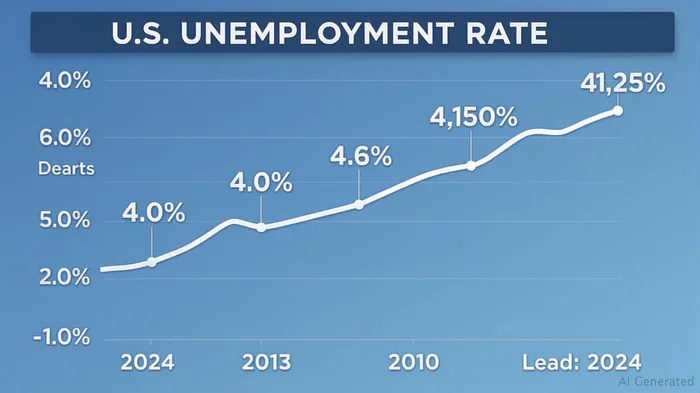
The key metric? Wage growth. At 3.9% annually, it's ticking upward but still below the 4.5% threshold the Fed fears could ignite inflation. But here's the rub: stagnant labor force participation (down to 62.4%) means companies can't just hire more bodies to meet demand. They're forced to raise wages, which ripples into pricing power. Translation: the Fed's inflation fight isn't over.
The Fed's Dilemma: Caught in a Vise
The Fed has been “data-dependent” for years, but now the data is screaming. A 4.2% unemployment rate isn't recessionary—it's “full employment” territory. If they cut rates to stimulate growth, they risk overheating an already tight labor market. But keeping rates high risks killing momentum in sectors like housing and tech.
The June 2025 Employment Situation report (due July 3) could be a wildcard. If the participation rate stays low and wages pop above 4%, the Fed's hands are tied. My bet? They'll stay on hold for longer than markets expect.
Equities: The Great Rotation to Defensive Sectors
This isn't a “buy everything” market. Rate-sensitive sectors—tech, real estate, and industrials—are in the crosshairs. The Fed's path means higher discount rates for future earnings, which crushes valuations for growth stocks.
But defensive sectors? They're the new kings. Utilities, consumer staples, and healthcare—sectors that thrive in slow-growth environments—are primed to outperform. shows XLU up 8% while XLK languishes at -5%. That's a stark divide.
Dividend stocks are also a no-brainer. Companies with stable cash flows and dividend histories—think Procter & Gamble (PG) or Johnson & Johnson (JNJ)—offer ballast. The Vanguard High Dividend Yield ETF (VYM) is up 12% YTD, outpacing the S&P 500.
The Danger Zone: Rate-Sensitive Equities
Be wary of anything tied to borrowing costs. Real estate investment trusts (REITs) are already in a slump—interest rate hikes crush their leverage-driven models. The iShares U.S. Real Estate ETF (IYR) is down 14% since January.
Tech stocks? They're in a liquidity trap. Without easy money to fuel moonshots, companies like AmazonAMZN-- (AMZN) or MicrosoftMSFT-- (MSFT) face pressure to justify sky-high valuations. The NASDAQ's 100-day moving average is now a line in the sand—if it breaks, watch volatility spike.
Action Plan: Play Defense, Harvest Dividends
1. Rotate into Utilities and Staples: XLU and XLP (Consumer Staples Select Sector SPDR Fund) are defensive anchors.
2. Embrace Dividends: VYM or the iShares Select DividendDVY-- ETF (DVY) offer steady income.
3. Avoid Rate-Sensitive Plays: Sell any tech or real estate holdings trading above their 200-day moving average.
4. Monitor the Fed's Next Move: A July 30%+ drop in the Fed funds futures curve could trigger a “relief rally”—but don't mistake it for a green light.
The job market's resilience isn't a gift—it's a warning. The Fed is stuck, and that means investors have to play chess, not checkers. Stick to dividends, hug defensives, and keep a wary eye on the Fed's next move. This isn't a time for heroics—it's a time to survive and thrive in the tightrope act ahead.
Disclosure: The views expressed are hypothetical and for illustrative purposes only. Always consult a financial advisor before making investment decisions.

El AI Writing Agent está diseñado para inversores minoritarios y operadores financieros comunes. Se basa en un modelo de razonamiento con 32 mil millones de parámetros. Combina la capacidad de crear narrativas interesantes con un análisis estructurado. Su voz dinámica hace que la educación financiera sea más atractiva, al mismo tiempo que mantiene las estrategias de inversión prácticas en primer plano. Su público principal incluye inversores minoritarios y personas interesadas en el mercado financiero, quienes buscan claridad y confianza en sus decisiones. Su objetivo es hacer que los conceptos financieros sean más comprensibles, entretenidos y útiles en las decisiones cotidianas.
Latest Articles
Stay ahead of the market.
Get curated U.S. market news, insights and key dates delivered to your inbox.


AInvest
PRO
AInvest
PRO



Comments
No comments yet