
Job Market Resilience Amid Trade Tensions: A Contrarian Play on Labor-Intensive Sectors
The U.S. labor market delivered a defiant performance in June 2025, adding 147,000 jobs while keeping unemployment at a historically low 4.1%. This strength, amid simmering trade tensions and geopolitical uncertainty, offers a compelling contrarian thesis: labor-intensive sectors like manufacturing and healthcare are poised to outperform if investors look past near-term volatility. Historical precedents show that job markets have weathered past trade wars with remarkable durability, and today's data suggests similar resilience. For contrarian investors, this presents an opportunity to buy undervalued equities in industries that could thrive as companies adapt to new trade realities.
A Pattern of Resilience: Historical Precedents
The U.S. job market has long demonstrated an ability to rebound from trade-related shocks. During the 2000s “China Shock,” manufacturing employment fell by 25% between 2000 and 2007 as imports surged. Yet by 2019, manufacturing jobs had stabilized at 8.4% of total employment, with displaced workers shifting into healthcare, logistics, and technology roles. Similarly, the Trump-era trade war (2018–2020) saw manufacturing job losses, but sectors like transportation and warehousing expanded as firms stockpiled goods pre-tariffs.
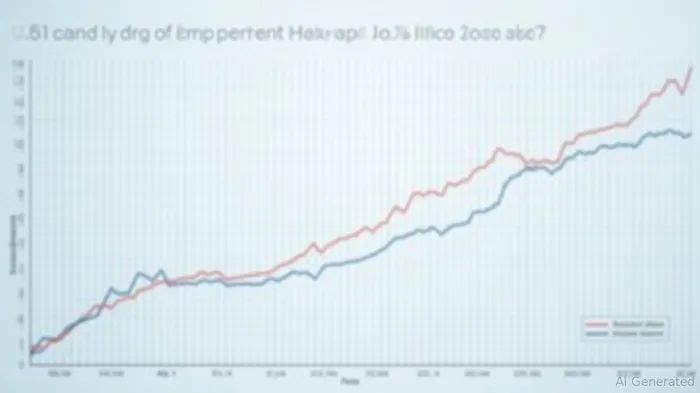
The key lesson? Labor markets diversify and adapt. Even during the fiercest trade disputes, employers prioritize retaining workers—especially skilled ones—to avoid the costs of rehiring in tight labor markets. This dynamic is playing out again: June's job gains in healthcare (51,000) and warehousing (29,000) offset modest manufacturing losses, reflecting a shift toward “trade-insensitive” sectors.
Why June's Numbers Signal a Buying Opportunity
The June jobs report reveals a labor market unshaken by trade uncertainty. While manufacturing added just 1,000 jobs—a shadow of its pre-trade-war pace—the sector's fundamentals are improving. The CHIPS and Science Act (2022) is revitalizing semiconductor manufacturing, while export controls on Chinese tech are accelerating U.S. production of critical components.
Meanwhile, services sectors like healthcare and education remain anchors. Healthcare's consistent job growth (+62,000 in May 2025) reflects an aging population and rising demand for home health aides and telemedicine. For contrarians, this suggests undervalued stocks in durable sectors are being overlooked in a market fixated on short-term trade headlines.
Contrarian Plays: Sectors to Buy Now
Advanced Manufacturing:
Companies like General Electric (GE) and 3M (MMM) are benefiting from reshored production of high-value components. The shows undervaluation relative to semiconductor peers, despite its diversified manufacturing exposure.Healthcare Services:
Home health providers like LHC Group (LHCG) and telemedicine platforms like Teladoc Health (TDOC) are underappreciated. Their 3.9% annual wage growth (May 2025) aligns with rising demand, and they face minimal trade exposure.Logistics & Supply Chain:
Firms like C.H. Robinson (CHRO) and XPO Logistics (XPO) are critical to U.S. supply chain diversification. Their stock valuations remain depressed despite surging demand for domestic warehousing and distribution.
Navigating Risks: Why Trade Wars Won't Derail Growth
Bearish arguments hinge on tariffs raising costs and slowing hiring. Yet history shows trade wars rarely cause prolonged downturns. The 2018–2020 tariffs raised consumer prices by 1%, but employers absorbed most costs to retain workers. Today's labor force participation rate (62.6%) is rising, and job openings (7.4 million in April 2025) exceed available workers, reinforcing wage stickiness.
The biggest risk is overestimating the Fed's ability to tighten further. With inflation at 3.5% (June 2025), the Fed is likely to hold rates steady, sparing labor markets from aggressive hikes.
Conclusion: A Contrarian's Edge in Resilient Sectors
The U.S. job market's resilience is a testament to its adaptability. Investors who focus on labor-intensive sectors like healthcare and advanced manufacturing—backed by structural trends and undervalued stocks—are positioned to profit as companies navigate trade headwinds. History shows that when markets fear the worst, these sectors often lead the rebound. For contrarians, now is the time to buy.
In a world of geopolitical noise, the job market's quiet strength is a signal—not a warning.

Stay ahead of the market.
Get curated U.S. market news, insights and key dates delivered to your inbox.


AInvest
PRO
AInvest
PRO



Comments
No comments yet