
U.S. Job Growth Sharp Decline and Its Impact on the Economy and Markets


 Aime Summary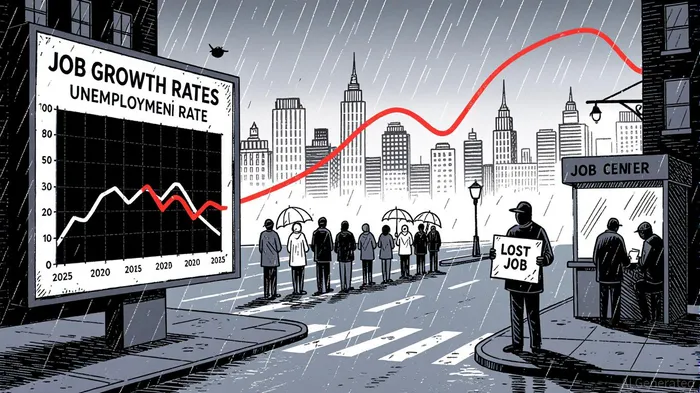
The U.S. labor market has entered a period of significant turbulence, with job growth collapsing to levels not seen since the Great Recession. In August 2025, . This decline, , signals a labor market in distress. The implications for consumer and business confidence, and by extension, the broader economy and financial markets, are profound.
Consumer Confidence: A Barometer of Pessimism
Consumer confidence, a critical driver of economic activity, has mirrored the labor market's deterioration. , . The Present Situation Index, which gauges current economic conditions, , , remaining below the 80 threshold often linked to recessionary fears.
, . Expectations for future job availability have also worsened, . , compounding concerns about purchasing power.
Business Confidence: Tariffs and Uncertainty Weigh Heavily
Business confidence has also plummeted, . , . The 's aggressive trade policies, including high tariffs on imports, have created a climate of unpredictability, particularly in manufacturing and professional services.
The manufacturing sector, a cornerstone of the administration's economic agenda, , despite the intended stimulative effect of tariffs. Meanwhile, . These trends underscore a disconnect between policy rhetoric and on-the-ground realities, as businesses grapple with rising costs and uncertain demand.
Economic and Market Implications: A Fed on the Defensive
The now faces mounting pressure to respond. , markets are pricing in a more aggressive easing cycle. The U.S. dollar has weakened broadly, , .
The stock market has mirrored this uncertainty. . , .
: Navigating the New Normal
For investors, the current environment demands a recalibration of strategies. Here are three key considerations:
and Income-Generating Assets: With consumer and business confidence waning, defensive sectors like healthcare, utilities, and consumer staples are likely to outperform. Bonds, particularly high-quality Treasuries, also offer a hedge against equity volatility.
: A weaker dollar could benefit emerging market equities and commodities like gold. Investors should consider hedging against dollar depreciation through diversified portfolios.
and Policy Sensitivity: Avoid overexposure to sectors vulnerable to trade policy shifts, such as manufacturing and retail. Instead, focus on companies with strong balance sheets and pricing power, particularly in technology and services.
Conclusion: A Tenuous Path Forward
The U.S. labor market's sharp decline has triggered a cascade of economic and market consequences, from eroding consumer confidence to reshaping corporate strategies. While the Federal Reserve's rate cuts may provide temporary relief, the underlying challenges—rising unemployment, policy uncertainty, and inflationary pressures—remain unresolved. Investors must remain agile, prioritizing resilience and diversification in an environment where certainty is elusive.
As the labor market continues to contract and policy debates intensify, the path to recovery will depend on a delicate balance between monetary stimulus and structural reforms. For now, the markets are watching—and waiting—for clarity.

Stay ahead of the market.
Get curated U.S. market news, insights and key dates delivered to your inbox.






Comments
No comments yet