
Job Corps Closure Sparks Skilled Trades Shortage: 3 Undervalued Equities to Watch
The suspension of the Job Corps program—America's largest vocational training initiative—has sent shockwaves through the skilled trades labor market. With 99 contractor-operated centers slated to close by June 30, 2025, the U.S. faces a projected deficit of over 500,000 workers in trades like construction, welding, and manufacturing. This labor shortage isn't just a temporary blip; it's a secular trend driven by an aging workforce, declining vocational education, and the shuttering of a program that trained 25,000 low-income youth annually. For investors, this presents a rare opportunity to capitalize on companies positioned to thrive amid the scarcity.
Why the Shortage Matters
The Job Corps program was a critical pipeline for training young people in high-demand trades. Graduates earned certifications in fields such as construction, electrical work, and welding—skills now in desperately short supply. With the program's closure, industries relying on these workers face rising labor costs, project delays, and increased competition for scarce talent. This dynamic creates a “perfect storm” for companies that can either mitigate labor risks or benefit from rising demand for infrastructure materials and automation.
3 Undervalued Equities to Capitalize on the Labor Shortage
1. Lincoln Electric Holdings (LECO): Welding Equipment & Training Leader
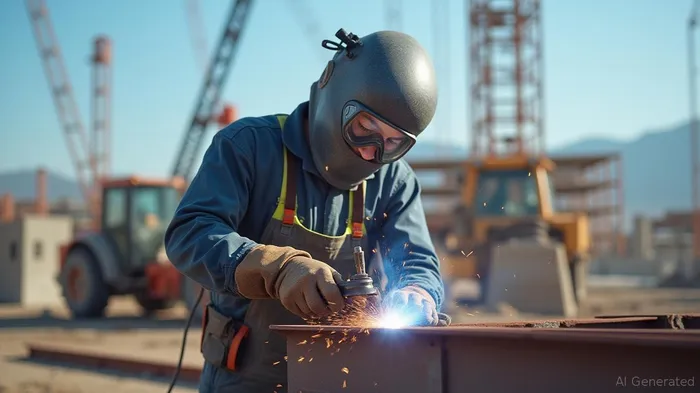 Why it's a play: Lincoln ElectricLECO-- is the world's largest manufacturer of arc welding equipment and a leader in vocational training programs. With Job Corps graduates accounting for a significant portion of welders, the closure of the program directly benefits LECOLECO--. The company's “Lincoln Welding School” and partnerships with community colleges allow it to train workers internally, reducing reliance on external programs.
Data Edge:
LECO's stock has underperformed in recent years, trading at a P/E ratio of 14.5—well below its 5-year average. However, rising demand for automation-friendly welding solutions (to offset labor shortages) and infrastructure projects under the CHIPS Act could ignite growth.
2. Vulcan Materials Company (VMC): Aggregates Supplier to Infrastructure Boom
Why it's a play: Vulcan MaterialsVMC-- is the nation's largest producer of construction aggregates (sand, gravel, and cement). As labor shortages delay construction projects, demand for materials like asphalt and concrete remains resilient due to federal infrastructure spending. The company's geographic footprint—spanning 22 states with high infrastructure needs—aligns with regions hardest hit by Job Corps closures, such as Texas and California.
Data Edge:
VMC's stock trades at 11.8x forward earnings, a discount to its historical average. With the Bipartisan Infrastructure Law allocating $550 billion to roads, bridges, and public transit, VulcanVMC-- stands to benefit from rising demand.
3. Caterpillar (CAT): Heavy Equipment for Labor-Light Construction
Why it's a play: Caterpillar's construction and mining equipment reduces the need for specialized labor by automating tasks like excavation and material handling. As labor shortages drive up project costs, companies will increasingly prioritize machinery over manual labor. CAT's partnerships with vocational programs (e.g., the National Association of Home Builders) also position it to train the next generation of skilled operators.
Data Edge:
CAT's stock trades at 13.2x forward earnings, undervalued relative to its 5-year average. Autonomous equipment sales have surged 20% annually since 2020, a trend set to accelerate as labor scarcity intensifies.
Investment Thesis: Labor Scarcity = Profitability
The Job Corps suspension isn't just a headline—it's a catalyst for a decades-long trend of skilled labor shortages. Companies like LECO, VMCVMC--, and CAT are uniquely positioned to capitalize on this shift:
- LECO benefits from its training infrastructure and welding equipment sales.
- VMC gains from infrastructure spending that's less labor-dependent.
- CAT profits by automating construction processes and reducing labor needs.
All three offer attractive valuations and exposure to secular trends in automation, infrastructure spending, and vocational training gaps.
Risks & Considerations
- Regulatory Pushback: Legal challenges to the Job Corps closure (e.g., a June 5 injunction blocking shutdowns) could delay the labor shortage's impact.
- Economic Downturn: A recession could reduce infrastructure spending and construction demand.
- Alternative Training Programs: New public-private initiatives could alleviate labor shortages faster than expected.
Conclusion: A Labor Shortage Catalyst for Value Plays
The Job Corps suspension is a turning point for skilled trades labor markets. Investors should focus on companies that can either mitigate labor risks or profit from the scarcity. Lincoln Electric, Vulcan Materials, and CaterpillarCAT-- offer compelling valuations and strategic advantages in a landscape where labor scarcity is the new normal. With infrastructure spending and automation trends on the rise, these equities are poised to outperform as the skilled trades crisis unfolds.

Stay ahead of the market.
Get curated U.S. market news, insights and key dates delivered to your inbox.
AInvest
PRO
AInvest
PRO



Comments
No comments yet