
JGB Futures: A Safe-Haven Anchor in a Volatile World
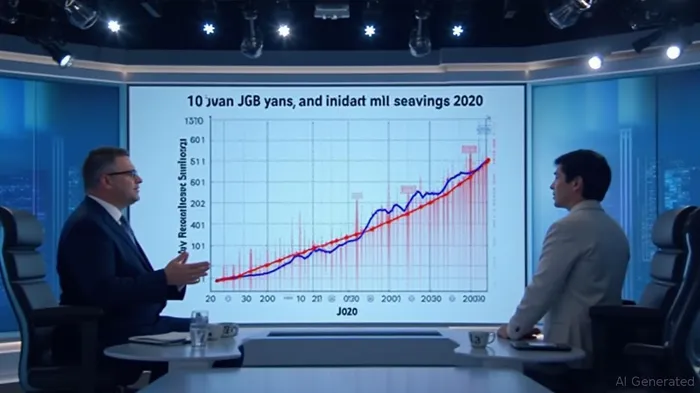
The global financial landscape in mid-2025 is defined by two interlocking forces: escalating geopolitical tensions and divergent monetary policies. Nowhere is this tension more evident than in the Japanese government bond (JGB) market. As U.S.-China trade frictions deepen and Federal Reserve rate hike speculation sows uncertainty, the JGB futures market—a bellwether of safe-haven demand—is caught between rising yields and the enduring allure of its perceived safety. For risk-averse investors, this presents a tactical opportunity to establish long positions in 10-year JGB futures, leveraging their dual role as a hedge against equity volatility and a beneficiary of central bank policy divergence.
Geopolitical Storms and the Safe-Haven Surge
The U.S.-China trade war, now entering its eighth year, has evolved into a multifaceted conflict encompassing tariffs, technology bans, and energy competition. Recent U.S. auto tariffs targeting Chinese imports and Middle East oil supply volatility have reignited inflationary pressures, pushing Japan's headline inflation to 3.6% in March 2025—well above the Bank of Japan's (BoJ) 2% target. Yet, core inflation (excluding energy and food) remains elevated at 3.2%, a stubborn reminder of supply-chain bottlenecks.
In such environments, JGBs traditionally flourish as a haven asset. Equity markets, particularly in emerging economies, have grown increasingly sensitive to geopolitical noise. The Shanghai Composite Index's 8% decline in May 2025 amid fresh U.S. sanctions exemplifies this dynamic. Meanwhile, the 10-year JGB yield, at 1.47% as of June 9, has risen steadily but remains below its 20-year average of 2.08%, offering a yield cushion unmatched by most developed-market bonds.
Central Bank Crossroads: BoJ Caution vs. Fed Hawkishness
The BoJ's gradual tapering of monthly JGB purchases—from ¥5.7 trillion in 2023 to a planned ¥2.9 trillion by early 2026—has been the primary driver of recent yield increases. Governor Kazuo Ueda's emphasis on “cautious normalization” reflects the central bank's balancing act: avoiding a “buyer's strike” in JGBs while acknowledging inflation's persistence.
In contrast, the Fed's policy path remains shrouded in ambiguity. While markets had priced in 50 basis points of hikes by year-end, recent soft U.S. jobs data and fiscal stimulus debates have muddied expectations. This divergence creates a unique backdrop for JGBs: the BoJ's accommodative stance contrasts with global tightening trends, making Japanese bonds a relative haven in a higher-rate world.
Why 10-Year JGB Futures?
The case for a long position in 10-year JGB futures hinges on three pillars:
1. Safe-Haven Demand: Equity volatility, as measured by the CBOE Japan Volatility Index (VXJ), has risen 20% year-to-date, driving inflows into fixed income.
2. Policy Asymmetry: The BoJ's gradualism contrasts with the Fed's uncertain path, reducing the risk of abrupt yield spikes.
3. Valuation Sweet Spot: At 1.47%, the 10-year yield offers a 100-basis-point buffer below its 20-year average.
Analysts at Nomura estimate that a 50-basis-point decline in yields—plausible if geopolitical risks escalate—could yield a 5% price gain for 10-year JGBs. Meanwhile, inverse volatility ETFs like the JP Short Volatility ETF (SVOL) could amplify returns if market panic subsides.
Risks and Mitigation
- BoJ Policy Acceleration: A faster taper could push yields higher, though the central bank's caution toward market stability likely limits this risk.
- Global Inflation Rebound: Should U.S. or Chinese inflation surprise to the upside, JGBs might underperform. Diversification into inflation-linked bonds (ILBs) or short-dated Treasuries mitigates this.
- Yen Carry Trade Unwind: A surge in JGB yields could trigger capital repatriation, pressuring equities. Positioning with futures rather than cash bonds reduces liquidity risk.
Investment Strategy
- Core Position: Allocate 5-10% of a portfolio to 10-year JGB futures, targeting entry points below 1.5%.
- Hedging: Pair the JGB long with a short position in global equities (e.g., via the MSCI World ETF) to capitalize on inverse correlations.
- Contingency: Reserve 15% of fixed-income allocations for ILBs, such as the iShares Inflation-Protected Bond Fund (TIPS), to guard against unexpected inflation spikes.
Conclusion: Anchoring in Uncertainty
The JGB market of June 2025 sits at a critical inflection point. While geopolitical storms and central bank divergence create near-term volatility, the 10-year JGB's valuation and safe-haven appeal position it as a resilient anchor for portfolios. For investors willing to navigate short-term turbulence, this is a strategic moment to lock in yields that offer both income and insurance against global equity instability. As history often shows, the best opportunities arise not in calm seas but in the choppy waters where fear and uncertainty collide.

Stay ahead of the market.
Get curated U.S. market news, insights and key dates delivered to your inbox.






Comments
No comments yet