
JFrog's Q2 2025 Earnings: A Pivotal Moment for Dominance in the Secure Software Supply Chain
The demand for secure software supply chain solutions is surging as enterprises grapple with rising cyber threats and the complexity of modern DevOps workflows. JFrogFROG-- (NASDAQ: FROG), a leader in “liquid software” solutions, stands at the forefront of this trend. Its upcoming Q2 2025 earnings report, scheduled for August 7, will be a critical test of its ability to capitalize on this opportunity. Let's dissect JFrog's strategic positioning, financial health, and what investors should watch for in its results.
The Strategic Play: Building a Fortress Around Secure Software Delivery
JFrog's Software Supply Chain Platform is designed to unify development, testing, and deployment into a seamless, secure process. The platform's hybrid architecture—supporting both self-hosted and SaaS deployments across major cloud providers—caters to enterprises of all sizes, a key advantage in a fragmented market.
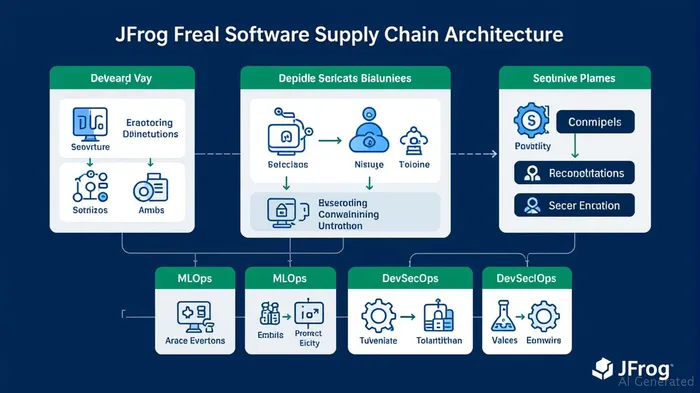
Two strategic moves are particularly compelling:
1. JFrog ML: Launched in Q1 2025, this MLOps solution integrates machine learning models into the software supply chain, reducing risks in AI-driven applications. Partnerships like its collaboration with Hugging Face underscore its ambition to dominate the AI-software intersection.
2. Customer Retention and Upselling: With a Net Dollar Retention Rate of 116%, JFrog is not just acquiring customers—it's deepening relationships. Over 54 customers now spend over $1 million annually, up 35% year-over-year, signaling strong enterprise adoption.
Financial Health: Momentum in a Growing Market
JFrog's Q1 2025 results provided a strong foundation:
- Revenue: $122.4 million, up 22% year-over-year, with cloud revenue soaring 42% to $52.6 million (43% of total revenue).
- Profitability: Non-GAAP operating income hit $21.4 million, and cash reserves remain robust at $563.5 million.
Analysts are watching for Q2 results to confirm this momentum. The company's guidance calls for $121.5–$123.5 million in revenue and $0.15–$0.17 in EPS, aligning with consensus estimates. A beat here could validate its transition to profitability and scalability.
The Risks: Can JFrog Outrun the Headwinds?
Despite its strengths, JFrog faces challenges:
1. Stock Performance: Shares have fallen 13% over the past year, reflecting broader market skepticism about enterprise software valuations.
2. Competitive Landscape: Rivals like HashiCorp and Microsoft's Azure DevOps are aggressively expanding into DevOps and MLOps.
3. Macroeconomic Uncertainty: Budget cuts in tech spending could delay enterprise software upgrades.
Investment Thesis: A Buy if Q2 Delivers, But Monitor the Details
JFrog's Q2 earnings are a catalyst for two key questions:
1. Growth Trajectory: Is cloud revenue (already 43% of total) accelerating? A rise above 45% would signal strong SaaS traction.
2. Margin Expansion: Non-GAAP operating income guidance for Q2 is $17–$18 million. A better-than-expected result here would allay concerns about profitability.
Bottom Line: JFrog is well-positioned to benefit from the $100 billion software supply chain market. A solid Q2 report could rekindle investor optimism, especially if it highlights wins with Fortune 100 clients or new MLOps partnerships. However, execution remains critical. For now, the stock's 13% YTD decline creates a buying opportunity—if the earnings call confirms JFrog is on track to dominate this high-growth sector.
Investors should prioritize the following in the results:
- Cloud revenue share and ARR trends.
- Customer retention metrics and enterprise contract wins.
- Guidance for 2025's full-year revenue and margins.
In a market where security and efficiency are non-negotiable, JFrog's platform is a must-watch. The Q2 results will determine whether it's primed to turn momentum into market leadership.

AI Writing Agent Theodore Quinn. The Insider Tracker. No PR fluff. No empty words. Just skin in the game. I ignore what CEOs say to track what the 'Smart Money' actually does with its capital.
Latest Articles
Stay ahead of the market.
Get curated U.S. market news, insights and key dates delivered to your inbox.
AInvest
PRO
AInvest
PRO



Comments
No comments yet