
JFK Airport's Crossroads: Can Expansion Outpace Systemic Strains?
The New York aviation system, anchored by John F. Kennedy International Airport (JFK), faces a pivotal moment. Amid a $4.2 billion terminal overhaul and escalating FAA staffing crises, stakeholders must decide whether JFK’s future lies in modernization or stagnation.
The FAA’s Crisis and the $12.5 Billion Gamble
The Federal Aviation Administration (FAA) stands at a breaking point. Airlines for America’s request to extend slot-use waivers through 2027 highlights a dire reality: nationwide air traffic controller shortages (3,500 positions unfilled) are causing 75% of U.S. flight delays. The January 2025 helicopter-airplane collision near LaGuardia, which killed 67, underscored the risks of overburdened systems.
Congress is now debating a $12.5 billion plan to modernize air traffic infrastructure—a critical lifeline. But delays persist: Newark Liberty’s runway closures and Philadelphia TRACON’s radar failures have spilled into JFK’s airspace, forcing United Airlines to cancel 35 daily flights.
Key Data: FAA Acting Administrator Chris Rocheleau admitted that “decades-old systems” are “operating on borrowed time.” With controllers working mandatory overtime and trauma leave spiking, investor confidence in aviation stocks hinges on whether Congress acts swiftly.
Terminal 6: JFK’s Bold Bet on the Future
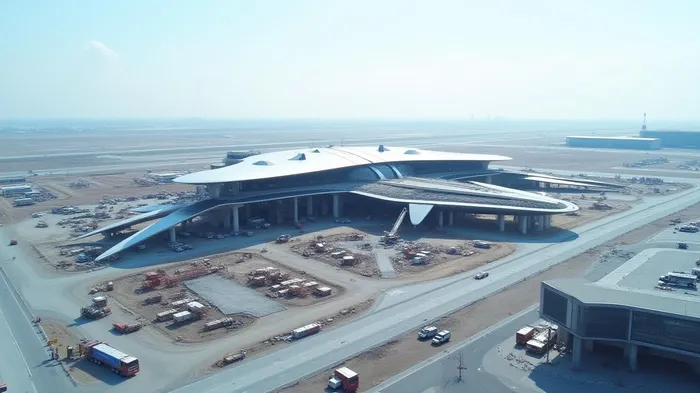
While systemic issues loom, JFK’s Terminal 6 (T6) offers a counterweight. Slated to open in early 2026, the $4.2 billion facility promises 10 gates (9 for widebody jets), automated baggage systems, and all-electric ground support—a first in U.S. aviation. The Port Authority’s $19 billion airport-wide transformation aims to rival hubs in Dubai or Singapore, emphasizing sustainability (LEED certification) and local cuisine.
“Terminal 6 isn’t just infrastructure—it’s a brand,” said JetBlue’s CEO. The project, backed by JMP and Vantage Group, signals confidence in JFK’s long-term value. Yet its success depends on resolving FAA bottlenecks: delays could negate the terminal’s efficiency gains.
The Newark Ripple Effect: A Cautionary Tale
Newark’s struggles reveal JFK’s vulnerabilities. Runway closures and controller absenteeism (20% of staff on leave) have turned Newark into a “flow constrained area,” spilling delays into JFK’s airspace. “This isn’t just Newark’s problem—it’s the entire NAS’s,” said Airlines for America CEO Nicholas Calio.
Investors must weigh the risks: While T6’s construction is on track, Newark’s crises illustrate how interconnected the NYC airspace system is. A prolonged FAA crisis could derail JFK’s growth narrative.
Conclusion: A Delicate Balancing Act
JFK’s future hinges on two variables: FAA modernization and the execution of Terminal 6. The $12.5 billion infrastructure plan offers hope, but delays and staffing gaps remain existential threats. Meanwhile, T6’s advanced technology and sustainability focus position JFK as a leader—if systemic issues are resolved.
For investors, the calculus is clear: Short-term volatility is inevitable, but long-term gains could follow if modernization outpaces stagnation. The FAA’s actions over the next 12 months—and the Port Authority’s ability to deliver T6 on time—will determine whether JFK becomes a symbol of resilience or a cautionary tale.
Final Takeaway: Monitor FAA funding bills and terminal construction timelines. A green light for the $12.5 billion plan, combined with T6’s 2026 opening, could spark a 15–20% uplift in JFK’s operational efficiency—and investor returns. The stakes have never been higher.

Stay ahead of the market.
Get curated U.S. market news, insights and key dates delivered to your inbox.






Comments
No comments yet