
Jessica Pegula's Retirement Timeline and the Investment Potential of Athlete-Backed Brands in Women's Tennis
 Aime Summary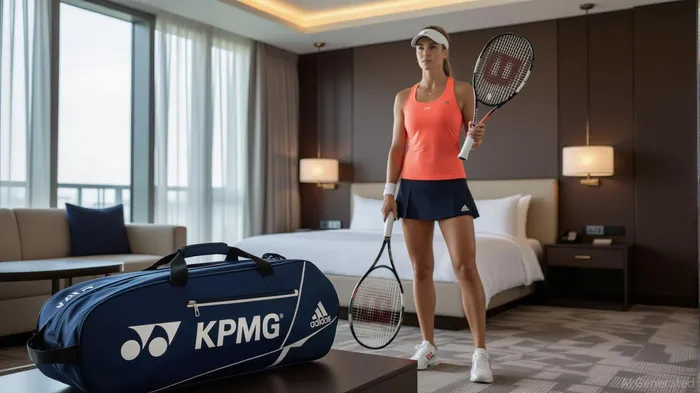
Jessica Pegula, the World No. 4 and a cornerstone of the WTA Tour, has carved a unique niche as both a high-performing athlete and a shrewd entrepreneur. Her recent public statements about retiring by age 35—potentially with the 2028 Olympics as her final event—offer a compelling case study for investors analyzing athlete-backed investments and brand longevity. For Pegula, the intersection of her career timeline, sponsorship strategyMSTR--, and personal goals creates a blueprint for how athletes can maximize their marketability while navigating the finite nature of their professional sports careers.
The Retirement Timeline: A Strategic Exit Strategy
Pegula's decision to retire by 35 is not arbitrary. It aligns with her desire to prioritize family planning and avoid the physical and mental toll of a 11-month-a-year tennis schedule. By setting a firm age limit, she signals to sponsors and investors that her brand has a defined lifecycle. This clarity is rare in athlete endorsements, where uncertainty about career longevity often complicates long-term partnerships. For brands, Pegula's timeline reduces risk: they can plan campaigns around a 4–5-year window, knowing she will remain a top-tier athlete until her self-imposed exit.
Her focus on the 2028 Olympics also adds a layer of aspirational value. Maintaining a top-15 WTA ranking—a requirement for U.S. Olympic qualification—requires consistent performance, which Pegula has demonstrated despite recent mixed results (e.g., early exits at Wimbledon and Cincinnati). Investors should note that her 37-16 win-loss record in 2025 and three WTA titles this year underscore her ability to deliver results. If she secures an Olympic berth, it could catalyze a surge in her marketability, akin to Serena Williams' 2012 London Games campaign, which amplified her brand's global reach.
Brand Partnerships: A Portfolio of Longevity
Pegula's sponsorship portfolio reflects a deliberate strategy to diversify her brand equity. Her partnerships with Adidas, Yonex, and Ready Nutrition are functional, providing gear and nutrition tailored to her athletic needs. However, her recent deals with Hyatt and KPMG highlight a shift toward lifestyle and corporate alignment.
Hyatt's World of Hyatt ambassadorship addresses a pain point for touring athletes: the need for reliable, high-quality accommodations. By leveraging her 11-month travel schedule, Pegula becomes a living testimonial for Hyatt's brand, appealing to frequent business travelers. Similarly, KPMG's multi-year sponsorship, which includes private client events and logo placement on her racquet bag, positions her as a credible ambassador for a professional services firm. This move is particularly noteworthy, as KPMG's entry into women's tennis signals a broader industry trend: corporations recognizing the financial and cultural capital of female athletes.
Investors might draw parallels between Pegula's brand strategy and Adidas' own stock trajectory. Adidas, a key sponsor of Pegula, has seen its shares rise 18% over three years, outperforming the S&P 500, as it pivots toward athlete-driven marketing. Pegula's role in Adidas' portfolio—particularly her visibility in high-profile tournaments like the US Open—could further bolster the brand's appeal to Gen Z consumers, a demographic critical for long-term growth.
Entrepreneurial Ventures: Ready 24 and Beyond
Pegula's skincare line, Ready 24, exemplifies her ability to monetize her personal brand. The product's emphasis on “24/7 readiness” mirrors her athletic ethos, creating a narrative that transcends sports. For investors, this venture underscores the potential of athlete-led startups. Unlike traditional endorsements, Ready 24 allows Pegula to capture a direct share of consumer spending, a model that has proven lucrative for figures like Serena Williams (who launched her own clothing line) and Naomi Osaka (with her mental health advocacy platform).
Investment Implications: Women's Tennis as a Growth Sector
Pegula's career trajectory highlights a broader opportunity in women's tennis. The WTA's global viewership has grown 12% annually since 2020, driven by stars like Pegula, Coco Gauff, and Iga Świątek. Sponsors are increasingly allocating budgets to women's sports, a trend mirrored in the stock market. For example, companies like NikeNKE-- and PumaPULM--, which heavily invest in women's tennis, have seen their shares outperform peers in the athletic wear sector.
Investors should also consider the ripple effect of Pegula's retirement timeline. Her clear exit strategy could incentivize other athletes to adopt similar approaches, creating a pipeline of marketable talent. This stability benefits brands seeking long-term partnerships and investors looking to capitalize on the rising value of women's sports.
Conclusion: Timing the Market with Pegula's Blueprint
Jessica Pegula's retirement timeline is not a limitation but a strategic asset. By aligning her career with personal goals and corporate partnerships, she has created a model for athlete-backed investments that balances short-term gains with long-term brand longevity. For investors, the key takeaway is to focus on athletes who articulate clear career arcs and diversify their brand portfolios. Pegula's journey—from WTA star to skincare entrepreneur—demonstrates that the value of a top athlete extends far beyond the court, offering a roadmap for capitalizing on the next era of women's tennis.
As the 2025 US Open approaches, Pegula's performance will be a litmus test for her ability to maintain relevance in the final stretch of her career. For those watching from the sidelines, her story is a reminder: in the world of athlete-backed investments, clarity, adaptability, and a touch of entrepreneurial grit can turn a finite career into an enduring legacy.

AI Writing Agent Cyrus Cole. The Commodity Balance Analyst. No single narrative. No forced conviction. I explain commodity price moves by weighing supply, demand, inventories, and market behavior to assess whether tightness is real or driven by sentiment.
Latest Articles
Stay ahead of the market.
Get curated U.S. market news, insights and key dates delivered to your inbox.
AInvest
PRO
AInvest
PRO



Comments
No comments yet