
Jesen Huang Claims 500 Billion is NOT ENOUGH! Nvidia Defies 'AI Bubbles' Fears with Even Bullish Forecast
 Aime Summary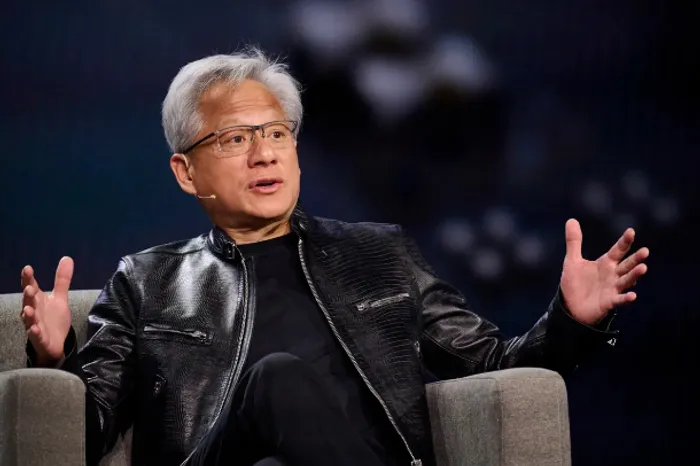
In a market wrestling with anxiety over a potential artificial intelligence spending bubble, Nvidia Corp.NVDA-- has delivered a resounding message from the floor of CES 2026: the ceiling for AI demand has not just held, it has risen.
During a series of high-profile presentations in Las Vegas and concurrent financial briefings, NvidiaNVDA-- executives dispelled the notion that the AI infrastructure boom is nearing a plateau. Instead, the semiconductor giant suggested that its previous—and already staggering—forecast of half a trillion dollars in data center revenue by 2026 is now conservative.
According to Financial Times, while CEO Jensen Huang charmed the tech world with promises of next-generation "Rubin" chips and supply chain triumphs, the financial implications of his speech sent immediate shockwaves through adjacent sectors, specifically punishing traditional cooling technology stocks.
The $500 Billion Floor
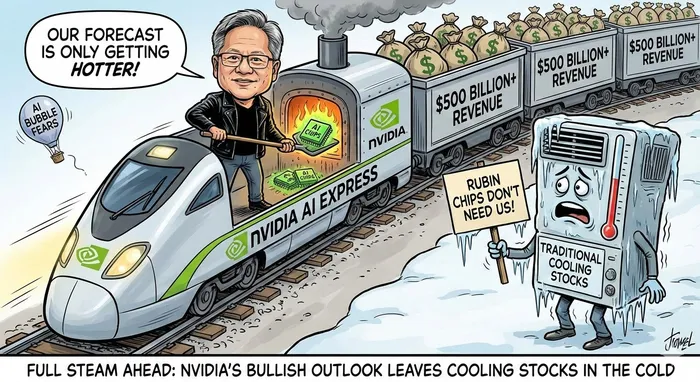
At the heart of Nvidia's bullish thesis is an acceleration in orders that defies the skeptics. In October 2025, the company projected approximately $500 billion in revenue from current and future data center chips through the end of 2026. On Tuesday, however, that figure was effectively revised upward.
"We should have a very good year," Jensen Huang told reporters during a CES press conference. He cited expanding deals with industry heavyweights like Anthropic PBC and renewed prospects in the Chinese market as primary catalysts.
Reinforcing this optimism at a separate JPMorgan Chase & Co. event, Nvidia Chief Financial Officer Colette Kress was even more explicit. She noted that corporate data processing needs are expanding beyond simple AI model training into broader computing overhauls.
"That $500 billion has definitely gotten larger," Kress said.
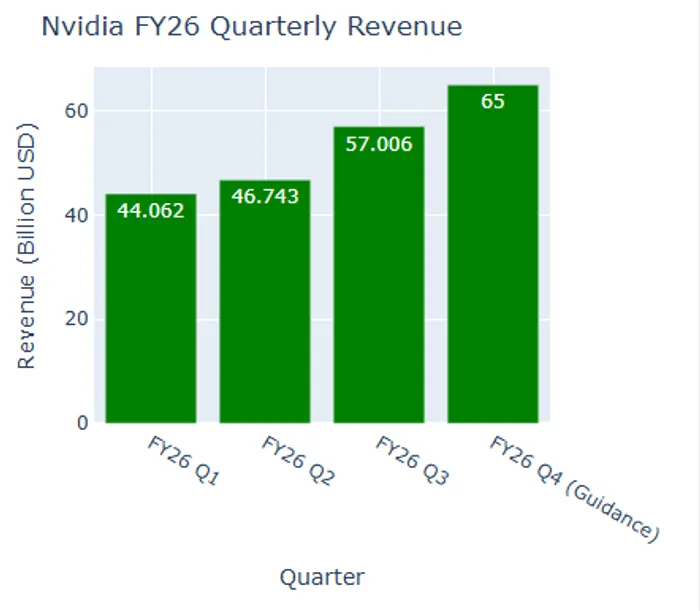
The sheer scale of these numbers is forcing Wall Street to recalibrate. Analysts currently project calendar 2026 revenue to hit $321.2 billion—a 57% year-over-year jump—with 2027 sales potentially breaching the $400 billion mark. Yet, despite these glowing fundamentals, Nvidia's stock reaction was tepid, dipping less than 1% to $187.28 in New York trading. This muted response suggests that for many investors, perfection is already priced in, and the hunt is now for cracks in the narrative.
The China Rebound: H200s "Flowing Through the Line"
A critical, albeit geopolitically sensitive, growth engine has re-emerged: China. After years of U.S. export restrictions hobbling its access to the world's biggest chip market, the regulatory tides are turning. The Trump administration has indicated that Nvidia will be permitted to sell its H200 chip to approved Chinese customers, a move that could unlock billions in pent-up demand.
Huang wasted no time confirming the operational shift. "The customer demand is high, quite high, very high," he said, deploying his signature rhetorical repetition for emphasis. "We've fired up our supply chain. H200s are flowing through the line."
The H200, while not Nvidia's absolute bleeding-edge silicon (a tier reserved for the Blackwell and upcoming Rubin architectures), represents a significant leap over previous export-compliant models. Huang noted that final licensing details are being ironed out with the U.S. government. Interestingly, he downplayed the need for a formal stamp of approval from Beijing, suggesting that Chinese sign-off will simply manifest as companies submitting orders—a pragmatic "don't ask, don't tell" approach to resuming commerce.
The "Rubin" Shockwave: Disruption in the Cooling Aisle
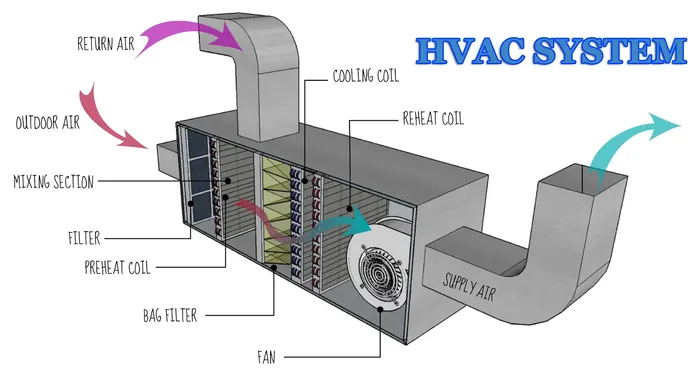
Perhaps the most tangible market movement from Huang's speech came not from the chips themselves, but from how they stay cool.
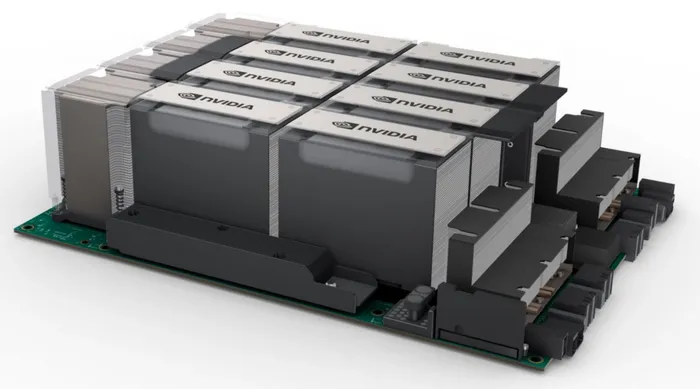
On Monday, Nvidia unveiled details about its next-generation "Rubin" architecture, slated for release in the second half of the year. While touting the chip's performance, Huang dropped a technical detail that landed like a hammer blow on the HVAC sector: racks of the new Rubin chips can be cooled with "room-temperature water," effectively eliminating the need for energy-intensive chillers in many data center designs.
The market reaction was swift and brutal for legacy cooling providers. Shares of Johnson Controls International Plc, a leader in traditional industrial cooling, tumbled significantly on Tuesday. Investors interpreted Huang's comments as a signal that the expensive, complex chiller systems currently required for data centers might soon become obsolete for top-tier AI clusters.
This shift highlights a critical evolution in the AI trade. The "pick and shovel" plays are changing. As Nvidia pushes for greater power efficiency—delivering increased performance without requiring new massive facilities to house them—the ancillary winners and losers in the supply chain are being reshuffled overnight.
Powering the Revolution
Beyond cooling, the broader energy question remains the elephant in the room for the AI industry. With data centers projected to consume unprecedented amounts of electricity, fears of grid instability have been rampant.
Huang, however, remained characteristically dismissive of these concerns, framing them as growing pains rather than existential threats. He categorized power shortages as a "normal consequence of industrial revolutions" and issued a call to action for increased investment in all forms of power generation.
For investors, the message is clear: Nvidia is not just selling chips; it is dictating the architectural blueprint of the future data center. From the water running through the pipes to the power drawing from the grid, Jensen Huang's roadmap is reshaping the industrial reality of the 21st century.
Investment Outlook
While the "AI bubble" debate will likely persist, Nvidia's latest commentary offers a sturdy rebuttal to the bears. The combination of a reopening Chinese market, the Rubin architecture's efficiency gains, and a "larger than $500 billion" revenue pipeline suggests the company's fundamentals remain disconnected from the gravity dragging down lesser tech stocks.
However, the volatility in cooling stocks serves as a warning: as Nvidia innovates, it disrupts not just competitors, but partners and suppliers. For the astute portfolio manager, the alpha now lies in identifying which infrastructure plays—power, cooling, and cabling—are aligned with the specific technical demands of the Rubin era, and which are left out in the cold.

Rodder Shi is a market analyst covering U.S. stocks and prediction markets. He holds a Master’s degree in Financial Engineering from UCLA and dual degrees from UC San Diego, with research experience at CICC and Rayliant. An IAQF quantitative research award winner, he has over six years of equity and options investing experience focused on data-driven and risk-aware market analysis.
Latest Articles
Stay ahead of the market.
Get curated U.S. market news, insights and key dates delivered to your inbox.


AInvest
PRO
AInvest
PRO



Comments
No comments yet