
Jensen Huang Goes All In: Nvidia’s New Robot Brain Arrives!


NVIDIA’s official robotics account posted a teaser on X: “Have you set the date? August 25, 2025.” The post featured a black gift box alongside a greeting card signed by Jensen Huang, which read: “Enjoy it well.”
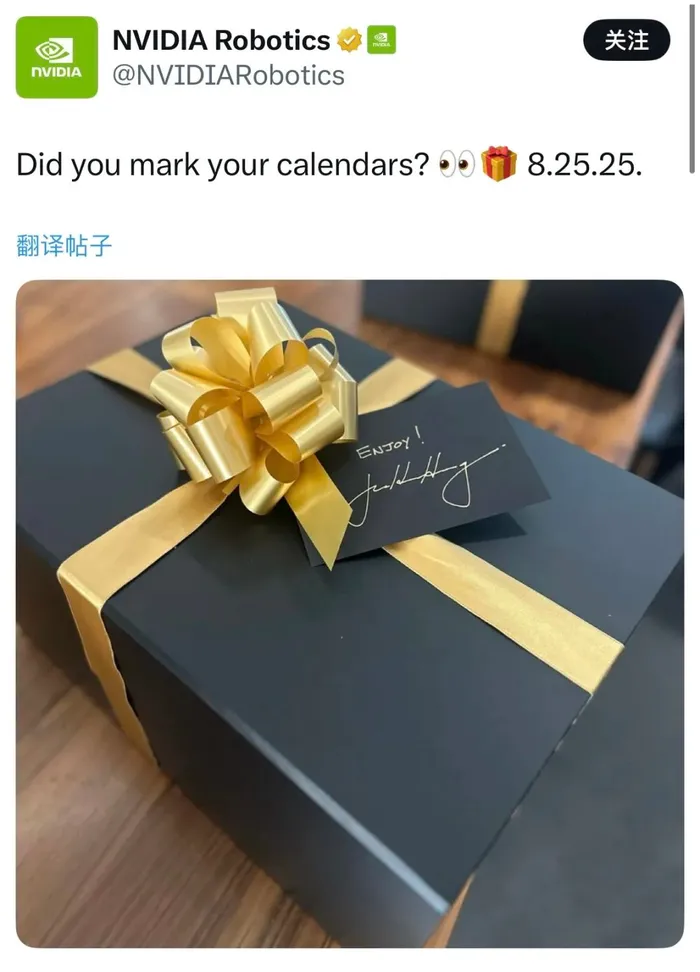
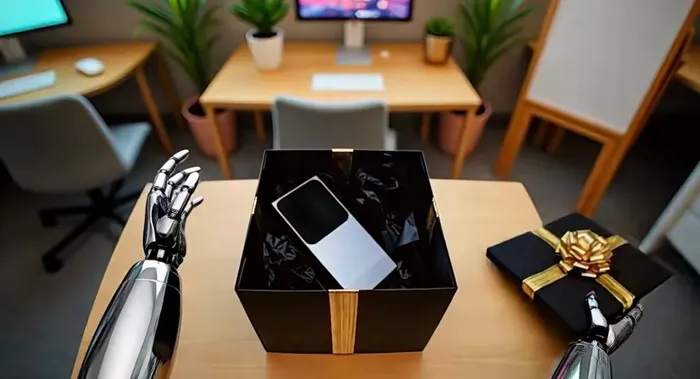
As for what’s inside the box, NVIDIANVDA-- had already hinted at it two days earlier with a teaser video. In the clip, Jensen Huang is seen writing on the card: “To robots: Enjoy your new brain!” Moments later, a humanoid robot picks up the card from the box and begins to read it aloud.

Musk and Huang Bet Big: Are Robots Entering a Breakout Phase?
When both Jensen Huang and Elon Musk—two of the world’s most influential tech leaders—are betting on robotics, it’s hard to ignore the signal.
This year, Huang has repeatedly emphasized: “The next wave is Physical AI.” AI, he explained, has already gone through three paradigm shifts—from Perception AI to Generative AI, then Agentic AI. The next evolution, he argues, is Physical AI.
According to NVIDIA, Physical AI refers to models with motor skills that allow them to understand and interact with the real world. These models are often embedded in robots or autonomous vehicles. With Physical AI, autonomous machines can sense, reason, and execute complex tasks in the physical world.
At the 2025 World Robot Conference, Rev Lebaredian, NVIDIA’s Vice President of Omniverse and Simulation Technologies, noted that Physical AI could unlock a multi-trillion-dollar market.
NVIDIA showcased a concrete example: a robotic arm running a visual reasoning model was able to infer, from the scene “bread + toaster,” that the most logical next step was to place the bread into the toaster for toasting—then translated that reasoning into precise physical movements.
Huang also highlighted that Chinese robotics companies are already leveraging NVIDIA Omniverse, its graphics and simulation platform, to train robots for safe human collaboration in the physical world.
In addition, NVIDIA has recently launched a new Omniverse library and NVIDIA Cosmos foundational world model to accelerate robotic solution development and deployment.
Meanwhile, Musk’s Optimus robot is already working at Tesla’s factories and can even serve popcorn to restaurant customers. Amazon’s warehouses now employ nearly as many robots as human workers. With Huang also entering the arena, could the robotics industry be on the cusp of explosive growth? The answer may come soon.

Expert analysis on U.S. markets and macro trends, delivering clear perspectives behind major market moves.
Latest Articles
Stay ahead of the market.
Get curated U.S. market news, insights and key dates delivered to your inbox.




Comments
No comments yet