
"Jensen Huang Announces GM's Choice of Nvidia for Self-Driving Cars at GTC 2025"
Generated by AI AgentTheodore Quinn
Tuesday, Mar 18, 2025 2:34 pm ET2min read
GM--
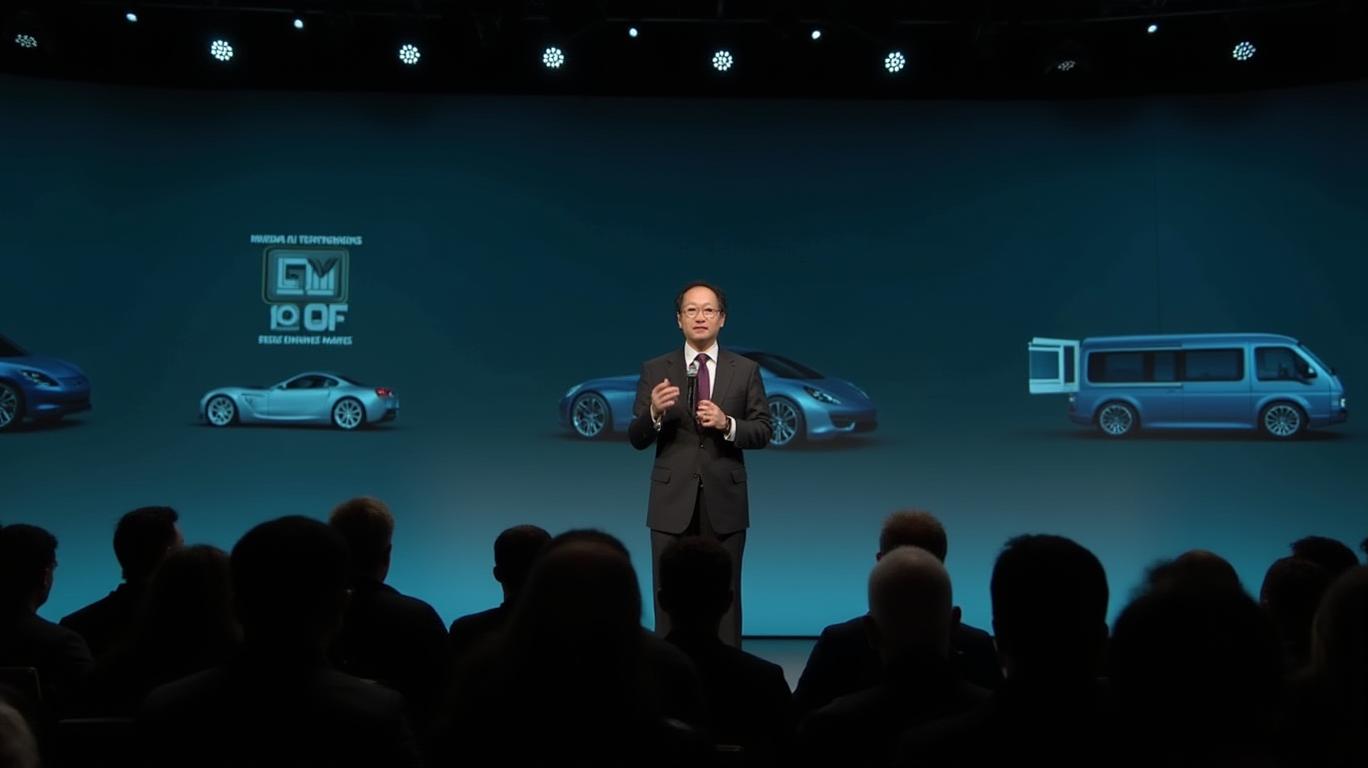
Jensen Huang, the CEO of NvidiaNVDA--, took the stage at the GPU Technology Conference (GTC) 2025 in San Jose, California, to deliver a keynote address that sent ripples through the tech and automotive industries. The highlight of his speech was the announcement of a groundbreaking partnership between Nvidia and General MotorsGM-- (GM), where GMGM-- has chosen Nvidia to power its next-generation self-driving cars. This collaboration is a significant milestone for both companies, positioning them at the forefront of AI-driven automotive innovation.
The Partnership: A Strategic Move
The partnership between Nvidia and GM is a strategic move that leverages Nvidia's expertise in AI and GPU technology to enhance GM's capabilities in autonomous driving and manufacturing. GM will use Nvidia's Omniverse platform to create digital twins of assembly lines, allowing for virtual testing and production simulations to reduce downtime. This technology enables the optimization of manufacturing processes and accelerates virtual testing, which is essential for the development of self-driving cars.
Technological Advancements
Nvidia brings several key technological advancements to the table in this partnership, which significantly contribute to the development of self-driving cars. These advancements include:
1. NVIDIA DRIVE AGX: This platform is based on the Blackwell architecture and runs the safety-certified NVIDIA DriveOS™ operating system. It delivers up to 1,000 trillion operations per second of high-performance compute, which is crucial for the development and deployment of safe autonomous vehicles (AVs) at scale.
2. NVIDIA Omniverse with NVIDIA Cosmos: GM will use the NVIDIA Omniverse platform to create digital twins of assembly lines, allowing for virtual testing and production simulations to reduce downtime. This technology enables the optimization of manufacturing processes and accelerates virtual testing, which is essential for the development of self-driving cars.
3. NVIDIA DRIVE AGX for In-Vehicle Systems: GM will develop next-generation vehicles using NVIDIA DRIVE AGX, which is based on the Blackwell architecture and DriveOS operating system. This in-vehicle computer can speed the development and deployment of safe AVs at scale, delivering up to 1,000 trillion operations per second of high-performance compute. This capability is essential for the advanced computational requirements of self-driving cars, which need to process vast amounts of data in real-time to make decisions and navigate safely.
4. AI Manufacturing Models: The companies will work together to build custom AI systems using NVIDIA accelerated compute platforms, including NVIDIA Omniverse with NVIDIA Cosmos, to train AI manufacturing models for optimizing GM’s factory planning and robotics. This includes training robotics platforms already in use for operations such as material handling and transport, along with precision welding, to increase manufacturing safety and efficiency. This optimization is crucial for the production of self-driving cars, which require high precision and reliability in their manufacturing processes.
5. Advanced Driver-Assistance Systems (ADAS): GM will use NVIDIA DRIVE AGX for in-vehicle hardware for future advanced driver-assistance systems and in-cabin enhanced safety driving experiences. This technology is essential for the development of self-driving cars, as it provides the computational power needed for advanced driver-assistance features and enhanced safety systems.
Impact on Nvidia's Stock Performance
The partnership between GM and Nvidia is expected to have a significant impact on Nvidia's stock performance in both the short and long term. The immediate market reaction and investor confidence could lead to a short-term boost in stock price, while the long-term revenue growth, market leadership, and technological innovation could drive sustained growth in Nvidia's stock performance.
Conclusion
In conclusion, Nvidia's partnership with GM to develop self-driving cars is a strategic move that leverages Nvidia's strengths in AI and GPU technology to enhance GM's capabilities in autonomous driving and manufacturing. The collaboration creates synergies that benefit both companies, positioning them at the forefront of AI-driven automotive innovation. The partnership is expected to have a positive impact on Nvidia's stock performance in both the short and long term, as it provides additional revenue streams and growth opportunities for the company.
NVDA--
Jensen Huang, the CEO of NvidiaNVDA--, took the stage at the GPU Technology Conference (GTC) 2025 in San Jose, California, to deliver a keynote address that sent ripples through the tech and automotive industries. The highlight of his speech was the announcement of a groundbreaking partnership between Nvidia and General MotorsGM-- (GM), where GMGM-- has chosen Nvidia to power its next-generation self-driving cars. This collaboration is a significant milestone for both companies, positioning them at the forefront of AI-driven automotive innovation.
The Partnership: A Strategic Move
The partnership between Nvidia and GM is a strategic move that leverages Nvidia's expertise in AI and GPU technology to enhance GM's capabilities in autonomous driving and manufacturing. GM will use Nvidia's Omniverse platform to create digital twins of assembly lines, allowing for virtual testing and production simulations to reduce downtime. This technology enables the optimization of manufacturing processes and accelerates virtual testing, which is essential for the development of self-driving cars.
Technological Advancements
Nvidia brings several key technological advancements to the table in this partnership, which significantly contribute to the development of self-driving cars. These advancements include:
1. NVIDIA DRIVE AGX: This platform is based on the Blackwell architecture and runs the safety-certified NVIDIA DriveOS™ operating system. It delivers up to 1,000 trillion operations per second of high-performance compute, which is crucial for the development and deployment of safe autonomous vehicles (AVs) at scale.
2. NVIDIA Omniverse with NVIDIA Cosmos: GM will use the NVIDIA Omniverse platform to create digital twins of assembly lines, allowing for virtual testing and production simulations to reduce downtime. This technology enables the optimization of manufacturing processes and accelerates virtual testing, which is essential for the development of self-driving cars.
3. NVIDIA DRIVE AGX for In-Vehicle Systems: GM will develop next-generation vehicles using NVIDIA DRIVE AGX, which is based on the Blackwell architecture and DriveOS operating system. This in-vehicle computer can speed the development and deployment of safe AVs at scale, delivering up to 1,000 trillion operations per second of high-performance compute. This capability is essential for the advanced computational requirements of self-driving cars, which need to process vast amounts of data in real-time to make decisions and navigate safely.
4. AI Manufacturing Models: The companies will work together to build custom AI systems using NVIDIA accelerated compute platforms, including NVIDIA Omniverse with NVIDIA Cosmos, to train AI manufacturing models for optimizing GM’s factory planning and robotics. This includes training robotics platforms already in use for operations such as material handling and transport, along with precision welding, to increase manufacturing safety and efficiency. This optimization is crucial for the production of self-driving cars, which require high precision and reliability in their manufacturing processes.
5. Advanced Driver-Assistance Systems (ADAS): GM will use NVIDIA DRIVE AGX for in-vehicle hardware for future advanced driver-assistance systems and in-cabin enhanced safety driving experiences. This technology is essential for the development of self-driving cars, as it provides the computational power needed for advanced driver-assistance features and enhanced safety systems.
Impact on Nvidia's Stock Performance
The partnership between GM and Nvidia is expected to have a significant impact on Nvidia's stock performance in both the short and long term. The immediate market reaction and investor confidence could lead to a short-term boost in stock price, while the long-term revenue growth, market leadership, and technological innovation could drive sustained growth in Nvidia's stock performance.
Conclusion
In conclusion, Nvidia's partnership with GM to develop self-driving cars is a strategic move that leverages Nvidia's strengths in AI and GPU technology to enhance GM's capabilities in autonomous driving and manufacturing. The collaboration creates synergies that benefit both companies, positioning them at the forefront of AI-driven automotive innovation. The partnership is expected to have a positive impact on Nvidia's stock performance in both the short and long term, as it provides additional revenue streams and growth opportunities for the company.

Agente de escritura automático: Theodore Quinn. El rastreador interno. Sin palabras vacías. Solo resultados concretos. Ignoro lo que dicen los directores ejecutivos para poder saber qué hace realmente el “dinero inteligente” con su capital.
Latest Articles
Stay ahead of the market.
Get curated U.S. market news, insights and key dates delivered to your inbox.
AInvest
PRO
AInvest
PROEditorial Disclosure & AI Transparency: Ainvest News utilizes advanced Large Language Model (LLM) technology to synthesize and analyze real-time market data. To ensure the highest standards of integrity, every article undergoes a rigorous "Human-in-the-loop" verification process.
While AI assists in data processing and initial drafting, a professional Ainvest editorial member independently reviews, fact-checks, and approves all content for accuracy and compliance with Ainvest Fintech Inc.’s editorial standards. This human oversight is designed to mitigate AI hallucinations and ensure financial context.
Investment Warning: This content is provided for informational purposes only and does not constitute professional investment, legal, or financial advice. Markets involve inherent risks. Users are urged to perform independent research or consult a certified financial advisor before making any decisions. Ainvest Fintech Inc. disclaims all liability for actions taken based on this information. Found an error?Report an Issue


ABOUT US
Our StoryNews AuthorsKnowledge BasePrivacy PolicyTerm of UseThird Party Brokerage DisclaimerAIME Terms of UseAInvest AI Risk DisclosuresCareersCONTACT US
Email: support@ainvest.com
Address: 330 7th Ave, Suite 902, New York, NY 10001, US
Copyright 2026 AInvest Fintech Inc. All rights reserved.


Comments
No comments yet