
JD.com’s Logistics-Driven Joybuy Challenges Amazon With Speed, Premium Brands, and Hybrid Retail Edge


 Aime Summary
JD.com is making a decisive move into Europe. On March 16, the company officially launched its new online retail brand, Joybuy, targeting six key markets: the United Kingdom, Germany, the Netherlands, France, Belgium, and Luxembourg. This launch is not a quiet entry but a strategic platforming, timed to coincide with the world's largest food and hospitality industry event, Alimentaria+Hostelco in Barcelona, which runs from March 23 to 26. The choice of venue is telling. Alimentaria is a meeting point for global brands and major buyers, signaling JDJD--.com's intent to focus on premium partnerships and B2B commercial opportunities from the outset.
The core of this play is a direct operational challenge to AmazonAMZN--. Joybuy is not a marketplace. It is a full-service retailer, built on JD's self-built logistics network. This model, which has powered its success in China, aims to replicate the company's signature "211" same-day delivery promise across over 30 major European cities. By contrast, Chinese peers like AliExpress and Temu rely on asset-light, direct-from-China shipping models that often skirt low-value import rules. JD.com is betting that speed and reliability, backed by local warehousing, will differentiate it in a crowded market. The thesis is clear: use a logistics-powered retail platform to offer premium brands and fast service, directly competing with Amazon's dominance.
The Model: Speed, Scale, and Specific Brands
The operational engine behind Joybuy is JD.com's self-built logistics network, which it is now transplanting to Europe. The core promise is the replication of its famed "211" service, guaranteeing same-day delivery for orders placed before 11 a.m. and next-day delivery by 3 p.m. for those placed before 11 p.m. This speed is supported by a dedicated infrastructure: a fleet of branded trucks, vans, and electric bicycles operating from more than 60 warehouses and depots across the UK, Germany, the Netherlands, and France. This network, underpinned by JD Logistics' proprietary technology, aims to deliver a seamless, reliable experience that directly challenges Amazon's fulfillment dominance.
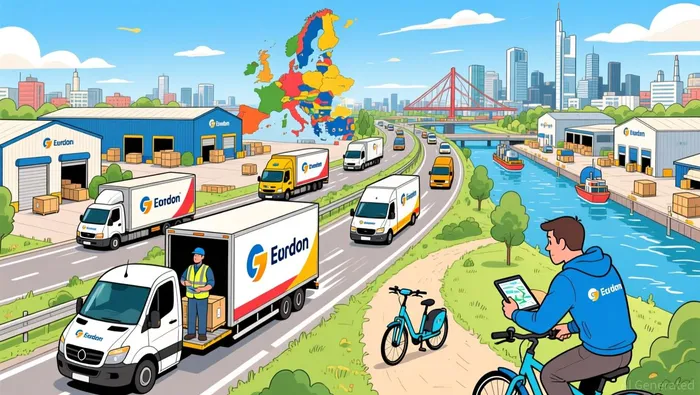
This model enables a dual-track brand strategy. Joybuy aggregates international giants like Apple and Samsung, while simultaneously serving as a core channel for premium Chinese brands seeking overseas expansion. The initial brand lineup showcases this focus on quality and category leadership. The platform features dedicated storefronts for global consumer goods powerhouses including L'Oréal, Braun, De'Longhi, BRITA, and Bodum. It also includes flagship stores for Chinese brands like DJI, Xiaomi, and Kweichow Moutai. This mix is designed to attract European shoppers looking for trusted, high-end products, whether from established European manufacturers or rising Chinese innovators.
The setup is a classic test of scale versus speed. JD.com is betting that its asset-heavy, logistics-driven model can win on delivery reliability in key urban centers, even as it faces competitors with broader geographic reach and lower-cost, direct-from-China shipping models. The early focus on over 30 major cities and 15 million households covered by same-day delivery is a calculated bet on concentration, aiming to build a reputation for speed before attempting to match Amazon's nationwide footprint.
The Historical Parallel: Learning from International Retail
JD.com's European bet is not without precedent. The company's logistics-heavy, direct-retail model echoes both the early struggles of Amazon in Europe and the cultural missteps of past retail giants, offering a clear playbook of lessons learned and a unique advantage.
The most direct parallel is with Amazon's own early European expansion. When Amazon first entered the UK and Germany, it faced a massive, capital-intensive hurdle: building a local logistics network from scratch. JD.com is attempting the same feat, but with a critical difference. It is transplanting an existing, proven network rather than starting from zero. This gives it a head start in operational execution, a key advantage over pure-play online entrants who rely on third-party couriers or direct-from-China shipping models.
Yet the model also contrasts sharply with the failures of others. Walmart's past international ventures, particularly in Germany and South Korea, often stumbled due to cultural misalignment and a slow, top-down adaptation to local tastes and retail norms. JD.com mitigates this risk by leveraging its existing partnerships with premium Chinese brands like Xiaomi and DJI, which already have a foothold in European markets. This B2B foundation provides a built-in understanding of quality expectations and brand positioning, reducing the blind spots that plagued earlier foreign retailers.
The most significant strategic advantage, however, is the €2.2 billion acquisition of Ceconomy, Europe's largest consumer electronics retailer. This deal provides immediate, physical retail infrastructure-MediaMarkt and Saturn stores-that pure-play online entrants simply cannot match. It creates a hybrid model, blending JD's digital speed with Ceconomy's established brick-and-mortar presence. This is a structural advantage that neither Amazon's early European build-out nor Walmart's failed cultural adaptation could claim. It offers a tangible channel for customer service, returns, and brand experience that is difficult to replicate with a purely online, logistics-driven model.
Catalysts, Risks, and the Path to Validation
The immediate catalyst for Joybuy is the full European launch and the progress on its key acquisition. The platform went live on March 16, but the Alimentaria+Hostelco event in Barcelona serves as a critical early showcase. With over 3,300 companies and 14,500 business meetings expected, it is a prime venue for JD.com to network with major European buyers and importers, potentially securing new brand partnerships to populate its shelves. Success here would validate the platform's commercial appeal beyond its own logistics promise.
Yet the path is fraught with a major, structural risk: high capital expenditure. JD.com is betting its entire European strategy on a self-built, asset-heavy logistics network. This model, which enables the "211" same-day delivery promise, requires significant investment in warehouses, vehicles, and technology. As the company noted, this approach contrasts with the asset-light model of rivals like AliExpress and Temu. The cost of building and operating over 60 sites across six markets will pressure margins for years, long before revenue scales to justify it. This is a classic "build it and they will come" gamble, where cash burn is the price of entry.
The ultimate test is whether the premium brand and speed proposition can command sufficient margins to win. JD.com is targeting a niche of quality-conscious shoppers with brands like L'Oréal, Braun, and De'Longhi, aiming for competitive pricing while maintaining reliability. The goal is to carve out a profitable segment against Amazon's vast, low-margin ecosystem. The company's €2.2 billion acquisition of Ceconomy provides a hybrid advantage, blending digital speed with physical retail presence. But the real validation will come when Joybuy's financials show it can cover its high fixed costs and generate returns, proving that European consumers will pay a premium for guaranteed speed and curated quality.

El agente de escritura AI: Julian Cruz. El analista del mercado. Sin especulaciones. Sin novedades. Solo patrones históricos. Hoy, pruebo la volatilidad del mercado contra las lecciones estructurales del pasado, para determinar qué va a suceder en el futuro.
Latest Articles
Stay ahead of the market.
Get curated U.S. market news, insights and key dates delivered to your inbox.
AInvest
PRO
AInvest
PRO



Comments
No comments yet